The AI economy is not waiting inside corporate headquarters. It is taking shape in phone screens, small businesses, side hustles, and daily decisions made by ordinary people across Asia and Africa.
For workers trying to solve problems and make a living, AI has become a practical tool rather than a distant promise. One of the clearest examples comes from Lagos, where makeup artist and entrepreneur Ogunmuyiwa has turned ChatGPT into a partner for running her business, planning her next move, and building new possibilities.
One Phone, Many Business Roles
Ogunmuyiwa first encountered ChatGPT while working as a customer support officer at a Lagos logistics startup. In 2024, she left her job to focus full time on her makeup business, and the chatbot became part of the structure she built around that work.
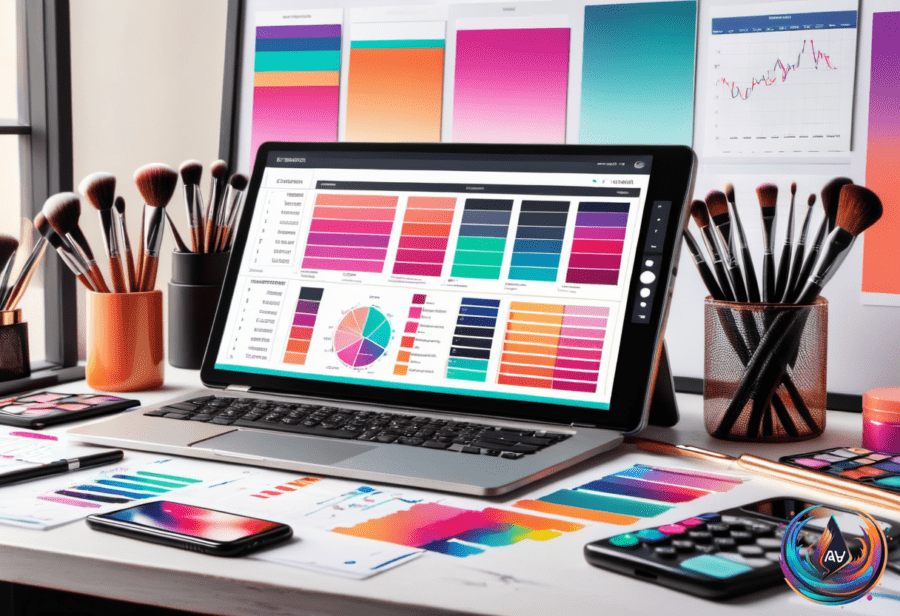
Today, Ogunmuyiwa uses ChatGPT for social media management, sales coaching, and business calculations. She also uses it to shape plans that might once have required more time, more staff, or outside help. “AI has really helped me to implement that structure in the best way possible,” Ogunmuyiwa said.
Her use of the tool reaches into hiring. Ogunmuyiwa used ChatGPT to produce a complete hiring plan, including interview questions and a checklist. The result changed how she viewed the chatbot’s role: “ChatGPT was my hiring manager that made the process less of a hassle.”
That description captures a major shift in everyday work. AI is not only generating words or answering questions; it is helping one entrepreneur organize tasks, prepare decisions, and move through business processes with a tool available from her phone.
Nearly half of Nigeria’s population now has internet access, with the majority connecting through smartphones. For Ogunmuyiwa, that access matters because AI bots are available wherever she is working. She finds the convenience of using them on her phone very useful, turning a device she already carries into a business assistant.
AI Moves From Ideas Into Physical Work
Ogunmuyiwa has also used AI to generate mood boards for her new studio. She shared reference images with carpenters and electricians, giving the people building the space a clearer view of her plans.
This is where AI becomes more than a digital conversation. A generated idea can guide a physical project, help explain a design, and connect an entrepreneur’s vision with the workers bringing it to life. The path runs from a smartphone to a studio, with AI helping organize the steps along the way.
Ogunmuyiwa has experimented with Anthropic’s Claude but favors ChatGPT. She has not paid for either ChatGPT or Claude services because she feels the free version serves her purpose. Her experience centers on time and access rather than a large technology budget.
“I have invested my time but not my money,” Ogunmuyiwa said.
AI contributes roughly 5% to Ogunmuyiwa’s business growth, according to the verified account of her work. That figure does not describe a total transformation powered by expensive systems. It describes a measurable contribution from tools she uses without paying for them, supported by the time she has invested in learning how to apply them.
The Bigger Labor Market Signal
The story unfolding in Lagos connects to a much wider change. Workers across Asia and Africa are using AI to solve daily problems, make a living, and create new possibilities. Their work shows how the real AI economy is being built through repeated, practical use rather than through announcements alone.
The global gig economy offers another preview of AI’s labor market. Its workers already navigate flexible work, changing demands, and income tied to skills and output. AI is entering that environment as a tool for planning, communication, organization, and productivity.
On September 14, 2026, Rest of World visited workers across Asia and Africa using AI. The focus on everyday workers points to an economy where adoption is measured by what people can accomplish with accessible tools. The important question is no longer only who develops AI, but who learns to use it for real work.
A September 9, 2026 discussion also framed the global gig economy as a preview of AI’s labor market. Hammad, co-founder of Adcelerate360° and a Forbes Councils member, is a leader and board advisor guiding global work. His position adds another layer to the debate over how skills, jobs, and opportunity will move through the AI economy.
At the center of that debate sits a $5.5 trillion AI skills gap. That gap is being filled by peers, not corporate learning and development. People who learn by testing tools, sharing methods, and helping one another are becoming part of the training system that businesses have not supplied on their own.
Ogunmuyiwa’s path shows what that peer-led future can look like: one worker, one phone, free AI tools, and a growing business. The next phase of the AI economy will be shaped by people who turn access into skill, then turn skill into work.
Based on