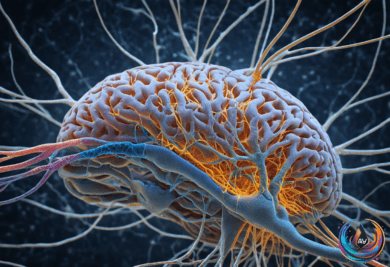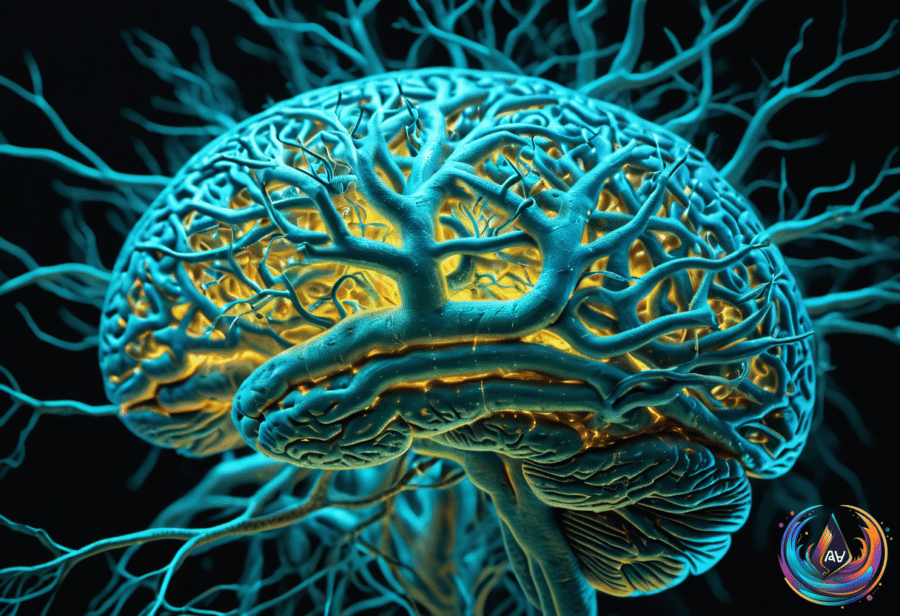
Memories may be harder to erase than scientists once thought. Recent studies show that memories can survive major changes in the brain, including hibernation and the loss of more than half the connections linked to memory-forming neurons.
The findings challenge a simple idea about memory storage: that a memory depends on one fixed group of connections staying intact. Instead, the evidence points to memories being held across shifting neural systems, with some connections disappearing and others returning as the brain changes.
Memory survives the loss of brain connections
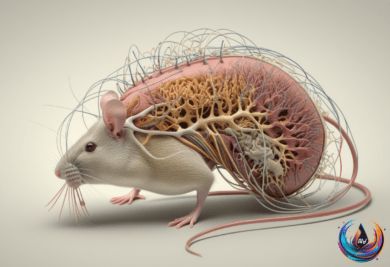
The clearest evidence comes from dormant mice. During hibernation, more than half of the synapses within the engram neurons in their hippocampus disappeared. An engram is the group of neurons linked to a stored memory, and the hippocampus is a brain region involved in memory.
Despite this major loss, the mice retained their memories. The study found that 50 percent of the synapses within the engram neurons disappeared during hibernation, yet the memories remained available after the animals woke. That result held even as the brain went through massive remodelling.
Researchers found an important difference between the connections that vanished. Clustered synapses on engram neurons appear crucial for retaining memory, while non-clustered synapses were wiped out during hibernation and reappeared within a day after hibernation ended.
That pattern gives the brain a more flexible role in memory. A memory may not depend on every connection around an engram neuron. Instead, clustered connections may help preserve the core information while other links change with the brain’s condition.
Steve Ramirez described the result in direct terms: “Memories may be harder to break than we thought.” He also said, “It gives hope that even in instances where information seems to be lost in the brain, whether it’s amnesia or Alzheimer’s disease, memory may nonetheless persist.”
A moving system rather than a fixed record
The mouse findings suggest that memories can remain accessible after the brain changes the network that supports them. Hibernation provides a clear test because it causes large changes in neural connections, yet the memories were retained.
This does not mean every connection has the same job. The difference between clustered and non-clustered synapses points to a system where some links protect a memory and others support the wider network around it. When the brain returns from hibernation, the non-clustered connections reappear within a day.
Priyanka Rao-Ruiz called the work “a remarkable step forward because it addresses a long-standing puzzle in memory research: how the brain retains long-term memories.” Her statement captures the central question raised by the studies. Scientists can observe that memories survive, but the changing network behind that survival remains difficult to explain.
The findings also connect to changes seen in Alzheimer’s disease. Women appear cognitively normal for almost three years longer than men after their brains start to develop Alzheimer’s disease. That difference adds another reason to ask whether memory can remain present even when the brain shows signs of damage.
The studies do not say that memory loss is impossible. They show that memory can survive a major loss of synapses and a period of extensive brain remodelling. That distinction matters because the visible condition of the brain may not reveal the full state of its stored memories.
What the findings leave unanswered
Several researchers are linked to the wider discussion of memory, including Andrea Kiss at Vienna University of Technology, Claire T. Hemingway at the University of Tennessee, Knoxville, Kazumasa Tanaka at the Okinawa Institute of Science and Technology, George Dragoi at Yale University, and Priyanka Rao-Ruiz at Vrije University Amsterdam.
Researchers led by Andrea Kiss described another memory puzzle this way: “It is…surprising that, out of the 16 events described here, only the Magdalena Flood survived in public memory.” The observation shows that memory can be selective at more than one level, from individual brains to public memory.
Becky Ferreira is the author of the article discussing these findings, and Milada Vigerova is listed as its photographer. Homer is mentioned in the context of mate choice overload, while other verified details include male frogs reaching a peak sound pressure level of up to 108 dB at 50 centimeters and high watermarks on some buildings in Germany rising over 20 feet above ground.
Those details sit outside the mouse study, but the memory findings stand on their own. They point to a brain that can preserve information through change, rebuild parts of its network, and protect key connections even after half of the synapses in an engram disappear.
The article is dated Aug 15, 2026 at 6:00 AM. Its central message is simple: a damaged or changing brain may still hold information that seems to have vanished. The next challenge is learning how those memories remain available when the network around them no longer looks the same.
Based on