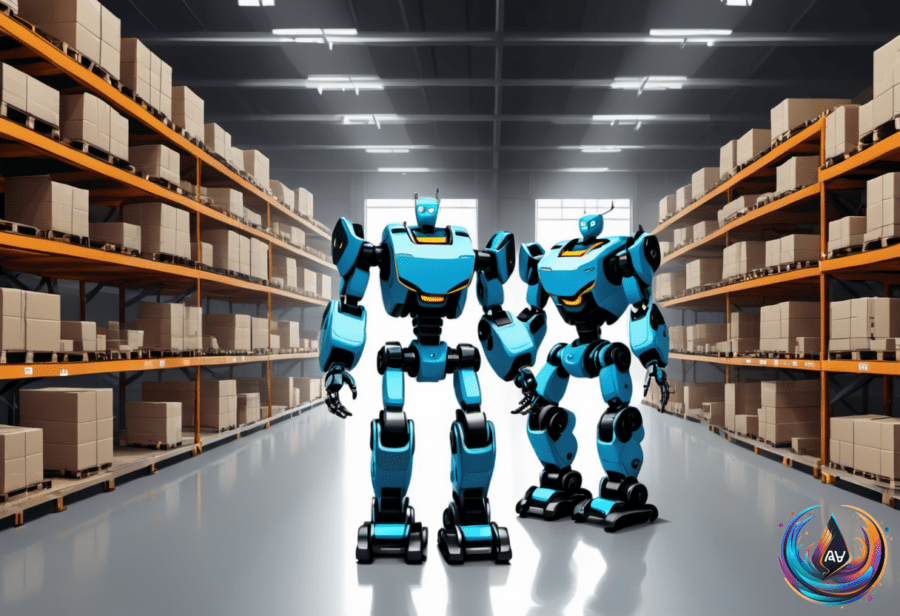
Robots are moving out of labs and into the real world at a scale we’ve never seen before. Imagine a warehouse the size of two football fields filled with “hundreds” of humanoid robots practicing real-world tasks nonstop. That’s exactly what’s happening right now in Austin, Texas, at a brand-new facility called Robot Park. Meanwhile, AI is speeding up in a big way too. A breakthrough system named DSpark is boosting how fast large language models answer questions without changing what they say. Let’s dive into these two electrifying developments that show robots and AI are leveling up together.
Robot Park: A Giant Leap for Humanoid Robotics
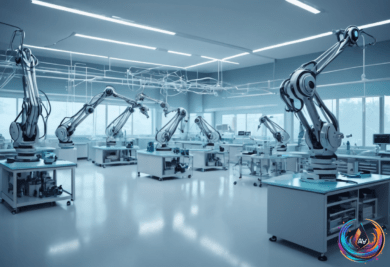
Humanoid robot maker Apptronik just opened Robot Park, a massive new factory that’s rewriting the playbook for robot training. Their previous site could only hold about 10 robots at a time. Now? “Hundreds” of the latest humanoids are in action. This isn’t just a showroom. These bots are practicing the exact tasks they’ll perform for customers — mostly manufacturers — like packaging items, sorting tools, and moving boxes around shelves.
Liz Clinkenbeard, Apptronik’s spokesperson, said, “The bots will practice tasks they’ll perform for customers — often manufacturers — like packaging items together, sorting tools, and moving boxes around shelves.” This means robots will get real-world experience at scale, not just simulations. The size of this facility and the number of robots working there marks a major milestone in making humanoid robots practical for everyday industry use.
Apptronik’s CEO, Jeff Cardenas, is steering this ambitious project. The company will share the data gathered at Robot Park with their research partner and investor, Google DeepMind. Google will use this data to improve Gemini Robots, an AI model widely used across the robotics industry. This collaboration promises a rapid feedback loop where real-world robot experience feeds into smarter AI — and smarter AI means better robots.
DSpark: Turbocharging Large Language Models
At the same time, a new AI system called DSpark is changing how large language models handle inference — that’s the process where AI generates answers. Released on June 29, 2026, by AI company DeepSeek, DSpark makes language models respond faster without losing accuracy. Carl Franzen, who covered the release, said, “DeepSeek is back with yet another open release that could once again change AI development around the globe.”
DSpark works by combining two clever ideas: a semi-autoregressive generation approach and speculative decoding. Speculative decoding uses a draft model to predict tokens ahead of time. Then, the main model quickly verifies those predictions. Franzen explained, “DSpark gives the system a scout that runs a few steps ahead, guesses the likely path, and lets the larger model quickly check which steps are safe.” This method speeds up inference by reducing the main model’s workload.
DeepSeek applied DSpark to its own models, DeepSeek-V4-Flash and DeepSeek-V4-Pro, as well as open models like Alibaba’s Qwen and Google’s Gemma. The results are stunning:
- Per-user generation speedups of 60% to 85% for DeepSeek-V4-Flash
- Per-user generation speedups of 57% to 78% for DeepSeek-V4-Pro
- Aggregate throughput increases of 661% for V4-Flash and 406% for V4-Pro under strict speed targets
- At service targets of 80 tokens per second per user, DSpark improved aggregate throughput by 51% for V4-Flash
- At 35 tokens per second per user, throughput rose by 52% for V4-Pro
This means more users get answers faster, and systems handle way more requests without extra hardware. It’s a game changer for AI companies that run large language models at scale.
The Future: Smarter Robots and Faster AI, Together
What do these two breakthroughs mean together? Robots are learning to handle messy, complex tasks in giant real-world settings. Meanwhile, AI models that power robots and other applications are speeding up, serving more users with sharper responses. The partnership between Apptronik and Google DeepMind fuels this cycle — real robot data improves AI, and faster AI helps robots act smarter and quicker.
Expect to see these humanoid robots rolling out in factories and warehouses soon. They’ll package, sort, and move with better skill and speed. Behind the scenes, systems like DSpark will keep AI humming fast enough to meet growing demand. The AI and robotics revolution is hitting a new gear, and it’s happening right now.
Keep watching Austin and the AI labs. The future of robots and AI is unfolding at full throttle.
Based on