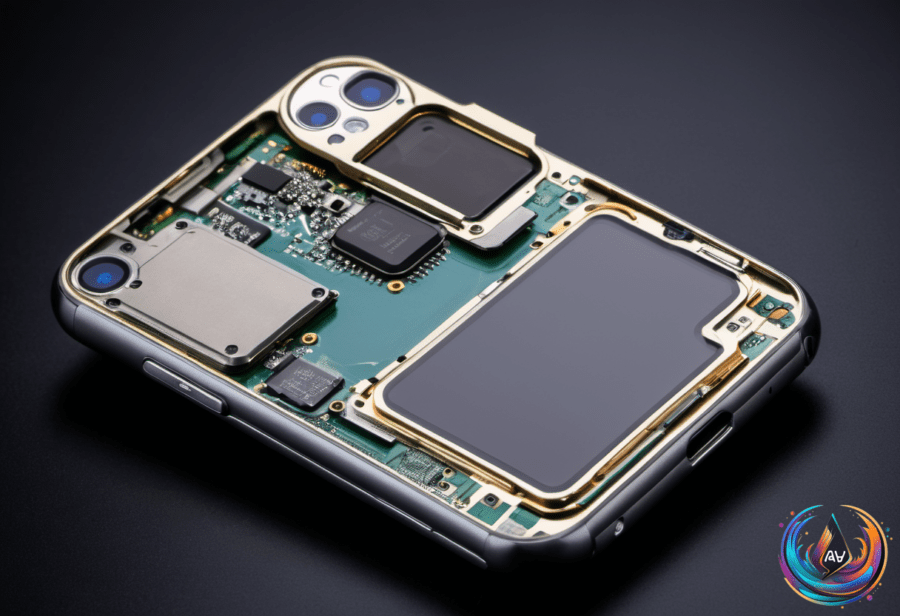
The iPhone 18 Pro brings a camera feature that pushes tiny mechanical parts to their limits. Its variable aperture uses six overlapping blades, each about as thin as a human hair, creating a repair challenge that may force users to replace the entire camera assembly.
That tension sits at the heart of Apple’s new camera design: remarkable precision on one side, difficult repair work on the other. The aperture mechanism is not impossible to repair, but iFixit says it “is about as close as it gets.”
Six Blades, One Extremely Tight Mechanism
The iFixit team took apart the iPhone 18 Pro and Pro Max to examine the variable aperture lens and its six overlapping blades. Each blade is about the thickness of a single human hair, leaving little room for error inside the mechanism.
Sarah Fielding described the challenge in direct terms: “The aperture’s blades are each thinner than a human hair.” That scale helps explain why the camera stands out as a “feat of precision engineering,” as iFixit described it.
A variable aperture lens depends on those blades moving together inside the camera assembly. The design adds a new mechanical layer to the camera, but that layer also introduces a delicate component that demands exact handling when something goes wrong.
iFixit summed up the conditions inside the mechanism with another warning: “The tolerances are tight, the glues are gummy.” Those details turn a camera repair into a task that requires more than removing and replacing a standard part.
Why the Aperture May Be Nearly Impossible to Repair
Repairing the aperture mechanism is not ruled out completely. The problem is the level of skill and equipment required to work on parts that are thinner than a human hair while dealing with tight tolerances and gummy glues.
“Doing so would require specialist tools, techniques, and knowledge that few people possess, making this as close to ‘impossible’ to repair as it gets,” iFixit said. That assessment points to a repair path with little room for ordinary service work.
If something breaks inside the variable-aperture camera, the mechanism probably can’t be fixed as an individual component. Users will likely have to replace the entire camera assembly instead, even when the failure involves only part of the aperture system.
That creates a sharp divide between the camera’s engineering achievement and its repair prospects. The six blades make the variable aperture possible, yet their thin construction also makes the mechanism a difficult target for repair technicians.
The Camera Assembly Could Become the Repair Bill
The cost of an earlier camera assembly offers a clear point of comparison. The iPhone 17 Pro camera assembly costs $249, suggesting that repair prices for the iPhone 18 Pro and Pro Max versions may increase.
The possible price increase follows from the likely repair method. If technicians cannot restore the aperture mechanism itself, replacing the entire camera assembly becomes the practical option, bringing the cost of a larger component into the repair.
Apple is not the first manufacturer to add aperture mechanisms to smartphones. Samsung previously added aperture mechanisms to smartphones, but the iPhone 18 Pro and Pro Max put a fresh focus on the challenge of servicing a design built around six extremely thin, overlapping blades.
The result is a camera feature that shows how far smartphone hardware can push precision engineering while exposing the limits of repair. Users get a variable aperture system, but a failure inside that system may lead to a full assembly replacement rather than a small component fix.
The iPhone 18 Pro camera’s story is moving in two directions at once. Its tiny aperture blades represent a striking engineering achievement, while the specialist tools, techniques, and knowledge needed to repair them make the mechanism one of the hardest parts of the phone to service.
As Apple’s variable aperture camera reaches the iPhone 18 Pro and Pro Max, the key question is not whether the mechanism can move with extreme precision. It is whether that same precision leaves any practical repair path when one of its thinnest parts breaks.
Based on