Construction robotics funding has reached about $1.6 billion this year through Oct. 29, putting the sector far ahead of its previous records. The total is more than four times the $389 million recorded during all of 2025 and more than three times the previous high of $506 million set in 2021.
That money has not come from a flood of new deals. The sector has recorded 30 funding rounds in 2026, compared with 28 during all of 2025. Instead, a few major companies have attracted much larger checks, with three companies raising most of the year’s funding.
Big Funding Rounds, Not More Deals
Crunchbase data shows that construction and robotics companies have already raised more money this year than in the previous five years combined, with about two months still left in the year. The dataset goes back to 2018, giving the $1.6 billion total a clear place in the sector’s funding history.
The contrast with earlier years is hard to miss. Funding reached $506 million in 2021, then fell to $389 million across all of 2025. This year’s total has passed both marks by a wide margin, but the number of rounds has barely changed, pointing to bigger bets on a small group of companies rather than broad funding growth across the industry.
San Francisco-based Bedrock Robotics accounts for the largest share. The company has raised $870 million across two deals, which is more than half of the sector’s total funding this year and makes it the largest funding recipient in construction robotics.
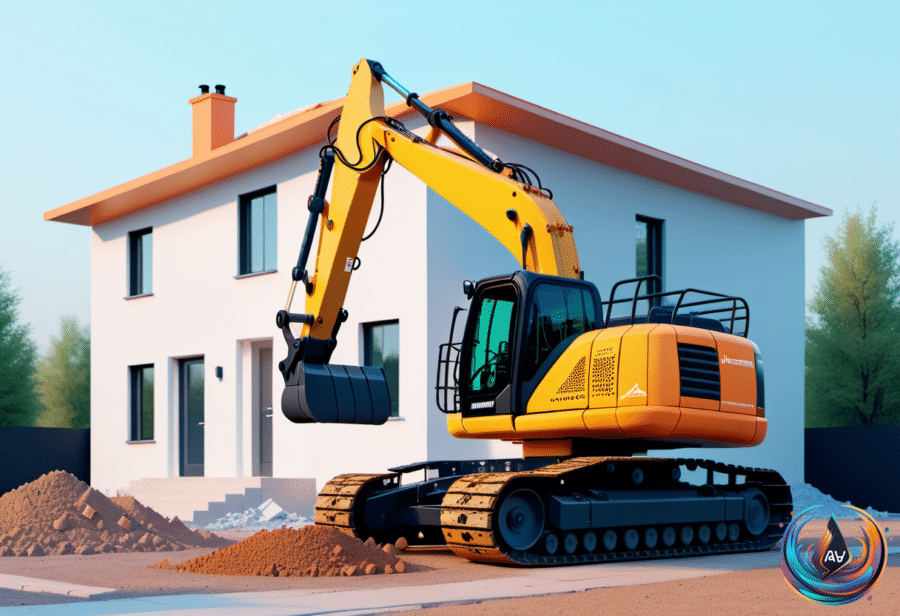
Bedrock said in August that excavators equipped with its autonomous systems were operating without human operators on commercial projects in Texas and Nevada. That claim places autonomous construction equipment in active commercial work, not only in testing or demonstrations.
Labor Shortages Create Pressure for Automation
The funding surge comes as labor shortages remain the biggest cause of project delays, according to a recent survey by the Associated General Contractors of America and NCCER. That pressure helps explain why contractors need construction-oriented technology that can address a shortage of workers while supporting project delivery.
Bedrock’s excavators offer one example of the kind of system drawing attention. The company’s autonomous systems allow excavators to operate without human operators, and its commercial projects in Texas and Nevada show where that technology is being used.
The funding figures also show why construction robotics is attracting larger commitments. Companies are not simply adding more deals; they are putting much more money behind a few businesses that aim to bring robotic systems into real construction work.
Icon Tests Whether Robotics Can Scale
Austin-based Icon is another major recipient of this year’s funding. The company builds homes using 3D printing and raised two rounds in 2026. Since its 2017 inception, Icon has raised nearly $800 million.
Icon says it has moved its technology beyond an experiment and into construction work. A company spokesperson told Crunchbase News that Icon has built “an in-the-field system that can build faster, with fewer people, less waste, greater design freedom and lower cost.”
To date, Icon has built more than 270 homes and structures across five states and two countries. The company also says it is on pace to grow revenue by 4x this year, adding a business-growth measure to the sector’s technology story.
The company’s own description of its progress also captures the challenge ahead. “Early on, the question was whether a robotic construction system could build a good home,” a spokesperson wrote via email.
Now, Icon says the harder test is scale. “Today, the question is whether a company can deliver at volume, across geographies and project types, and improve its economics with each build. That’s only answerable with time in the field.”
That shift—from proving that robotic construction can work to showing that it can work across locations and project types—sits at the center of this year’s funding surge. Bedrock’s autonomous excavators and Icon’s 3D-printed homes represent different approaches, but both point toward construction technology built for field use.
With $1.6 billion raised through Oct. 29, construction robotics has reached a new funding peak before the year ends. The 30 recorded rounds show that the sector is not drawing money through a much larger number of deals. It is drawing attention through a few companies that have secured unusually large sums while labor shortages keep pressure on contractors.
Based on
- Sector Snapshot: Construction Robotics Funding Soars To $1.6B, Tripling Previous Peak — news.crunchbase.com
- $2.1B for Re:Build, $600M for Bedrock Robotics, $169M for Group14 — axios.com
- A new, bigger AV boom is here — mobility.techcrunch.com
- Humble Robotics Raises $51 Million for Cabless Self-Driving Trucks – Business Insider — businessinsider.com
- Agility Robotics and Churchill Capital Corp XI Announce Expected Gross Capital Raise of Approximately $465 Million and Anticipated Closing of Business Combination | Markets Insider — markets.businessinsider.com