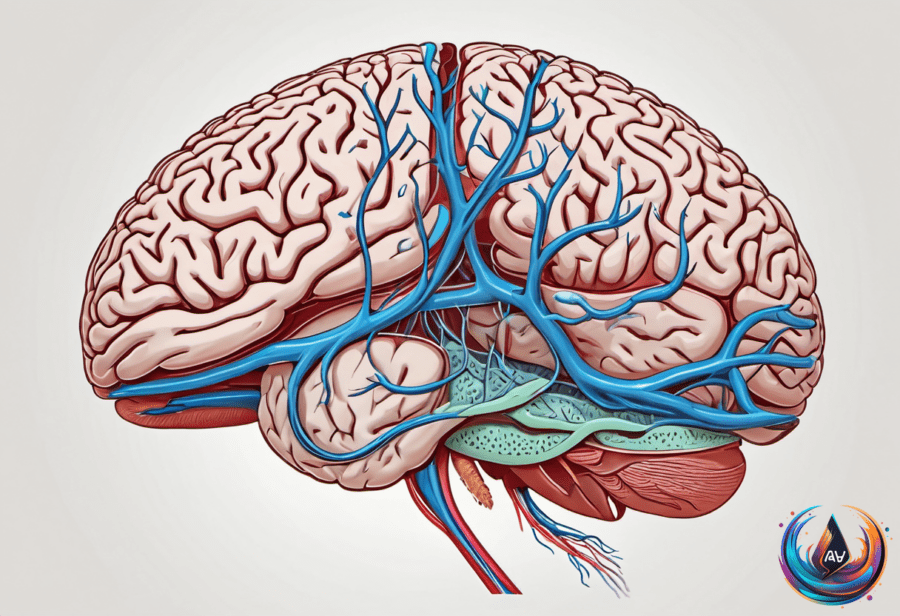
Researchers have completed a detailed map of every neuron in a male fruit fly’s brain, creating the second complete fruit fly brain map. A connectome of a female Drosophila had been completed earlier this year, giving scientists a way to compare the wiring of male and female brains in the same species.
The male brain is about the size of a pin head, yet it contains over 300 million synaptic connections. The new map covers 124 million connections between nerve cells and reveals wiring linked to courtship, aggression, visual tracking, and the song males use during courtship.
How scientists mapped a pin-head-sized brain
Building the map required the researchers to dissect a fruit fly brain and cut it into 66 evenly spaced slices. Each piece went through repeated rounds of scanning, with electron microscopy capturing the slices at the resolution needed to trace individual nerve cells and their connections.
The first processing step used generative AI to link the slices back together properly. That allowed the team to follow the paths of nerve cells through the pieces and assemble a connected picture of the brain. The work uncovered over 300 million synapses in the fly brain, showing how much wiring can fit inside a structure no larger than a pin head.
Gerry Rubin, a senior group leader at HHMI Janelia Research Campus, described how long scientists have been working toward this kind of computer-assisted map. “I was a graduate student at the [UK’s Laboratory of Molecular Biology]… and when I got there in 71, they already bought this giant computer, and they had the idea that they were going to use machine vision and computers to assemble the C. elegans connectome,” he said.
The project included collaborators from HHMI Janelia Research Campus, the Drosophila Connectomics Group at the University of Cambridge, Google Research, and the Champalimaud Foundation.
Small wiring differences, distinct behaviors
About 95% of the cells are shared between male and female fly brains. The remaining 5% are enough to drive distinct behaviors, and the completed maps show how those differences appear in the brain’s wiring.
Male flies have extra wiring that enhances visual tracking, along with more wiring associated with aggression than female flies. The researchers also identified differences in circuits connected to courtship, aggression, and the love song circuits used by males.
During courtship, a male produces a specific sound by vibrating his wings. Dr Philipp Schlegel described what happens next: “The sound is produced by vibrating the wings to produce a very specific song. If the female likes it, she will allow him to approach, and if she doesn’t, and she’s not receptive at a time, she’ll basically reject him, which could be a kick to the face.”
The differences in wiring are driven by two key genes. That finding connects genes to behavior through the physical structure of the brain, rather than treating genetic influence as an unexplained link.
Why the maps matter beyond fruit flies
The primary aim of the research was not to discover differences between male and female flies. The researchers wanted to understand the principles that guide brain wiring, using a brain small enough to map in full detail.
Scientists have known for decades that genes influence behavior, but they have had little idea how genes exert that influence. The fruit fly maps offer a direct view of the process: genes shape brain wiring, and those wiring patterns help produce behavior.
That question also matters for humans. Patterns of behavior in humans seem to have a strong genetic basis, and gene variants related to schizophrenia and autism spectrum disorders remain difficult to understand. Prof Gregory Jefferis connected the detailed fly map to the larger challenge of understanding complex brains.
“There are patterns of behaviour in humans that seem to have a strong genetic, basis. So, for example, there are many gene varients now related to schizophrenia and autism spectrum disorders that we don’t really understand,” Dr Jefferis said.
He also pointed to the scale of what brains can do: “We have this amazing stuff in our heads that lets us do incredible things such as playing a sonata or solving a scientific problem. And this development could help our understanding of how those systems work.”
The maps may also matter for artificial systems. Gwyndaf Hughes said, “There are people who’ve been putting the fly brain in the middle of artificial networks and trying to see if it’s useful to help, learn and control artificial systems.”
The wiring inside a female fly brain was completed two years ago, while the female Drosophila connectome had been completed earlier this year. With the male map now complete, researchers have a matched view of both brains and a clearer way to study how a small number of wiring differences can produce different behavior.
Based on