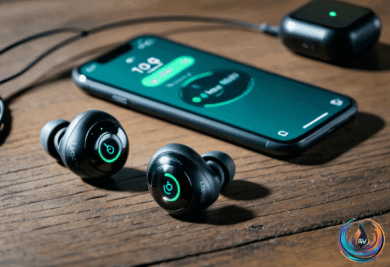
DJI is shaking up the world of audio and video gear with some fresh products. The Mic Mini 2S is a small wireless audio system, but it packs serious power. It’s the first in DJI’s Mini lineup to record audio internally. This means you don’t need extra devices to save your sound.
Each transmitter carries 14.5GB of built-in storage. That’s enough to capture 28 hours of 24-bit audio or about 21 hours of 32-bit float audio on one charge. The float format helps keep audio clear, even when loud sounds pop up unexpectedly. The Mic Mini 2S also offers an internal 32-bit float setting for better sound quality in tough spots.
Battery life is impressive too. With the charging case, the system runs about 42 hours. DJI offers two versions: one with two transmitters, a receiver, and the charging case for £169 or 189 euros. There’s also a smaller pack with a single transmitter, mobile receiver, and case for £79 or 99 euros. DJI says, “This offers a cost-effective way for creators to upgrade and expand their existing equipment as they move into multi-person content.”
Osmo Pocket 4P Brings a Zoom Lens to Pocket Cameras
DJI’s Osmo Pocket 4P adds a second camera lens, stepping up what pocket cameras can do. It has a 3x telephoto lens with a 1/1.28-inch sensor, a 60mm equivalent focal length, and a bright f/1.8 aperture. This gives creators more framing options without carrying larger gear.
The Osmo Pocket 4P shoots 4K video with up to 12x zoom. Image quality stays strong until about 6x zoom, then it drops off. The camera’s main sensor offers a wide dynamic range of up to 17 stops when filming in 10-bit D-Log 2. That means it can capture bright and dark details in the same shot. Its battery lasts about 210 minutes, and it charges fast—halfway in 10 minutes and full in 30 minutes with a 100W charger.
This camera weighs just 230 grams and comes with 103GB of internal storage. It also supports microSD cards up to 1TB. In Europe, the Osmo Pocket 4P costs between €499 and €599 for the Standard set. The Vlog Combo is priced slightly higher, between €605 and €689.
HoverAir Versa Blends Gimbal and Drone for Creators on the Move
HoverAir has a new product called Versa, designed for vloggers and filmmakers. It’s the first 3-axis gimbal camera that can switch from handheld to drone mode in seconds. You can hold it like a camera with built-in controls and a screen. There’s a record button and a joystick for easy use.
HoverAir promises, “No learning curve. No pilot skills. No controller. Just launch and go.” The Versa includes AI-powered modes like follow-me and a photo mode named 3D Worlds. These features aim to help users capture creative shots without fuss.
The company plans to launch Versa on Indiegogo in August. However, key details like sensor size, video resolutions, lens specs, and price remain under wraps for now. Versa stands out as a blend of drone and gimbal tech, promising new ways to film on the fly.
These new gadgets show how DJI and partners push boundaries in compact audio and video gear. Whether you need long-lasting audio recording, zoom lenses in your pocket, or a drone that doubles as a handheld camera, the future of content creation is getting easier and more flexible.
Based on
- DJI’s Mic Mini 2S is the first in its Mini lineup that can record your audio internally — engadget.com
- A second lens makes DJI’s Osmo Pocket 4P my new favorite video camera | The Verge — theverge.com
- HoverAir’s Versa Is A Pocket Gimbal Camera And Drone Mashup — engadget.com
- DJI Osmo Pocket 4P Review: The Best Gimbal Camera Money Can’t Buy — engadget.com
- What if your DJI Pocket camera could put on wings and fly? | The Verge — theverge.com