Imagine a network so vast it could wrap around the Earth trillions of times. Now imagine it stretching nearly a billion times the distance from Earth to the Sun. This isn’t science fiction. It’s the underground fungal network beneath our feet, and it’s rewriting what we know about life on Earth.
Scientists have just mapped the full extent of these fungal highways for the first time. The results are staggering. These arbuscular mycorrhizal fungi form threads that span 110 quadrillion kilometers—yes, quadrillions. If lined up, these hyphae would reach far beyond our solar system’s borders.
Life’s Hidden Web Beneath the Soil
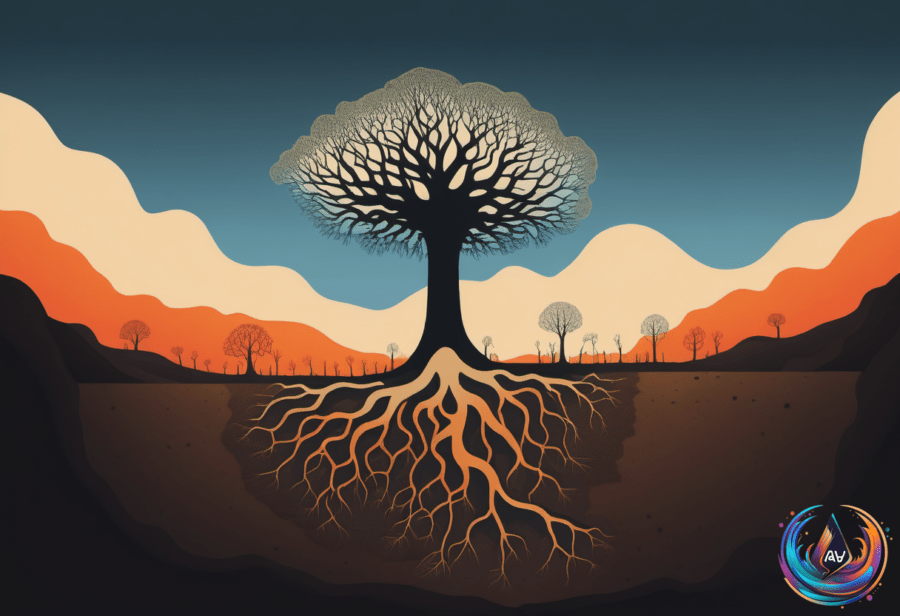
These fungi are nature’s master connectors. They partner with roughly 70 to 80 percent of all plant species. Their ultra-thin threads, smaller than a human hair, spread through soil to deliver water and vital nutrients like phosphorus and nitrogen directly to plants.
In return, fungi receive carbon from plants, locking away about one billion tons of this carbon underground every year. Without this storage, Earth’s atmosphere would be far hotter. These fungi act as a global carbon sink, helping regulate climate without most people even knowing it.
But their impact is not just chemical. Their networks extend a plant’s reach by up to 100 times beyond what roots alone can tap. That means plants grow stronger and survive better in poor soils. It’s a win-win connection beneath the surface.
Mapping the Invisible Giant
How did scientists uncover this hidden giant? They combined 16,000 soil samples taken worldwide with advanced machine learning and robotics. A robot at the AMOLF Biophysics Institute in Amsterdam filmed fungal networks growing in the lab, revealing their true size and structure.
Using this data, researchers built a global map showing where these fungal webs are densest and where they fade away. The networks are thickest in wild grasslands, which hold about 40 percent of the world’s fungal biomass. These ecosystems are crucial yet dangerously unprotected.
In contrast, croplands show fungal densities about half that of natural ecosystems. Farming disrupts these networks, cutting their size and carbon storage ability in half. This loss threatens plant health and accelerates carbon release into the atmosphere.
The total biomass of living fungal networks weighs five to six times more than all humans combined. This living infrastructure moves nutrients and carbon at speeds scaled up to hundreds of kilometers per hour—making these fungi Earth’s underground superhighways.
Why This Discovery Matters Now
- Climate Regulation: These fungi remove about 11 percent of human-produced carbon emissions annually, slowing global warming.
- Food Security: Healthy fungal networks boost crop resilience and nutrient uptake, reducing the need for fertilizers.
- Conservation Urgency: Grasslands, fungal hotspots, are converted to farmland four times faster than forests, risking massive network losses.
- Scientific Frontiers: Less than 10 percent of fungi are formally described. This mapping is just the start of understanding their global role.
Scientists warn that 90 to 95 percent of fungal biodiversity hotspots lie outside protected zones. This puts these critical underground systems at risk from land use change and climate pressures.
Researchers will present their findings at upcoming global environmental conferences, pushing for fungal networks to be factored into climate and land management policies. These networks are a missing piece in the puzzle of Earth’s ecosystems and carbon cycles.
Their work also highlights how little we still know about the underground world. New technologies in imaging, machine learning, and robotics are finally revealing how these fungal networks operate and shape our planet.
Could managing and restoring fungal networks become a key climate solution? Scientists say yes. But first, we need to protect the landscapes that host these underground giants and unlock the secrets of their complex biology.
The next decade could see fungi move from invisible soil dwellers to vital allies in fighting climate change and food insecurity. This breakthrough mapping is the first step into a vast, hidden frontier that touches every living thing on Earth.
Based on
- Threads of underground fungal networks are long enough to reach beyond the Solar System — arstechnica.com
- Threads of Earth’s Underground Fungal Networks Are Long Enough to Reach Beyond the Solar System – Inside Climate News — insideclimatenews.org
- 621 trillion miles of fungi networks crisscross the planet | Popular Science — popsci.com
- First global map of mycorrhizal fungi reveals true scale of underground networks across the planet — phys.org
- Science breakthrough: Researchers uncover fungus network 700 million times distance between Earth and Sun — gbnews.com