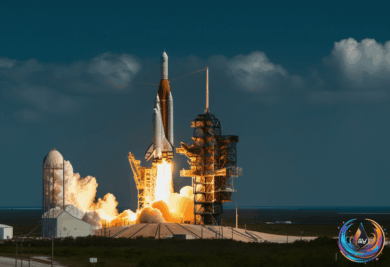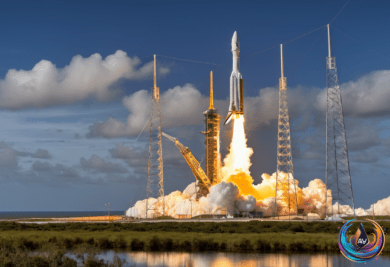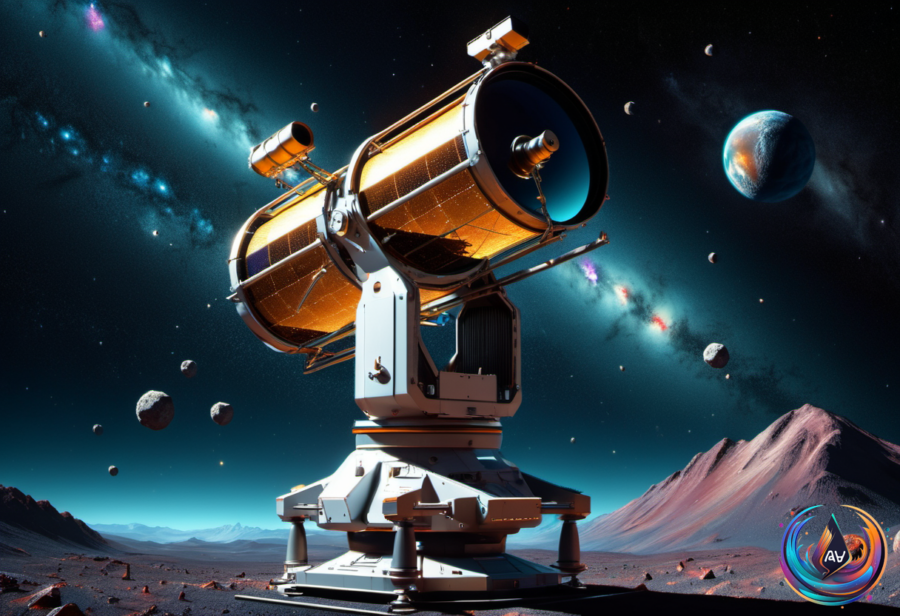
NASA is preparing to launch a powerful new space telescope called the Nancy Grace Roman Space Telescope. It will blast off from Florida’s Kennedy Space Center at the end of August 2026. This telescope is designed to capture images at least 100 times larger than what the Hubble telescope can.
What makes Roman special is its super-wide-angle, 300-megapixel infrared camera. It can spot asteroids as small as 60 feet long. That’s important because many of these small space rocks are hard to find but could still pose a threat to Earth.
NASA’s planetary defense team estimates there are about 25,000 asteroids roughly 460 feet or larger with orbits that bring them close to Earth. More than half of these remain undiscovered. Even smaller asteroids, about 165 feet long, number around 230,000, but fewer than 10% have been located.
Ground-based telescopes help find these asteroids, but Earth’s atmosphere blocks much of the view. Roman will work in space, giving it a clear, wide view. It can observe more asteroids in infrared light than the James Webb Space Telescope in the same amount of time. Its field of view is also much bigger than JWST’s.
Roman’s software still needs some fine-tuning to tell the difference between asteroid streaks and other space signals like cosmic rays or glitches. A researcher at Johns Hopkins, Andy Rivkin, said, “Roman’s software will need some tweaking to spy space rocks.”
Tracking Solar Storms with PUNCH
NASA is also monitoring the sun closely with another mission called PUNCH. Launched in March 2025, PUNCH uses four small satellites that watch the sun 24/7. They focus on coronal mass ejections, or CMEs, which are huge bursts of solar material that can cause geomagnetic storms on Earth.
On May 31, 2025, PUNCH captured detailed images of a CME. Using this data, scientists improved their computer models to forecast solar storms. The model predicted the CME would reach Earth just eight hours after analyzing the first 12 hours of data. The timing was accurate to within half an hour.
Before PUNCH, instruments could only track about 20% of a CME’s journey from the sun to Earth. Craig DeForest, a scientist involved with PUNCH, said this is like upgrading from a steam engine to a modern combustion engine for space weather prediction.
Solar storms can disrupt radio signals, cause power outages, and damage satellites. They also affect internet connections. Getting better predictions helps protect technology and power grids on Earth.
Preparing to Deflect Dangerous Asteroids
Meanwhile, scientists in China have studied how to stop asteroids headed for Earth. They found the best way is to bury and detonate a nuclear device inside a large asteroid. This method would push the asteroid off course and prevent a collision.
The research shows a nuclear blast equal to 200 Hiroshima bombs could completely destroy an asteroid about 100 meters wide. Burying the bomb about 30 meters deep beneath the asteroid’s surface triples the speed change compared to a shallow blast.
For even bigger asteroids, about a kilometer wide, detonating a bomb 20 meters deep in a crater could push it away from Earth at speeds over 30 centimeters per second. That might be enough to keep our planet safe.
NASA’s planetary defense experts, like Rick Cosentino, emphasize the importance of showing what Roman can do to find and track these space threats. Bryan Holler, a researcher at the Space Telescope Science Institute, said that demonstrating Roman’s planetary defense abilities will help raise support for the mission.
Alise Fisher, NASA’s astrophysics communications lead, added that Roman will cover such a large volume of the cosmos that it will open new doors for many kinds of science, not just asteroid hunting.
With Roman set to launch in 2026 and the Near-Earth Object Surveyor planned for 2027, NASA is pushing hard to find and track dangerous asteroids. Alongside solar storm monitoring from PUNCH, these missions work together to protect Earth from space hazards.
Based on
- NASA’s new dark-energy space telescope can also detect killer asteroids — technologyreview.com
- Date set: Nasa’s powerful new telescope is ready to launch | The Independent — independent.co.uk
- NASA’s PUNCH Mission Can Now Accurately Predict When Solar Storms Will Hit Earth — engadget.com
- Chinese scientists reveal most effective way to destroy doomsday asteroid | The Independent — independent.co.uk