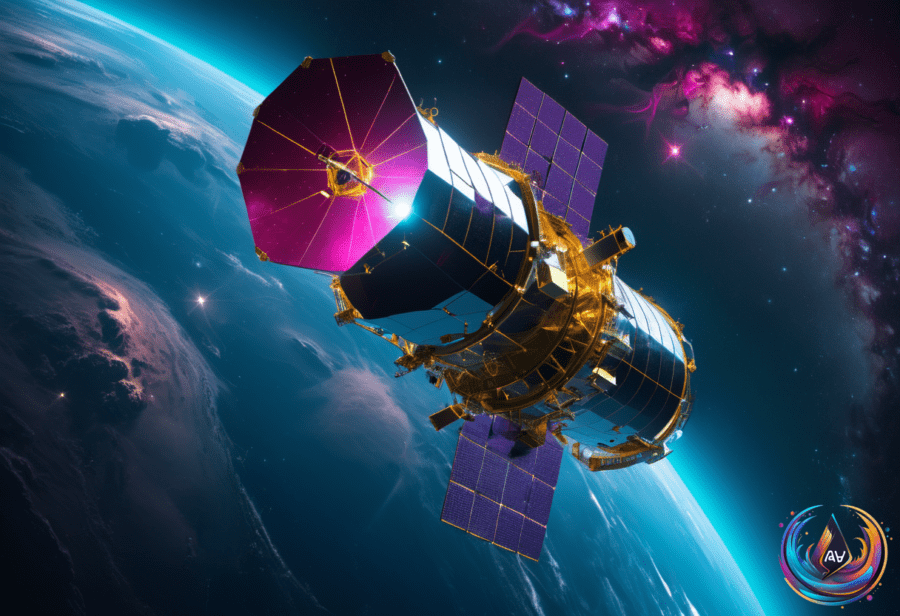
NASA is racing ahead to launch the Nancy Grace Roman Space Telescope on August 30, 2026. This mission just jumped the schedule by eight months! That’s right—Roman will blast off sooner than anyone expected. The excitement is real because this telescope promises to shake up how we explore the cosmos.
The Powerhouse Mirror Ready for Launch
At the heart of Roman is a giant 7.9-foot (2.4-meter) primary mirror—the same size as Hubble’s. But don’t mistake this for a copycat. Roman’s mirror is tuned for infrared light, letting it peer through cosmic dust that blocks visible light. This means it will reveal hidden stars, galaxies, and planets lurking behind thick veils of gas and dust.
NASA engineers at Goddard Space Flight Center gave the mirror a final inspection. They ran “shake tests” to simulate launch conditions and used high-powered cameras to check for dust or misalignment. The mirror passed with flying colors, confirming it’s mission-ready. Now, Roman is packed up and heading to Kennedy Space Center for launch prep.
Why Roman Will Change the Game
Roman’s field of view is 100 times larger than Hubble’s. Imagine swapping a telescope that looks through a straw for one with a wide-angle lens. This allows Roman to scan massive swaths of sky fast. Over its five-year primary mission, it will spot billions of stars, galaxies, and black holes.
But that’s not all. Roman’s infrared sensors will hunt down thousands of new exoplanets—planets orbiting stars beyond our solar system. It’s expected to discover around 100,000 new worlds, including “rogue planets” that drift alone in space without a star. How? Through gravitational microlensing, where a planet’s gravity bends light from distant stars, briefly magnifying them.
- Reveal the distribution of planets across the Milky Way
- Identify Earth-sized planets in habitable zones
- Catalog rogue planets roaming the galaxy
- Probe dark energy and understand cosmic expansion
The Journey From Concept to Launchpad
The Roman telescope wasn’t always called Roman. It started as the Wide Field Infrared Survey Telescope (WFIRST). After years of design, testing, and partnerships—including a key donation of the mirror from the National Reconnaissance Office—the mission matured. NASA renamed it in 2020 to honor Nancy Grace Roman, the first female chief astronomer at NASA and the visionary behind the Hubble Space Telescope.
Roman’s mission will deploy the telescope to the second Sun-Earth Lagrange point, or L2, located about four times farther than the Moon. There, Roman will join the James Webb Space Telescope to unlock cosmic secrets far beyond Earth’s reach.
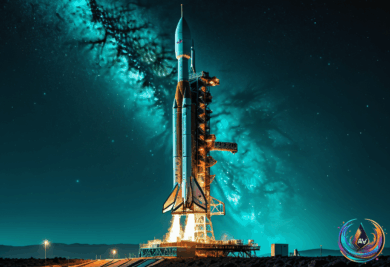
Before launch, Roman will undergo final tests, fueling, and be encapsulated in a protective nose cone. It will ride a SpaceX Falcon Heavy rocket to space, where it will start its mission to revolutionize astronomy.
What’s Next for Space Exploration?
Roman’s launch means a new era of discovery is about to begin. It will fill a critical gap between narrow deep views from telescopes like Hubble and the broad but shallower surveys from ground-based observatories. Roman’s wide field and infrared vision allow it to survey the cosmos faster and deeper than ever.
Scientists will use Roman’s data to tackle some of the universe’s biggest mysteries. What is dark energy? How are stars and planets formed? What’s the true makeup of the Milky Way on its far side? Roman will provide answers and spark new questions.
This is just the start. With Roman in orbit, humanity gains a powerful new eye on the universe. The countdown is ticking, and the future of cosmic exploration is brighter than ever.
Based on
- NASA’s Nancy Grace Roman Space Telescope is set to launch on August 30 — engadget.com
- Nasa set to launch Nancy Grace Roman Space Telescope on this date. What will it do? – India Today — indiatoday.in
- NASA clears Nancy Grace Roman Space Telescope for KSC shipment — newsbytesapp.com
- Hello, World! NASA Shares New Home for Roman Space Telescope Updates – NASA Science — science.nasa.gov
- NASA’s Roman Space Telescope Set to Revolutionize Astronomy – Archypedia News — archypedia.news