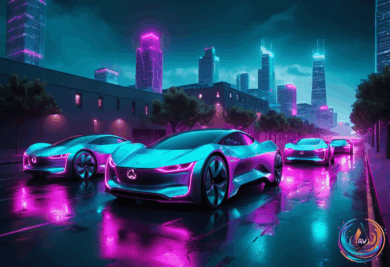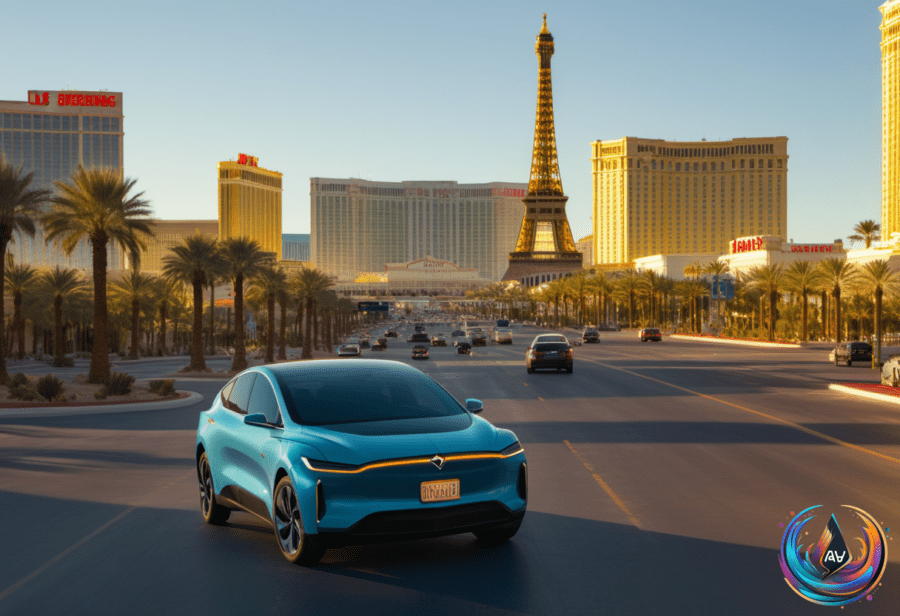
Clark County is about to become a major proving ground for autonomous transportation. On August 20, 2026, the Nevada Transportation Authority approved permits for Tesla, Uber, and Waymo to operate commercial robotaxi services, creating room for up to 8,000 autonomous vehicles over the next 12 months.
The permits set the stage for a huge expansion across the county, but the companies may not fill every space they received. Testimony from Tesla and other companies suggests their real deployments will stay below the approved limits, turning the next year into a measured rollout rather than an instant flood of robotaxis.
Three Companies, Thousands of Approved Vehicles
Tesla received the largest permit, with approval to deploy up to 5,000 robotaxis. Waymo can operate up to 1,000 autonomous vehicles over the next year, while Uber received approval for 1,000 robotaxis through partnerships with Hyundai subsidiary Motional and Zoox.
Those numbers add up to the potential for 7,000 vehicles from the three newly approved operations. The overall figure of up to 8,000 robotaxis across Clark County also includes the broader deployment allowed under the permits and existing autonomous vehicle operations.
Zoox already holds an autonomous vehicle network company permit that allows it to operate 100 robotaxis. That permit gives the company a separate place in Nevada’s expanding autonomous transportation system, alongside its role as an Uber partner.
Tesla’s approved ceiling may look enormous, but Eric Early, Tesla’s Cybercab chief engineer, made clear that the company does not expect to reach it within the next year. “The 5,000 has always been a ceiling for us,” Early said.
He also set a more limited target for the coming year: “I don’t think we’ll be in a position by this time next year to deploy 5,000 vehicles, and it’s not [because of] the technology. … I think we would be extremely happy and satisfied if we could get ourselves up to 2,500, maybe a bit higher than that in the next year.”
Las Vegas Roads Become the Next Battleground
The permits will bring more attention to areas where autonomous vehicle testing already takes place. Most AV testing has occurred in the Golden Triangle area between the airport and Las Vegas Boulevard, a central part of Clark County’s transportation network.
Motional is testing in the downtown area and in a shopping district known as Town Square. Those locations give the companies different environments for autonomous operations, from the Golden Triangle to downtown streets and a busy shopping district.
The scale of the approved permits has also raised questions about how many robotaxis Nevada’s roads and commercial transportation market can handle. Kimberly Maxson-Rushton, a lawyer representing the Livery Operators Association, warned that the applications create two major concerns.
“These applications raise two grave concerns. One deals with the oversaturation of the commercial transportation industry as a whole in Nevada. And the second one deals with the overcrowding of the roadways, and specifically the Golden Triangle,” Maxson-Rushton said.
Her concerns place the focus on what happens beyond the technology itself. A robotaxi network must fit into existing roads and commercial transportation services, and the Golden Triangle could face the most pressure if multiple operators expand in the same area.
Uber Pushes a Hybrid Robotaxi Network
Uber is not proposing a future built only around autonomous vehicles. The company advocates for a hybrid approach that keeps human drivers and robotaxis operating on the same network, giving riders access to both types of service.
Uber has lobbied for a system requiring robotaxis to operate through a ride-hailing network that also uses human drivers. During the Nevada Transportation Authority meeting, Uber made its case for gradually integrating autonomous vehicles to meet peak demand.
Sarfraz Maredia, Uber’s global head of Autonomous Mobility & Delivery, represents the company’s position as Uber moves into a market where partnerships will shape its robotaxi service. Its approved 1,000-vehicle operation will rely on Motional and Zoox, while human drivers remain part of the same network.
That hybrid model could give Uber a way to expand service without depending on robotaxis alone. It also creates a direct test of how autonomous vehicles and human-driven cars can share one ride-hailing system during periods when demand rises.
Nevada’s decision now puts Tesla, Uber, and Waymo on the same commercial stage in Clark County. The next 12 months will show how many vehicles each company deploys, how the services fit into existing transportation, and whether the region can absorb the robotaxi expansion without overcrowding its roads.
Based on