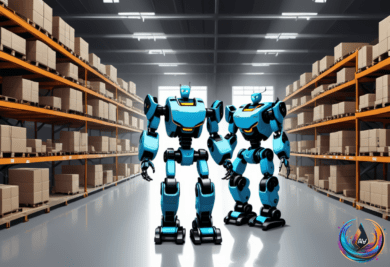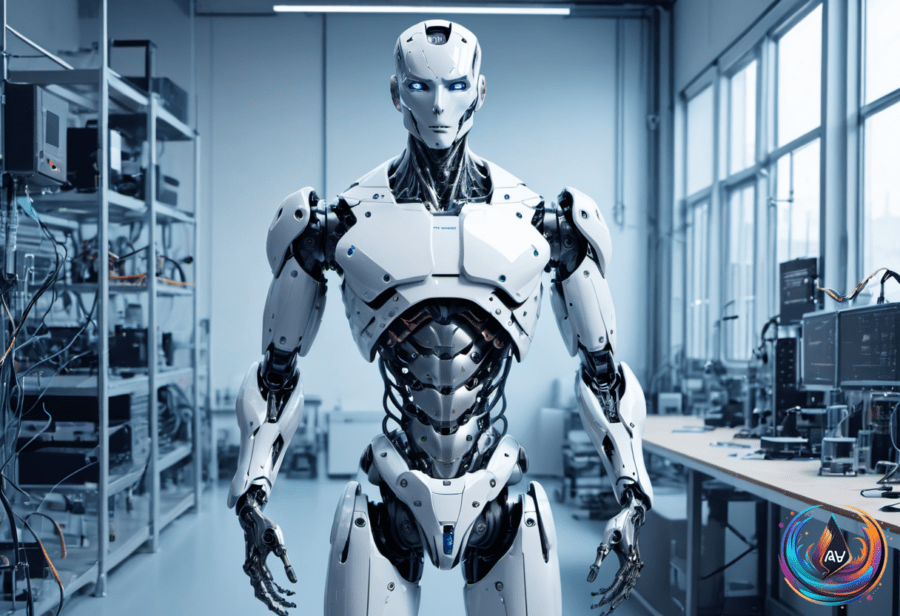
A new player in humanoid robotics is gearing up to enter defense markets. Foundation Future Industries, founded in 2024, is testing its humanoid robot, Phantom MK1, with Ukrainian forces. The company hints at kinetic weapons developments set to debut within months.
Eric Trump holds dual roles at Foundation as an investor and chief strategy adviser. Known more for his hands-on engineering hobbies like milling at home, he praises the robot’s interactive features—fist bumps, high-fives, and command-following. He sees broad potential from industry to military and hospitality. Donald Trump Jr. and Eric Trump are passive minority investors with no day-to-day control or contract dealings.
Foundation acquired Boardwalk Robotics shortly after launching. That acquisition brought millions in existing government contracts, mainly inherited from Boardwalk and the Institute for Human and Machine Cognition. However, Foundation has yet to secure new government contracts independently.
The US humanoid robot market hit $3.22 billion in 2025 and is projected to explode to $122.83 billion by 2035. Analysts predict a 43.83% compound annual growth rate between 2026 and 2035. Investment hotspots include precision actuators, tactile sensors, robot-grade batteries, and scalable manufacturing processes. Humanoids require dozens of actuators to operate legs, arms, torso, and hands. Yet, they still struggle with perception, navigation, and physical manipulation. Robotics pioneer Rodney Brooks expects reliable humanoid operation in complex environments will take more than a decade.
Meanwhile, Hyundai aims to accelerate humanoid commercialization. The automaker plans to acquire Softbank’s remaining 9.9% stake in Boston Dynamics for roughly $325 million. Hyundai bought an 80% stake in 2020 and aims to produce up to 30,000 Atlas robots annually by 2030 at its Georgia plant. Initial Atlas tasks will be logistics and welding, scaling to complex jobs later. Hyundai partners with NVIDIA and Google DeepMind to develop Atlas and build an end-to-end AI robotics chain to speed validation and commercialization.
Trump family investments extend beyond robotics. Their defense tech companies have earned at least $3.2 billion in government business since their involvement, mostly from SpaceX and Anduril contracts. Ten of 15 Trump-linked firms were already government contractors before their investment. The Pentagon, White House, and Trump Organization insist no unfair advantages occurred.
Notable Trump-backed companies include Hadrian, Vulcan Elements, and Firehawk Aerospace. Vulcan secured a $620 million Defense Department loan last November, reportedly requested by a White House adviser. Trump Jr. is a partner at 1789 Capital, which invested in Vulcan, but he had no role in the loan process. Trump family assets are managed by third-party institutions, insulating them from direct management or government dealings.
On the tech front, President Trump’s ventures include a crypto company with major UAE royal investors. The White House approved UAE entities to access American AI chips. Another royal’s firm partly owns TikTok’s U.S. operations. Defense spending is set to surge nearly 50%, reaching its highest level since World War II, laying fertile ground for all these robotics and defense investments.
Based on
- A Humanoid Company Backed by Eric Trump Is Preparing Its Robots for War — wired.com
- The US$58.9 Billion Humanoid Robot Opportunity Starts with Actuators, Sensors, and Batteries | Says DataM Intelligence | Markets Insider — markets.businessinsider.com
- Hyundai Reportedly Looking To Take Total Control Of Robotics Giant Boston Dynamics — engadget.com
- Wash. Post: ‘Trump’s sons invest heavily in defense tech as father’s administration pours money in’ | CNN Politics — cnn.com
- Trump is boosting military spending. Companies backed by his sons are earning billions from it | The Independent — independent.co.uk