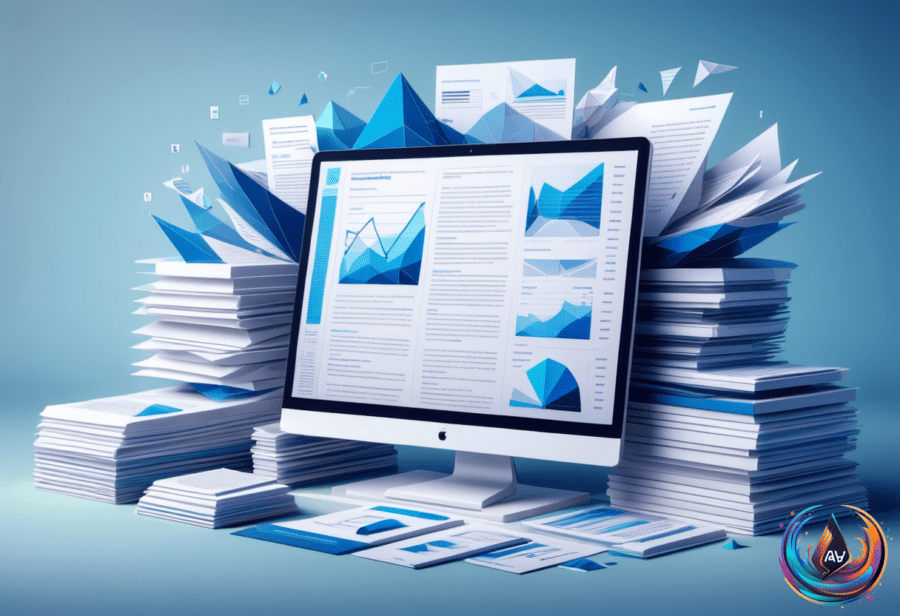
Text recognition just got a massive upgrade. The new PP-OCRv6 model family is here to crush real-world challenges. Whether it’s documents, screenshots, industrial labels, or scene text, this lineup handles it all. And it does so across 50 languages! This isn’t just an upgrade—it’s a leap forward for Optical Character Recognition.
Powerful, Scalable OCR for Any Use Case
PP-OCRv6 comes in three sizes: tiny, small, and medium. These models range from a lightweight 1.5 million parameters to a hefty 34.5 million. The medium model hits an impressive 86.2% detection Hmean and 83.2% recognition accuracy on official benchmarks. That’s a jump of +4.6 and +5.1 percentage points over the previous PP-OCRv5_server. That means clearer, faster, and more accurate text reading.
What makes it so sharp? The entire family shares a unified backbone called PPLCNetV4. This network handles both text detection and recognition. The detection module uses RepLKFPN, a lightweight large-kernel feature pyramid network. It spots text at different scales while keeping inference fast and efficient.
On the recognition side, PP-OCRv6 employs EncoderWithLightSVTR. This module blends local context modeling with global attention. The result? It reads tricky text crops with higher precision. This combo powers the model to tackle complex layouts and fonts with ease.
One Model, 50 Languages, Endless Possibilities
Here’s the kicker: the small and medium tiers support 50 languages within a single model. That includes Simplified and Traditional Chinese, English, Japanese, plus 46 Latin-script languages. No need to juggle multiple OCR models for multilingual projects. This simplifies deployment and cuts costs.
PP-OCRv6 models work seamlessly with multiple inference backends. You can run them on Paddle Inference, ONNX Runtime, or Transformers. Plus, the models are downloadable from a public repository. They convert smoothly to ONNX format using PaddleX and paddle2onnx. Conversion logs confirm flawless ONNX exports.
Developers get full support for RapidOCR inference, with example code for both Paddle and ONNX models. This opens doors to embedded applications, cloud services, and custom pipelines. Lightweight and versatile, PP-OCRv6 fits everywhere.
Meet PaddleOCR-VL-1.6: The Document Parsing Marvel
Beyond OCR, there’s PaddleOCR-VL-1.6. This 0.9 billion parameter document parser tackles complex content extraction. It pulls text, tables, formulas, charts, and seals from documents across 109 languages. That’s a serious multilingual powerhouse.
PaddleOCR-VL-1.6 pairs a layout detector with a vision-language model of equal scale. Its dynamic-resolution image encoder teams up with the small ERNIE-4.5-0.3B language model. This combo understands document structure and content at a deep level.
On OmniDocBench v1.6, it scored 96.33%. That’s the top spot on the leaderboard. It outruns Gemini 3 Pro at 92.91%, GPT-5.2 at 86.59%, the massive 235B-parameter Qwen3-VL at 89.78%, and MinerU2.5-Pro at 95.75%. This proves that size isn’t everything; smart design wins.
Even better, PaddleOCR-VL-1.6 is compact enough to run locally. You don’t need a giant cloud model or a pricey per-page API. Quantized builds operate inside tools like Ollama and LM Studio. Its Apache 2.0 license lets you fine-tune and deploy commercially. This opens document AI to startups and enterprises alike.
The model’s improvements come from smart fixes. The team hunted down weak spots, rare layouts, and mislabeled training data. They cross-checked with independent parsers like MinerU2.5-Pro. Reinforcement learning refined the model further, making it robust across diverse document types.
What’s Next for OCR and Document AI?
PP-OCRv6 and PaddleOCR-VL-1.6 deliver powerful, efficient, and multilingual solutions. They push OCR and document parsing to new heights. Developers can now build smarter apps that understand text and documents worldwide.
Imagine scanning industrial labels in multiple languages with one model. Or parsing complex legal, scientific, or financial documents without cloud dependency. The future of text AI is here, compact and open source.
Evaluate PP-OCRv6 online and integrate lightweight, production-ready OCR into your projects. Combine it with PaddlePaddle, Transformers, or ONNX Runtime. The tools are ready. The models are open. The multilingual revolution has begun.
Based on