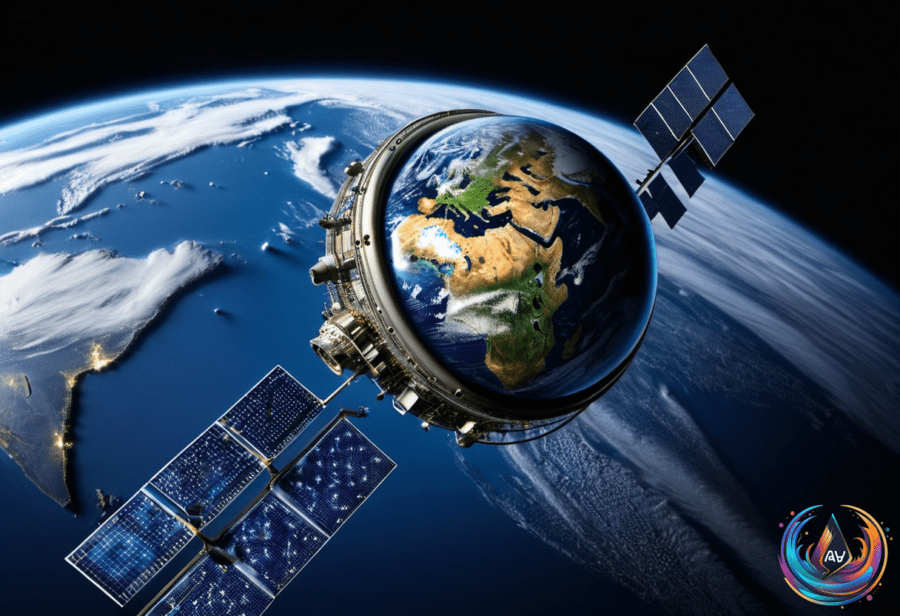
The Federal Communications Commission has given the green light to Reflect Orbital’s plan for a sun-reflecting satellite. The device, named Earendil-1, will bounce sunlight down to Earth during nighttime.
Earendil-1 uses a thin, highly reflective film that can be adjusted to aim light precisely. It also has a built-in propulsion system to control its position in orbit. The satellite will only reflect sunlight at preset times and will alert researchers beforehand. It promises to avoid shining light near observatories and protected zones.
Despite these safeguards, the American Astronomical Society is not pleased. They argue the satellite’s brightness will disrupt astronomical research. “This application is fundamentally different from telecommunications satellites,” they stated. “It is designed to be as bright as possible, making impacts on astronomical research extremely challenging to mitigate.” The FCC, however, dismissed these concerns. It cited the Communications Act’s mandate to encourage new technologies and services for the public.
Meanwhile, NASA launched the Swift Boost mission on July 3 at 4:36AM Eastern time from the Marshall Islands. Its job is to rescue the Neil Gehrels Swift Observatory, a gamma-ray telescope that is losing altitude faster than expected. Without help, the observatory would fall from orbit by year’s end.
The rescue craft, named LINK, was sent up attached to a Pegasus XL rocket launched from the Stargazer plane. After release at 40,000 feet, the rocket fired to deliver LINK to orbit. LINK has powered on successfully and will undergo system checks before approaching Swift. It will dock using three robotic arms and then tug the observatory to a higher orbit of about 370 miles over 10 to 12 weeks.
Swift has studied gamma-ray bursts for over 20 years. These bursts are intense flashes of high-energy light, releasing more energy in seconds than the sun will in its lifetime. Swift acts as a cosmic first responder, quickly gathering crucial data on these explosive events thought to come from colliding or dying stars.
While these missions unfold, SpaceX continues to expand its Starlink constellation. In the first half of 2026, it launched 1,589 Starlink satellites—more than the 1,489 it deployed by this point in 2025. The company added 29 more satellites on July 9 alone. Since Starlink’s start, over 12,400 satellites have launched, with nearly 11,000 still active in orbit.
Amazon’s competing Leo satellite service has launched about 400 satellites over the past 15 months, aiming for a total of 3,232. Both companies race to blanket Earth in internet coverage from space.
Finally, a milestone was reached with the launch of the first commercial satellite powered by a nuclear payload. City Labs’ BOHR satellite lifted off aboard a SpaceX Falcon 9 from Vandenberg Space Force Base, California. The cubesat generates electricity by converting beta particles from tritium’s radioactive decay.
BOHR’s mission is to prove nuclear power can sustain long-term commercial space operations. It targets deep space and permanently shadowed areas like the Moon’s dark side. This technology isn’t new to space exploration—it powered NASA’s Voyager probes and Mars rovers—but this marks its first commercial use.
Based on
- FCC grants approval for sun-reflecting space mirror that’s been widely criticized by astronomers — engadget.com
- NASA Mission To Rescue The Falling Swift Observatory Has Launched — engadget.com
- Starlink deployments on record pace | The Verge — theverge.com
- First-ever nuclear-powered payload now in orbit after successful SpaceX launch | The Independent — independent.co.uk
- Swift: Space robot sent to rescue falling telescope – BBC Newsround — bbc.com