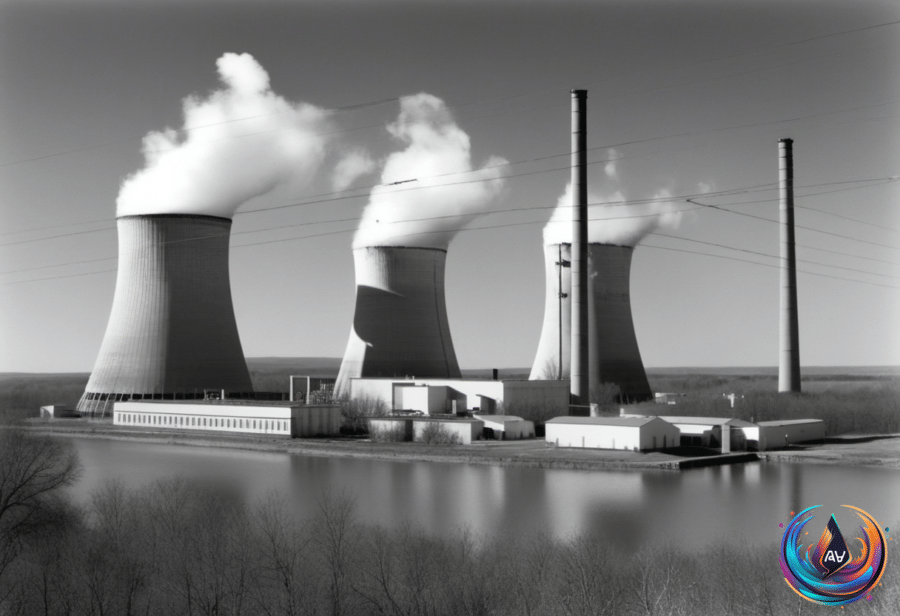
Nuclear power is looking for more from what already exists. Constellation, the largest nuclear operator in the US, plans to add nearly a gigawatt of new capacity across 11 existing reactors at six plants. The strategy avoids the grand drama of building an entirely new fleet—because apparently even nuclear plants prefer renovations when the alternative is starting from scratch.
The work is called a power uprate: upgrading equipment so an existing nuclear plant can reach a higher capacity. Constellation plans to spend more than $4.3 billion on uprates for 11 reactors, enough to power roughly 700,000 US homes.
On October 5, the Department of Energy awarded Vistra a $4.2 billion loan for upgrades at three plants. The US Department of Energy will also commit over $4 billion to help finance upgrades and modernization for Vistra nuclear power plants across Pennsylvania and Ohio, with those projects adding 433 megawatts of power capacity.
The numbers matter because the US nuclear fleet already has roughly 98 gigawatts of total power capacity. Between three and eight additional gigawatts are on the table from uprates, while the Nuclear Regulatory Commission expects applications to add 2.4 gigawatts to reactors through 2032.
Existing reactors carry the near-term burden
The uprate pipeline is larger than recent approval activity suggests. The US Nuclear Regulatory Commission approved over 80 uprates between 2001 and 2010, but approved 33 between 2011 and 2020.
The most recent major US uprate went to three reactors at the Browns Ferry nuclear power plant in Alabama. Between 2018 and 2019, the project expanded their power capacity by 14%.
Joe Dominguez described the financial challenge plainly: “These are capital intensive, labor intensive projects that require a different price point than the market trades at, frankly.” The Department of Energy’s support for Vistra and the planned Constellation spending show how much capital existing plants need before they can deliver more electricity.
That additional capacity also meets a new source of demand. PJM, the grid operator covering much of the East Coast, expects about 30 gigawatts of additional peak demand because of AI by 2030.
Canada builds new reactors while AI enters old ones
Canada is pursuing a different part of the nuclear expansion story. Ontario Power Generation received construction approval in 2025 for the Group of Seven’s first commercial, grid-scale small modular reactor, aiming to connect it to the grid by the end of 2030.
Construction on the first of four planned grid-scale units at the Darlington nuclear site began in 2025. Canada is also the world’s second-largest uranium exporter, and its nuclear industry contributes $22 billion per year to the Canadian GDP while supporting about 89,000 jobs.
In the US, artificial intelligence is being positioned as an operating tool across the existing fleet. Nearly the entire fleet of 94 US nuclear reactors has been offered the chance to integrate AI into operations, and most have taken it.
Atomic Canyon launched NIVA, the Nuclear Industry Virtual Assistant, in August. NIVA was pilot-tested in nuclear plants run by Constellation Energy, while Nuclearn’s products have gone to work with more than 65 US partners, including NuScale Power Corp.
Atomic Canyon downloaded 53 million pages of publicly available data from the Nuclear Regulatory Commission to train its AI model. Trey Lauderdale explained the approach this way: “Technically, they’re sentence-embedding models. Fancy way of saying, we taught AI how to seek the nuclear language.”
Microsoft and Nvidia collaborated on a project applying AI to optimize the entire life cycle of a nuclear plant. The Electric Power Research Institute, Oak Ridge National Laboratory, and the Institute of Nuclear Power Operations are also part of the wider group of entities connected to this nuclear-AI push.
Rob Austin said the goal was “to make decades of operating experience, hundreds of thousands literally of operating experience reports, tens of thousands of technical documents, and a whole lot of information available for people to find.” Jerrold Vincent offered the simpler version: “If you think of it as ChatGPT for nuclear, it’s actually not a bad place to start.”
The appeal is practical: more capacity from existing reactors, new small modular reactors in Canada, and AI tools aimed at turning accumulated operating knowledge into usable assistance. Lauderdale put the workforce problem bluntly: “There is absolutely no way we as an industry will be able to have this nuclear resurgence or nuclear renaissance without augmenting the capacity of this knowledge-based workforce.”
Based on