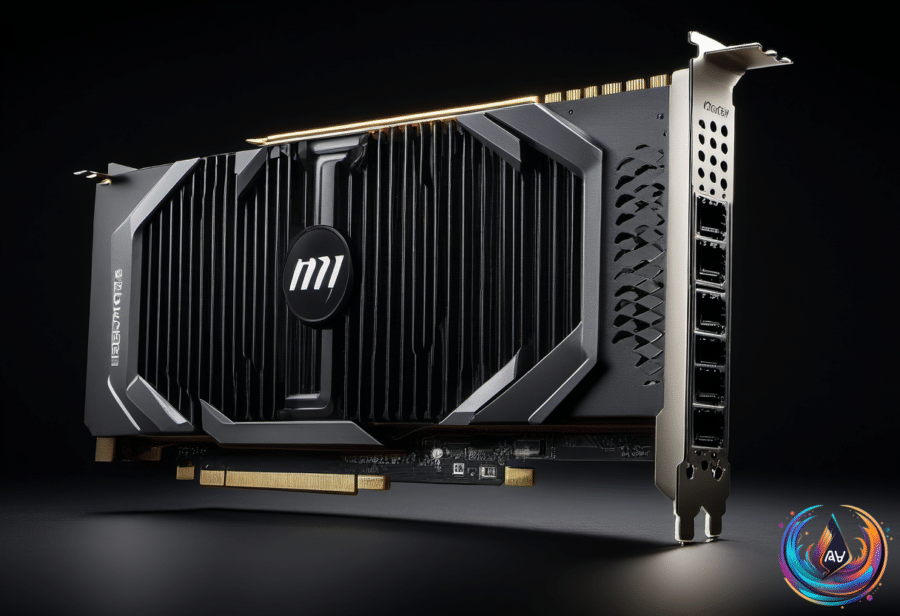
NVIDIA’s RTX PRO 6000 sits in a very different part of the market from the GeForce RTX 5090. The RTX 5090 is priced at $1,999, while the RTX PRO 6000 now costs $16,000. That makes NVIDIA’s workstation GPU about eight times the price of its top consumer graphics card.
The gap becomes more striking because the RTX PRO 6000 can outperform the RTX 5090 in some games. Testing by Tech YouTuber der8auer found the workstation card about 14 percent faster in Cyberpunk 2077, about 11 percent faster in Star Wars Outlaws and Remnant 2, and about three percent faster in Assassin’s Creed Mirage, even with NVIDIA’s workstation driver.
That gaming result does not explain the full price. The RTX PRO 6000 is built around 96GB of GDDR7 ECC memory, 24,064 CUDA cores, and a maximum board power of 600W. Its price also rose from $8,565 at launch to $16,000.
Why the RTX PRO 6000 costs so much
The key difference is memory protection. ECC memory can detect and correct errors, which matters more when a GPU handles serious number crunching or a long professional job than when someone wants a few extra frames in a game.
That feature gives the RTX PRO 6000 a role in the workstation GPU market, where long-running tasks and large data sets matter. AMD competes in that market, while NVIDIA also sells the GeForce RTX 5090 for a much lower price.
The gaming tests show that the RTX PRO 6000 has plenty of speed outside workstation tasks, but they do not turn it into a sensible $16,000 gaming purchase. Its performance advantage ranges from about three percent to 14 percent in the listed games, while its price is about eight times the RTX 5090’s original $1,999 price.
That is the central tradeoff: buyers are paying for a combination of memory capacity, error correction, CUDA core count, and workstation positioning, not only for higher game frame rates.
Apple’s Mac Studio reaches the same price range
Apple’s Mac Studio (M5 Ultra) shows how much computing hardware can cost when it targets demanding work. The computer has a base price of $5,500, while the top configuration costs $11,299. That version includes 2TB of storage, 256GB of RAM, and a 36-core processor.
The M5 Ultra offers up to a 36-core CPU, an 80-core GPU, and a 32-core neural engine, with memory options of 96GB, 256GB, and 512GB. Apple also sells the Mac Studio M5 Max with up to an 18-core CPU, a 40-core GPU, and a 16-core neural engine; its top-end configuration costs $5,899.
For comparison, the Mac Studio M3 Ultra with 32 cores, 256GB of RAM, and 2TB of storage costs $7,499. The M5 Ultra therefore reaches a price close to the RTX PRO 6000, but it combines CPU, GPU, neural engine, memory, and storage in one computer rather than selling one graphics card.
The performance figures reflect that broader design. The Mac Studio M5 Ultra scored 52,185 in multi-core CPU Geekbench 7 testing, while its Geekbench 6 single-core score ranked among the highest seen, just below the Mac Mini M6.
Its disk speeds reached 14GB/s for writes and 11GB/s for reads. In one test, a nine-minute 4K timeline with mostly 8K H.256 footage exported in one minute and 13 seconds, compared with well over eight minutes on a MacBook M3 Pro.
Designed for large media and AI workloads
Apple claims the M5 Ultra can play eight 8K 30 fps ProRes tracks at once in real time. It can also play four 7K RAW tracks with extensive color correction at the same time. Those figures show where the computer’s extra processing power and memory can matter.
The machine also transcribed a 70-minute podcast in 18 seconds using Mac Whisper. Apple claims that four Mac Studio M5 Ultra machines linked into a cluster can process AI three times faster than one machine.
Gaming is still possible. The Mac Studio reached more than 80 frames per second at 4K 60 fps in Baldur’s Gate III. But its feature list points toward video production, audio transcription, and AI processing rather than a single focus on gaming.
The RTX PRO 6000 and Mac Studio M5 Ultra reveal two versions of expensive computing hardware. NVIDIA’s card concentrates its cost in GPU cores, 96GB of GDDR7 ECC memory, and a 600W board. Apple’s desktop spreads its price across a 36-core CPU, 80-core GPU, 32-core neural engine, large unified memory options, and fast storage.
Both products can deliver gaming performance, but their prices make more sense when viewed through their workstation and production tasks. For buyers who need those capabilities, the hardware offers tools built for long, demanding workloads. For everyone else, the RTX 5090 and lower-priced Mac Studio configurations remain the less expensive choices.
Based on