OpenAI plans to keep building artificial intelligence infrastructure even as voters push back against new data centers. CFO Sarah Friar said the midterm election results did not change the company’s direction because customer demand remains strong and OpenAI needs more computing power for its services and models.
“The demand for AI is real,” Friar said. “I don’t think anyone’s arguing with that, or if they are, I think it’s a losing argument.” She said OpenAI will continue investing while it raises capital, builds relationships with hyperscalers, and moves toward a possible public debut.
Voters raise concerns about data center growth
Tuesday’s voting showed how difficult that expansion may become. Across 41 local ballot measures in 10 states, voters backed restrictions or rejected pro-development proposals in all but one case. Opposition grew over the summer as residents worried that new facilities could harm the environment, raise utility bills, and contribute to job loss.
OpenAI depends on data centers to train its models and serve customers, so the company cannot separate its business plans from the local debate. Friar said the election results did not dramatically change anything for OpenAI, but she acknowledged that communities now want more information and a stronger voice in how these projects develop.
“If the midterm means more focus on data centers and communities, we’re going to keep doing the work to get into those communities and to build trust with them,” Friar said.
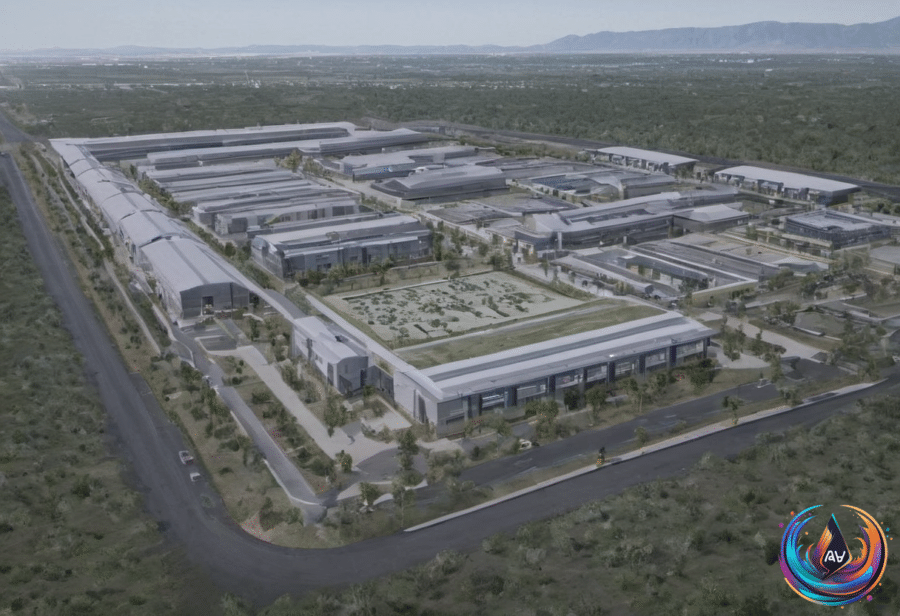
OpenAI has started calling its data-center buildings “compute campuses.” The company says the term reflects a broader economic role, with specialized equipment, hardware upgrades, skilled workers, and local suppliers extending beyond the buildings themselves. The rebranding has drawn criticism, though, with brand strategist Allen Adamson saying, “You can’t rename your way out of a problem.”
New promises on power, water, and noise
On Thursday, OpenAI published a policy blueprint and a National Community Compact for company-owned and operated facilities. The commitments include publishing construction plans, commissioning independent noise studies, and reporting water and electricity use. OpenAI also says public officials will not have to sign nondisclosure agreements during discussions, except for narrow protections involving security, trade secrets, and other sensitive information.
The company has promised to pay its own electricity costs and the additional infrastructure needed to serve its sites. It also says it will provide financial assurances to protect other customers if a project is delayed, reduced, or canceled. Friar said OpenAI has promised it will never raise a community’s electricity bill and can sometimes work with utilities to help invest in the power grid.
Water is another central concern. Friar said a large data center footprint uses about the amount of water found in two Olympic swimming pools, which OpenAI trucks in. She said most of that water is used by people working in the facilities.
Noise controls and local benefits are part of the company’s pitch as well. Friar said OpenAI plans to build a 300-foot-high berm around a Georgia data center to control noise. In Georgia, OpenAI has also invested in free school lunches, and the company says kids eating lunches and breakfasts rose 70 percent. OpenAI is building a park and holding an AI summit for small businesses there.
OpenAI says it has committed $80 million beyond tax payments in Effingham County, Georgia, including a $4.8 million grant for free school meals for all 14,000 county students. In Pike County, Ohio, OpenAI and SB Energy have made a joint $6 million commitment after families identified childcare as a priority.
“You have to go meet communities where they are,” Friar said. “You have to listen, learn. You have to set a plan and then be accountable.”
Capital, customers, and a possible 2027 IPO
The infrastructure push comes as OpenAI builds a larger business. Friar said the company had a breakout third quarter, with the business growing 70 percent quarter over quarter and its enterprise business doubling quarter over quarter. She described the company as balanced, with 50 percent of its business coming from consumers and 50 percent from enterprises.
Friar said 1.2 billion people across the globe come to OpenAI every week to get things done. J.P. Morgan Chase joined as a customer in the third quarter, with a focus on areas such as cyber. Cisco used OpenAI technology to put together its road map 20 percent faster and save thousands of hours each month on coding.
OpenAI’s enterprise growth also supports its demand for computing power. Friar said about 40 percent of what people ask ChatGPT to do goes beyond their formal job descriptions, while 90 percent of the tasks handled by her finance team are agentic in nature.
The company is also looking for more funding. OpenAI is in talks to raise money at a $1.25 billion pre-money valuation, and Friar said the round is ongoing. “A good CFO always raises money when she can,” she said.
OpenAI confidentially filed its prospectus with the Securities and Exchange Commission in June, and Friar said Friday that the company would continue looking into a 2027 debut. Anthropic, OpenAI’s chief rival, is trying to go public first with a goal of reaching the Nasdaq in mid-November. Anthropic’s revenue reached $33.2 billion in the first nine months of the year, up roughly 1,200 percent, while its purchase commitments and lease agreements totaled about $895.4 billion, substantially all tied to computing and infrastructure.
For OpenAI, the message is direct: demand for AI is driving a need for more data centers, but communities want proof that they will share in the benefits and avoid the costs. Friar summed up the company’s position by saying, “At OpenAI, we’re building a durable, strong business.” The next test will be whether its promises can build enough trust to match that ambition.
Based on
- OpenAI CFO Says Data-Center Buildout Will Continue After Midterms — unite.ai
- OpenAI investing in AI data centers despite election results, CFO says — cnbc.com
- CNBC Exclusive: Transcript: OpenAI CFO Sarah Friar Speaks with CNBC’s Sara Eisen on “Squawk on the Street” Today — cnbc.com
- Watch CNBC’s full interview with OpenAI CFO Sarah Friar — cnbc.com
- OpenAI turns on the charm after voters turned on data centers | Fortune — fortune.com