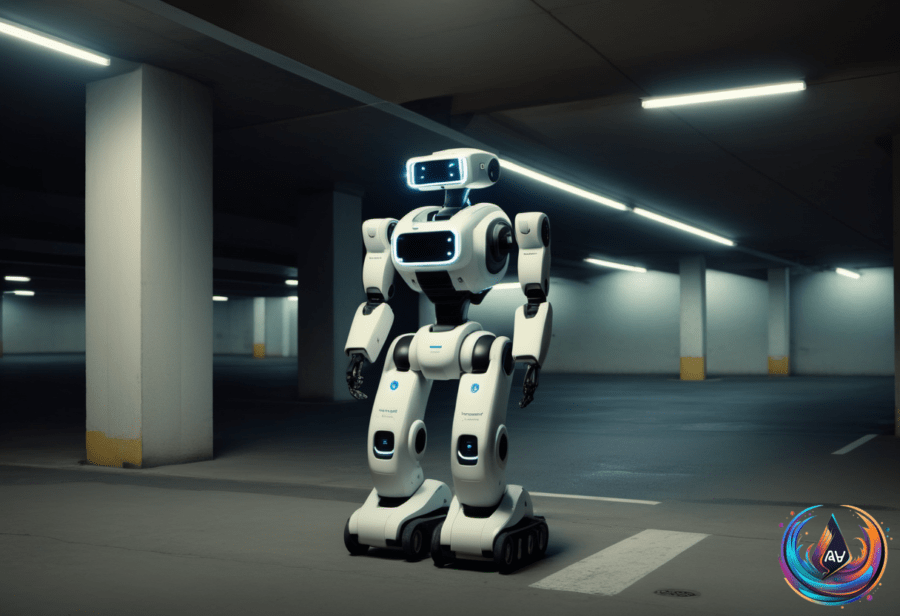
The city of Dublin, Ohio, invested over $67,000 in an autonomous security robot named the K5. This robot stands about 1.5 meters tall and weighs around 400 pounds. It is equipped with 360-degree cameras and emergency call buttons. It was designed to patrol spaces like parking garages to prevent crime through constant monitoring.
The K5 began its patrols in the Rock Cress parking garage in July 2025. It used LIDAR sensors, computer vision, and anomaly detection to scan the environment and spot suspicious behavior. The idea was to have a machine that could watch over public spaces, spot trouble, and alert human security officers.
But after nearly a year on duty, the results were clear: the robot didn’t make a single arrest, issue a citation, or report any incident. Dublin police decided the K5 “did not meet operational needs.” They returned the robot to its maker, Knightscope, on June 21, 2026. A police spokesperson explained, “He did not help detain a single person and did not issue a single fine.”
Dublin had budgeted $238,440 for two of these robots over two years. That money is roughly equal to the annual salary of a police officer. After decommissioning the K5, the city received a partial reimbursement of $60,533. Still, the investment raised questions about the value of such technology for public safety.
Technology and Market Reality
The K5 is a high-tech machine. It uses LIDAR, computer vision, and algorithms to patrol autonomously. However, in practice, it still needed constant human supervision. For example, during deployment in New York’s subway system, the robot could not operate fully on its own.
This raises concerns about the current ability of autonomous security robots to replace human officers. The global security robotics market is worth about $8 billion. Despite this, robots like the K5 struggle to deliver on promises of crime prevention and public safety.
The Limits of Autonomous Security Robots
Knightscope’s K5 showed clear limits in real-world use. It failed to produce any measurable security improvements in Dublin. The robot’s presence didn’t lead to arrests or citations. It simply patrolled without triggering any actionable alerts.
This outcome highlights the challenges in using AI and robotics for public safety. Surveillance alone does not stop crime. Human judgment and intervention remain vital. The K5’s failure suggests that autonomous security robots still have a long way to go.
Dublin’s experience is a cautionary tale. Spending tens of thousands on a robot that does not improve security raises questions about where cities should invest. Until these robots can prove they add real value, police departments may hesitate to replace officers with machines.
In short, the K5 showed that smart technology alone cannot solve security problems. It needs human backup and better design to be truly effective. For now, robots like the K5 remain more of a curiosity than a crime-fighting solution.
Based on
- Failing Robot Cop Company Knightscope Now Publishing Bizarre AI Slop Fan Fiction About Its Robots Solving Absurd Crimes — futurism.com
- Why the Bull Case for Knightscope Stock Is Autonomous Security Robotics Adoption – roboticsreports.com — roboticsreports.com
- Robot Cop DubBot K5: One Year on a Parking Lot, Zero Arrests — abit.ee
- Robot police officer Dubbot has been fired. He did not catch a single criminal – BmhToday — bmhtoday.com
- Autonomous Security Robots: The K5 Failure Exposes Critical Market Limitations – Alabia Insights – Robôs, IA e o Futuro — alabia.com.br