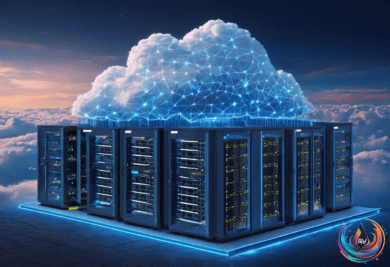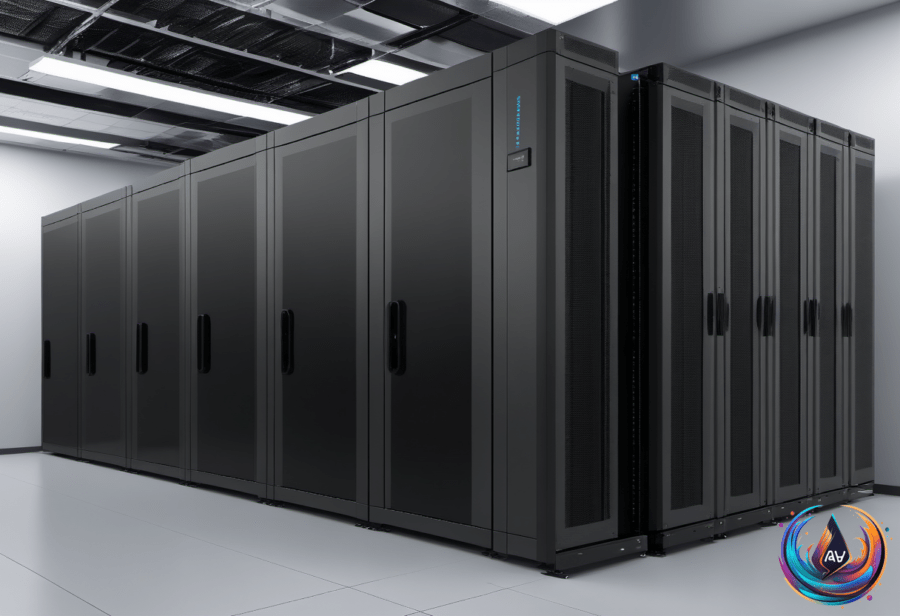
Runware just launched its Sonic Inference Pod, a modular AI data center that aims to shake up inference delivery. The pods promise higher-quality results at lower costs than popular GPU clouds and serverless platforms. Unlike typical setups, Runware’s pods rely on closed-loop cooling, ditching water entirely.
Runware already has 10 pods deployed across the U.S., Europe, and Asia-Pacific. Their network runs as a single system. If one pod goes offline, traffic reroutes to another with spare capacity. “We believe distributed compute, positioned closer to end users for faster inference, is what will win in the long term,” said Runware’s Flaviu Radulescu. Customers include Higgsfield AI and Wix.
Backing this ambition, Runware raised $50 million in Series A funding last December. Meanwhile, the AI infrastructure race is heating up. OpenAI is nearing a staggering $500 billion deal to build a mega data center in Ohio. It’s a bet on massive centralized compute power, in contrast to Runware’s distributed pods.
Workhorse Group is entering the fray with a containerized mobile AI data center. Announced on July 28, 2026, the product is still in development. CEO Scott Griffith sees this as a chance to leverage Workhorse’s expertise in power electronics, thermal management, and rugged enclosures. The company targets 2027 for initial production and deliveries.
Workhorse plans a partnership-driven go-to-market strategy for this new product line. Griffith said, “We feel this is an opportunity to build a competitive advantage and develop a new revenue stream in this exciting new category.” The company also expects the move to boost cash flow and help lower production costs of its electric trucks.
The containerized data center market is projected to hit $41 billion by 2031. Demand stems from faster deployments, site flexibility, 5G rollouts, edge and AI workloads, disaster recovery, and energy efficiency. The race is not just about size, but adaptability and location.
On the other end of the spectrum, NTT Data is set to spend at least $9 billion through 2033 to quadruple its computing capacity in Japan. That means adding roughly 750 megawatts over seven years. The planned investment totals at least ¥1.5 trillion ($9.6 billion). This is a massive bet on expansion in a mature market.
China’s DeepSeek is planning a giant AI data center in Inner Mongolia, aiming for one gigawatt of compute capacity. They hope to bring part of it online by the end of 2027 or early 2028. This project signals China’s ambition to build large-scale AI infrastructure rapidly.
Ready Server recently completed a pilot for full-immersion liquid cooling at a data center in Singapore. Cooling remains a critical challenge as AI workloads grow. Runware’s approach sidesteps water, while others explore immersion techniques to keep systems efficient.
Between small, mobile pods and sprawling facilities, the AI data center landscape is fracturing. Runware’s pods represent the future of distributed, flexible compute. OpenAI’s Ohio mega-center and DeepSeek’s Inner Mongolia project show there’s still appetite for scale. Workhorse’s mobile containers add a rugged, versatile middle ground.
Running inference faster and closer to users is crucial. Demand outpaces facility construction. Radulescu said, “Demand for inference is growing faster than facilities can be built.” That gap fuels innovation in form factor and deployment speed. The question is which model will dominate when AI workloads explode further.
Based on
- Is the future of data centers portable? Runware builds a pod to find out — techcrunch.com
- Workhorse Group Announces Planned Entry into Mobile AI Data Center Category | Markets Insider — markets.businessinsider.com
- NTT Data said to eye ¥1.5 trillion outlay for Japan data centers – The Japan Times — japantimes.co.jp
- DeepSeek is developing massive AI data center in Inner Mongolia – The Japan Times — japantimes.co.jp
- Ready Server Pilots Full-Immersion Cooling to Prepare Singapore Facility for AI-Ready Compute Services | AP News — apnews.com