Q-CTRL has raised $290 million.
The company announced its Series C round on November 12, 2026, with Salesforce Ventures leading the deal. The funding will expand Q-CTRL’s AI-driven quantum infrastructure software and widen global deployment of navigation systems designed to operate without GPS.
Bullhound Capital and Affinity Partners also made significant investments. Q-CTRL described the oversubscribed round as the largest quantum-sector fundraise for a software-focused business, after expanding it twice to meet investor demand.
That is a substantial claim in a sector fond of expensive hardware and futuristic promises. Q-CTRL is putting its capital behind the less glamorous problem: making quantum machines produce useful results outside controlled demonstrations.
Software Between Quantum Hardware and Useful Results
Q-CTRL’s software platform applies AI to the control of quantum machines and is designed to work across hardware systems. The company is targeting two operational problems: improving the useful output of quantum computers in data centers and integrating sensitive quantum sensors into vehicles for commercial aviation and autonomous systems.
Robert Keith, a Salesforce Ventures partner, framed the investment around that practical bottleneck. “The hard problem in quantum is not building the machine, it is getting useful output from it.”
Keith identified Q-CTRL’s AI-powered control software as the company’s answer. He pointed to a materials simulation on IBM hardware available through the IBM Quantum Platform, along with a quantum navigation system qualified for safety of flight.
The combination gives Q-CTRL a software base for two markets that rarely share a product pitch: enterprise quantum computing and vehicle navigation. The round gives the company capital to pursue both from that common foundation—an efficient arrangement, assuming the technology keeps delivering outside the presentation deck.
Ironstone Opal Takes Quantum Navigation Into the Field
Q-CTRL’s navigation system is called Ironstone Opal. It is designed for environments where GPS is unavailable or denied, and Q-CTRL says the system is unjammable, unspoofable and undetectable.
The company also says its software ruggedization keeps sensitive quantum sensors working in field conditions and enables them to perform 100 times better than the best alternative. That capability matters because quantum sensors are only useful to an aircraft, autonomous platform or drone if they survive the conditions those systems face.
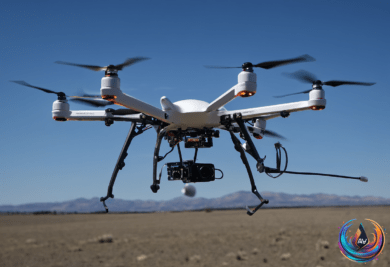
Ironstone Opal is being deployed on commercial aircraft with Airbus and on autonomous platforms with Lockheed Martin. The system is also being deployed on unmanned drones, extending Q-CTRL’s stated navigation work across aviation and autonomy.
Q-CTRL plans to deepen its software-first capabilities while scaling globally to meet customer demand in sectors including finance and energy. It will continue major autonomy and aerospace programs and expand global deployment of its quantum navigation systems.
The investor list is built for that expansion. New investors include Affinity Partners, AMD Ventures, EDGE Group, MPower Partners, Australia’s National Reconstruction Fund Corporation and SPARX Asset Management.
Returning backers include DCVC, In-Q-Tel, Lockheed Martin Ventures, Main Sequence and Square Peg. Q-CTRL said the mix of strategic corporate venture, private equity and growth-stage venture capital could support joint sales, technology integration and direct revenue generation.
Founder and CEO Michael J. Biercuk linked the syndicate’s backing to Q-CTRL’s technology, revenue growth and strategic alignment across AI and aviation. He also presented infrastructure software as the company’s route to customer value from quantum technology.
The commercial path now depends on extending existing aerospace and autonomy deployments and turning the investor group’s potential sales and technology-integration channels into broader customer adoption. The money supplies room to scale; the deployments will determine whether Q-CTRL has built infrastructure or simply found a more polished way to describe a quantum bet.
Based on
- Q-CTRL Raises $290M Series C to Scale AI-Driven Quantum Software — unite.ai
- Quantum software startup Q-CTRL raises $290M Series C — axios.com
- Catching rogue AI and preventing cyberattacks—could quantum computing have its ‘ChatGPT moment’ | Fortune — fortune.com
- LTM Brings AI-Powered Quantum Error Mitigation to IBM Quantum Functions Catalog | AFP.com — origin-zh9p7m-www.afp.com
- Quanome Enters into Agreement for Strategic Investment in QAI Labs, Advancing Quantum Life Sciences Strategy | Markets Insider — markets.businessinsider.com