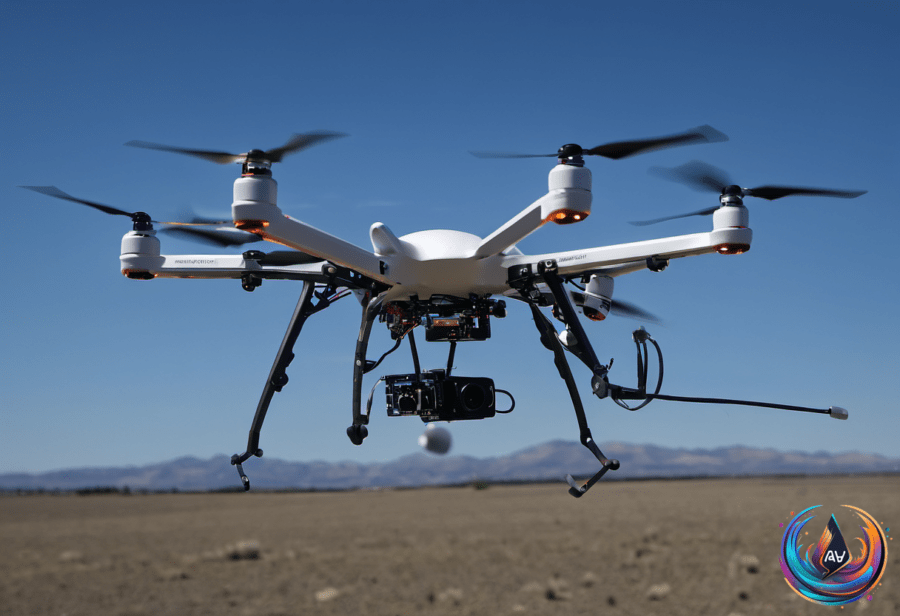
Quantum Cyber is opening the door to a new hardware race: the company wants manufacturing partners to build the first working prototype of a quantum-photonic antenna for secure unmanned aerial systems. The call reaches beyond traditional factories, inviting foundries and applied-R&D organizations to help turn licensed quantum technology into an operating unit.
Applications are due by September 18, 2026, after Quantum Cyber announced the request on September 4. The Nasdaq-listed company plans to review submissions and invite selected respondents into controlled technical exchanges, setting the stage for a focused development program with partners that can move from design to hardware within six months.
A Quantum Layer for Contested Communications
Quantum Cyber N.V., an autonomous defense technology company, is pursuing an antenna designed for unmanned aerial systems operating in contested and denied environments. The licensed quantum-photonic system aims to support resilient, frequency-agile communications, giving drones an alternative secure quantum communication frequency for navigation and communication.
That mission targets one of the hardest problems facing drone operations: maintaining reliable positioning and communications when familiar systems cannot be trusted. Quantum Cyber CEO David Lazar described the production goal in direct terms: “The production of the Quantum Antenna is intended to allow Drones to navigate and communicate on an alternative secure Quantum communication frequency. We are trying to solve one of the biggest obstacles on the battlefield today, which is building alternative technology for secure reliable Global Positioning System (GPS).”
The technology comes through Quantum Cyber’s exclusive worldwide Intellectual Property License Agreement with Project LightShift, Inc., the holder of the quantum-photonic antenna license. The agreement was executed on June 11, 2026, giving the company the licensed foundation for its prototype effort.
“Executing the Project LightShift license in June was our first public commitment that the quantum layer of our platform would be real. Today’s call for applications is the second,” Lazar stated.
From Feasibility to a Working Unit
Quantum Cyber is not asking partners to solve one isolated manufacturing step. The planned prototype program covers the full path from early assessment to a tested piece of hardware, with the company seeking organizations that can contribute across several stages.
- Feasibility assessment
- Process definition
- Design-for-manufacture review
- Fabrication and packaging
- Testing and characterization
- Delivery of at least one operating unit
Partners capable of completing the prototype development within six months are preferred. That timeline places pressure on every phase, from selecting a workable process to packaging the antenna and proving its performance through testing and characterization.
“We are actively looking for manufacturing partners — factories, foundries, and applied-R&D organizations — and we are inviting them to apply,” Lazar said. The company’s stated goal is to deliver at least one operating unit and demonstrate that a quantum-photonic antenna can be built.
That demonstration matters because the project must move quantum technology from a licensed concept into a physical component that can operate inside a drone communication system. The application process will help Quantum Cyber identify partners with the manufacturing capacity and technical skills needed for that transition.
Quantum Infrastructure Meets a Growing Drone Push
Quantum Cyber’s prototype effort arrives as its Bridgeport, Connecticut manufacturing complex has moved into operation. The site completed its first mini-interceptor drone on-site, while an 80-unit 3D printing drone production farm advances toward commissioning.
Those activities place the quantum antenna project inside a broader manufacturing push for autonomous defense technology. The U.S. Department of Defense FY2027 Budget Request allocates approximately $55 billion toward drone and autonomous warfare programs, creating a major public funding backdrop for systems built around unmanned platforms.
Quantum technology is also gaining physical infrastructure in Europe. The Novo Nordisk Foundation, owner of Quantum Foundry Copenhagen, has committed more than DKr2.9bn ($451m) to quantum technology initiatives. Its new quantum chip fabrication facility in Copenhagen spans 5,300m² and is scheduled to open in 2027, while the European Commission is involved in strategic initiatives for quantum technology.
These developments point to a growing focus on the hardware needed to make quantum systems useful. For Quantum Cyber, the immediate challenge is narrower and more concrete: find the right manufacturing partner, build the antenna, test it, and deliver a working unit.
The September 18 deadline now sets the next milestone. If the application process produces a partner able to meet the six-month preference, Quantum Cyber will have a path toward testing whether its licensed quantum-photonic technology can support secure, frequency-agile drone communications in the environments where conventional systems face their toughest test.
Based on
- Novo Nordisk Foundation backs new quantum chip plant in Copenhagen — techmonitor.ai
- Quantum Cyber Invites Qualified Foundries, and Prototype-Development Partners to Apply for Its Quantum-Photonic Antenna Manufacturing Program; Responses Due September 18, 2026 | Markets Insider — markets.businessinsider.com