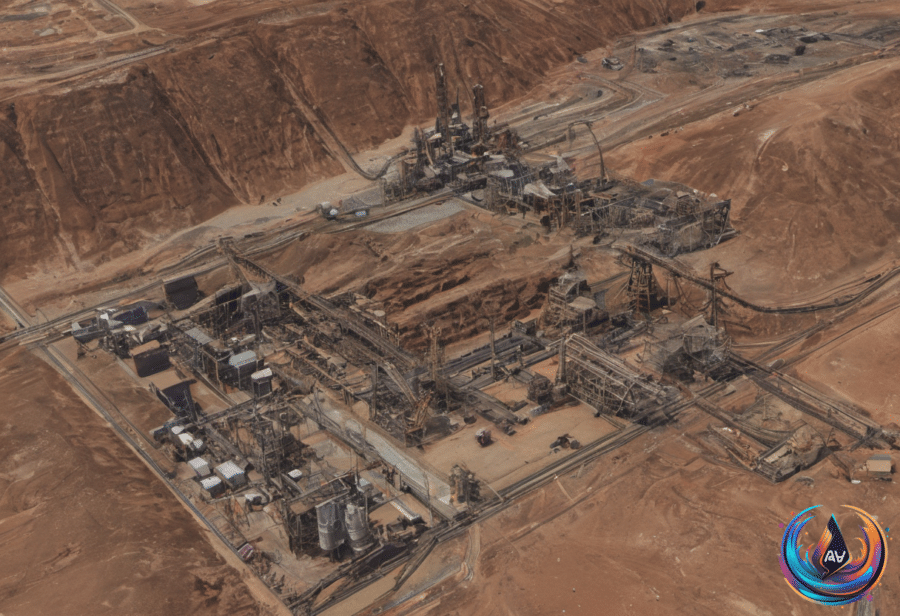
America has rare earth minerals. What it lacks is enough mining and processing capacity to turn those deposits into the materials used by modern industry. That gap left the United States dependent on China, after decades of cheaper imports pushed domestic production aside.
China now processes most of the rare earth minerals used around the world. In 2024, it mined about 60 percent of the rare earth elements used in magnets and handled about 91 percent of their separation and refining. The result is a supply chain in which mining is only one part of the challenge. Processing holds the real power.
How the United States lost its processing edge
The United States once had a major rare earth operation at Mountain Pass in California. The mine led domestic production until the late 1980s, but radioactive wastewater spills made it hard to keep production running. Its separation plant closed in 1998, and the mine itself stopped in 2002.
Even when the United States mined rare earths, it shipped much of what it produced overseas for processing. MP Materials restarted mining at Mountain Pass in 2017, but the broader supply gap remained. The United States imported more than two-thirds of the rare earth elements it used as recently as 2025.
Rare earth elements are a group of 17 metals. They support materials used in cars, wind turbines, and military jets, which makes access to both the minerals and the processing facilities a matter of industrial and national policy.
“The market is nervous,” Rafael Moreno said. He also called it “paramount” to end China’s stranglehold on the raw materials supply used across those industries.
China turns processing into leverage
China showed the strength of its position with a series of export controls issued in 2025. China agreed to suspend those controls until Nov. 10, 2026, but the episode made clear how much pressure can come from control over processing and exports.
That pressure reaches beyond companies that dig for ore. A mine can produce rare earth minerals, yet manufacturers still need separation and refining before those materials can support magnets and other products. With China handling about 91 percent of that work, supply disruptions can affect countries that have deposits but lack the plants to process them.
Moreno said it is “imperative” that officials reach a deal for Beijing to ease its threat to ban rare earth exports. His warning captures the immediate concern: the United States is trying to rebuild capacity while China holds a commanding position in the existing market.
Washington bets on a domestic rebuild
The US government has committed more than $7 billion since April 2025 to rebuild US rare earth production capacity. The Pentagon also bought $400 million of preferred stock in MP Materials in 2025, giving it 15 percent ownership.
That investment links government policy to the revival of Mountain Pass. MP Materials mines and processes rare earth minerals in California, and the company expects its next magnet plant to begin testing in 2028. The plant would address the part of the supply chain that imports and overseas processing left exposed.
The effort faces a basic geographical reality. The United States has rare earth deposits, but few mines, and it has little mining compared with the size of its known resource base. A US Geological Survey map marks pink areas believed to have potential for rare earth deposits, showing that the country’s problem is not a complete lack of minerals.
The harder task is turning those deposits into a dependable domestic supply. That requires mines, separation plants, refining capacity, and magnet production to work together. Restarting one mine cannot replace an entire chain on its own.
The 2025 export controls gave the issue a clear deadline. China’s suspension lasts until Nov. 10, 2026, while MP Materials expects testing at its next magnet plant in 2028. Those dates show the gap between the time needed to rebuild production and the speed at which supply policy can change.
For the United States, the lesson is direct: mineral deposits do not equal supply security. The country gave up much of its processing edge after cheaper imports reshaped the market, and China built the capacity that followed. Now Washington is spending billions to restore a chain that will take mines, plants, and years to complete.
Based on
- America gave up its rare earth edge. China took full advantage. — arstechnica.com
- Rare earths force Trump to be less hostile before Xi summit | Reuters — reuters.com
- China’s stranglehold on rare earths must be ended, says hopeful supplier to EU | Critical minerals | The Guardian — theguardian.com
- Rare earths force Trump to be less hostile before Xi summit – The Japan Times — japantimes.co.jp