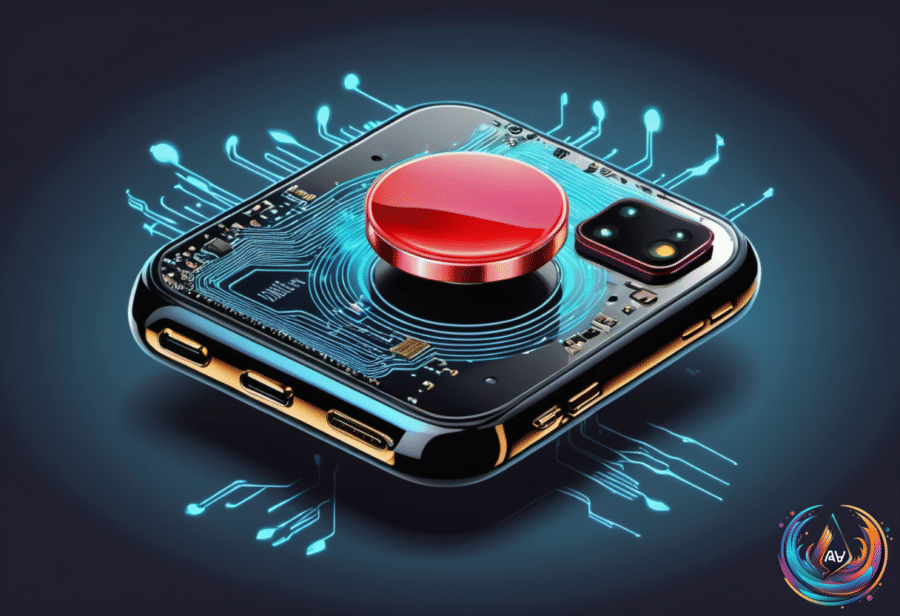
SpeakON puts a microphone behind the iPhone. The company has introduced a 25 g magnetic button that snaps to the back of an iPhone and writes finished text directly into open apps, giving voice input its own hardware instead of leaving everything to the phone’s built-in microphone.
The device measures 58 x 58 x 6 mm and carries its own microphone, onboard storage, and battery. SpeakON installs as a system-wide iOS keyboard extension, so the button can send completed text into open text fields across supported apps rather than keeping voice input inside a separate destination.
That approach gives the product a clear pitch: press the button, speak, and place the finished words where they belong. The device supports up to 5 minutes of continuous input per press, which covers short messages and longer dictated passages without turning every sentence into a separate command.
A small button with unusually specific limits
SpeakON uses a 220 mAh cell rated for 10 or more hours of continuous use and more than 2 weeks of standby. The battery charges over USB-C in under 1.5 hours, while 128 MB of onboard storage handles the device’s local data needs.
The magnetic attachment requires an iPhone 12 or newer, and the app requires iOS 16.0 or above. Those requirements divide the experience cleanly: newer iPhones get the magnetic connection, while the software sets the broader floor for compatibility.
The hardware weighs 25 g, enough to add a physical accessory without becoming another large device to carry. It also avoids the familiar smartphone ritual of opening an app, finding a voice control, and hoping the operating system puts the words in the right field. Phones already contain enough menus to qualify as part-time office buildings.
One price, privacy controls, and an upcoming agent
SpeakON sells the device for a one-time $129 in the United States. The price includes Pro Lifetime, with no recurring fee, giving the product a different billing model from services that turn voice features into another monthly subscription.
Voice data is encrypted, never sold, and not used to train AI models. Users control cloud sync, which puts the handling of voice data in the product’s sales pitch rather than burying it in the fine print—an unusual place for privacy to receive daylight.
SpeakON calls the category an AI Communicator, and takes its framing from the Communicator in Star Trek: you should not need to be at a terminal to stay connected. The reference explains the company’s goal, but the actual product is more practical than science-fictional: a magnetic button, a microphone, and a keyboard extension that moves dictated text into iPhone apps.
The company also plans to make SpeakON Agent available in October 2026, with expected availability on October 20, 2026. That future software addition gives the hardware a second stage, though the current device already has a defined job—capture voice and deliver finished text through iOS.
SpeakON’s launch lands on September 22, 2026, with a product that treats voice input as a hardware problem instead of only a software feature. Its limits are concrete: 25 g, 58 x 58 x 6 mm, up to 5 minutes per press, and support tied to iOS 16.0 or above and iPhone 12 or newer.
That clarity may matter more than the category label. The device does not promise to replace the iPhone; it adds a dedicated way to speak into it, with a one-time price, controlled cloud sync, and no subscription attached to Pro Lifetime.