Salesforce is putting its accumulated CRM knowledge inside a new reasoning model. On September 15, 2026, Salesforce and NVIDIA announced Koa, a model built for the Agentforce platform and trained through post-training on NVIDIA’s Nemotron 3 Super model.
Koa is designed to help agents work through complex, multistep workflows, choose the right tools, and complete a goal through a sequence of correct actions. Salesforce describes it as the company’s first CRM reasoning model, giving Agentforce customers a specialized, Salesforce-hosted option for powering their use cases.
From CRM Experience to Model Knowledge
Koa was built on a proprietary synthetic dataset modeled on enterprise knowledge from nearly three decades of CRM deployments. That dataset does not contain customer data. Salesforce said no customer data was used to train Koa, and the training corpus was built from synthetic scenarios covering reasoning, tool use, and decision-making across CRM workflows.
The scenarios simulate real-world enterprise workflows across more than 14 industries, including manufacturing, financial services, healthcare, and travel. Each scenario pairs a persona with a set of tasks, then maps the sequence of actions and tool calls needed to carry them out.
That structure gives Koa a target beyond producing a correct answer. The model learns to reach a goal by taking the right actions in the right order, a distinction that matters when an agent must use tools, work with data, and complete several connected steps.
Salesforce Chair and CEO Marc Benioff described the strategy this way: “The most valuable thing Salesforce has built isn’t our platform — it’s the accumulated knowledge of how enterprise business actually works. With Koa, the knowledge is put inside the model itself.”
Training Koa to Act Across Long Workflows
Salesforce applied Supervised Fine-Tuning and reinforcement learning with Group Relative Policy Optimization, or GRPO. The company used NVIDIA’s NeMo RL, NeMo Gym, and NeMo AutoModel tooling to train the model on a targeted set of prioritized enterprise tasks.
The research paper describing Koa was submitted to arXiv on September 14, 2026, one day before the announcement. In that paper, the model’s developers describe Koa as the result of applying GRPO reinforcement learning to the open-weight Nemotron-3-Super-120B foundation model with public and synthetically generated data, using no customer data.
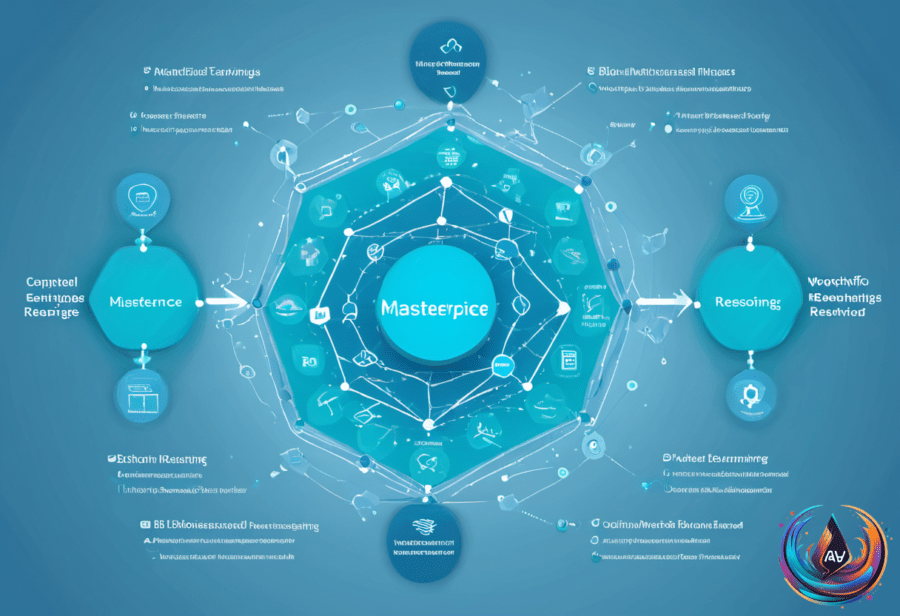
The paper identifies a simulation-to-reward pipeline as Koa’s distinctive component. The pipeline turns workflow specifications into persona-conditioned, multi-turn tasks, then ties rewards to successful tool use when a request depends on data.
For enterprise domains, those workflow specifications are written in Agent Script, Salesforce’s declarative language for building Agentforce agents. For public tool-use domains, the workflow structure is synthesized, with the same simulation and grounded-reward machinery driving GRPO across both types of work.
A Salesforce Trust Boundary for Agentforce
Salesforce controls the Koa model weights and performs post-training and inference within its own trust boundary. The company said no customer data crosses that boundary during inference, giving customers a Salesforce-hosted path for Agentforce workloads.
That control is central to Koa’s role. Salesforce is not presenting the model as a general-purpose system detached from business operations; it is positioning Koa around CRM workflows, enterprise tools, and the decisions agents must make to finish work.
Jensen Huang, NVIDIA’s founder and CEO, said: “The Nemotron open models gave Salesforce the basis for a CRM model that can reason and act securely.” The partnership combines NVIDIA’s Nemotron-3-Super-120B foundation model with Salesforce’s CRM knowledge, synthetic workflow scenarios, and Agentforce tooling.
The result points toward a new direction for long-horizon AI agents. Instead of stopping once an answer looks correct, Koa is trained around the full path from task to tool call to completed outcome.
Salesforce’s announcement places that approach inside Agentforce, where specialized reasoning can serve workflows shaped by nearly three decades of CRM deployments and scenarios spanning more than 14 industries. As Koa moves into Salesforce’s hosted offering, the key test will be how this model handles the connected actions that turn an agent’s response into completed enterprise work.
Based on