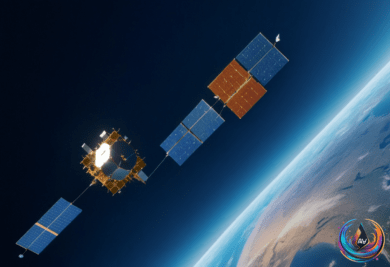
Starlink is reaching for the cellular market. SpaceX plans to become a major mobile carrier, not just a satellite internet broadband provider, by combining Starlink satellites with terrestrial wireless infrastructure.
The company has agreed to acquire 100 percent of Grain Management’s nationwide 800 MHz spectrum portfolio. The low-band license portfolio covers up to 14 megahertz of paired spectrum in the 800 MHz band, giving Starlink Mobile access to frequencies already supported by most mobile devices.
SpaceX announced the plan on Oct. 9, 2026, at 4:30 am EST, with the announcement also dated Oct. 8, 2026, at 9:23 PM UTC. The acquisition targets a technical gap that has limited Starlink’s path from satellite broadband service to major mobile carrier in the United States.
Low-band spectrum fills Starlink’s cellular gap
SpaceX said the 800 MHz spectrum will help Starlink’s signal operate better indoors. That matters because a network built only around satellites faces a basic problem: getting a signal through the places where people actually use mobile devices, including buildings and other covered spaces.
“This prime low-band spectrum addresses one of the key remaining technical gaps that will pave the way for Starlink Mobile to become a major mobile carrier in the US,” SpaceX said.
The 800 MHz band gives Starlink Mobile terrestrial spectrum that most mobile devices already support. SpaceX also said its new low-frequency cellular spectrum will work with a satellite network designed to provide direct-to-device connectivity, including service indoors, outdoors, in cellular dead zones, and everywhere in between.
That is a larger ambition than extending internet access to remote areas. SpaceX is assembling the pieces of a network that can use both satellites and terrestrial spectrum, a combination that would place Starlink closer to conventional mobile carriers than to a satellite-only broadband provider.
A larger satellite network with more bandwidth
The FCC has authorized SpaceX to deploy and operate 15,000 Starlink Mobile Gen2 satellites for direct-to-device connectivity. Those satellites are optimized for the 2 GHz spectrum and will be able to deliver more than 100 times the bandwidth of Starlink’s current satellite generation.
The FCC also granted SpaceX’s request to deploy 15,000 Starlink satellites for direct-to-device service and waived a rule requiring a leasing arrangement with terrestrial wireless carriers. That waiver allows SpaceX to use its own spectrum instead of depending on a separate terrestrial carrier’s licensed network.
SpaceX had already acquired spectrum licenses from EchoStar late last year, including frequencies used in the United States for commercial wireless services such as mobile and satellite communications. The Grain Management acquisition adds the low-band spectrum SpaceX says Starlink Mobile needs to close its remaining technical gap.
The FCC authorized the full range of backhaul bands used by Starlink’s V3 broadband satellites as well. The result is a plan built around several spectrum layers: low-band cellular frequencies for mobile-device compatibility and indoor performance, 2 GHz spectrum for the Gen2 mobile satellites, and backhaul bands for the V3 broadband satellite system.
“With this new low-band spectrum and our Gen2 constellation, Starlink Mobile can now become the first network operator to deploy both satellite and terrestrial spectrum,” SpaceX said. The company described the goal as “One network that provides Americans with a reliable service indoors, outdoors, in cellular dead zones, and everywhere in between.”
SpaceX’s move puts Starlink on a direct path toward the mobile carrier market, alongside established competitors such as T-Mobile, AT&T, and Verizon. The company now has the spectrum portfolio, FCC approvals, and satellite plans behind that claim—though calling a network a major carrier is easier than operating one.
Based on
- SpaceX wants to become a ‘major mobile carrier’ with low-band spectrum acquisition — engadget.com
- SpaceX announces plan to become a ‘major mobile carrier’ | The Verge — theverge.com
- SpaceX to acquire low-band spectrum license portfolio of up to 14MHz — markets.businessinsider.com
- SpaceX’s Starlink is now closer to becoming a major mobile carrier rival — africa.businessinsider.com