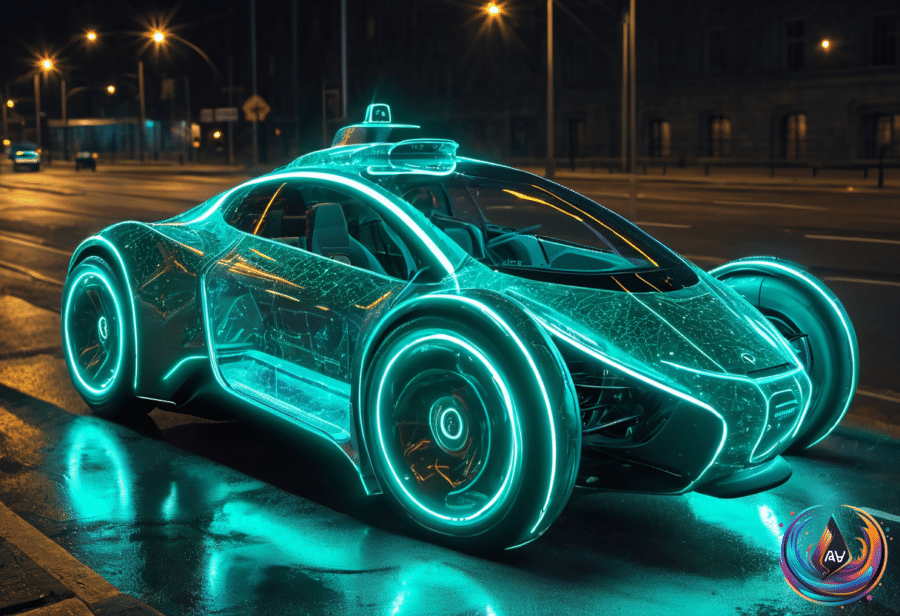
Tesla has started inviting select customers to buy its driverless Cybercab for personal use, turning a vehicle once aimed at robotaxi fleets into something individuals can order. The offer lists a $29,990 purchase price, a mandatory $299-a-month Autonomy Subscription, and a $1,000 non-refundable deposit.
There is a catch that makes this different from buying an ordinary car: the Cybercab cannot work without the subscription. It has no steering wheel, gas pedals, brake pedals, or conventional manual fallback, and Tesla designed it to operate as a fully autonomous vehicle.
The invitation email warns that “Initial availability is limited.” Tesla’s Robotaxi account on X posted the offer with screenshots of the order page and invitation email, saying that “select customers are now being invited to purchase Cybercab for personal use.”
A personal car limited to robotaxi zones
Although buyers would own the vehicle, they could not use it everywhere. Personal-use Cybercabs will only operate inside Tesla’s supported, geofenced robotaxi locations, the same areas where the company already provides its service.
Those locations include limited areas of Miami, Orlando, and Tampa in Florida, along with Austin, Dallas, Fort Worth, Houston, and San Antonio in Texas. Ashok Elluswamy, Tesla’s AI lead, described the plan this way: “it’ll work unsupervised inside all the same geo locations as Robotaxi, just serving the owners’ needs.”
That limitation changes what ownership means. A Cybercab could serve its owner without a driver, but the owner could not simply take it on a road trip outside the supported map. Canceling the $299 monthly subscription would make the vehicle unusable on public roads because it has no manual controls.
Tesla says the subscription covers autonomous driving, maintenance, and towing. It does not include auto insurance, so buyers would still need to handle that cost separately.
The order terms also block owners from using the Cybercab for commercial work. That means no Uber, no DoorDash, and no placing the vehicle on Tesla’s own Robotaxi network to help cover the monthly fee. Tesla AI chief Ashok Elluswamy has floated Q2 2027 as a possible target for allowing customer cars to join the network, but that option is not part of the current purchase terms.
Delivery plans meet regulatory questions
Tesla lists December 2026 as the estimated delivery date. Buyers must pay the $1,000 non-refundable deposit to enter the December delivery window, but the terms do not guarantee that delivery will happen then.
The Cybercab first appeared in October 2024 as a two-seat vehicle without a steering wheel or pedals. Tesla began offering Cybercab rides through its Model Y-powered Robotaxi service in Austin in September, then expanded the service to other cities in Texas and Florida.
The company now has 278 Cybercabs in operation, representing approximately 40 percent of its fleet, according to the crowd-sourced Robotaxi Tracker. Elon Musk also announced on November 6 that Tesla would reduce Cybertruck production at Gigafactory Texas toward the middle of next year to make room for higher Cybercab production.
That production push comes as federal regulators examine whether the vehicle meets safety rules. The National Highway Traffic Safety Administration opened a probe on September 4 into the process Tesla used to self-certify the Cybercab.
NHTSA said the vehicles lack permanently attached, conventional manual controls, including a brake pedal, gas pedal, steering wheel, and mirrors. The agency said it opened an audit query “to examine the process and technical data on which Tesla relied when certifying the Cybercab and related issues.”
Tesla submitted its legal justification to NHTSA in October and requested that the entire response remain confidential. The agency’s ruling is still pending, yet Tesla has started accepting customer deposits.
Federal regulation currently requires a steering wheel and pedals for commercial operation unless a vehicle receives an exemption, and Tesla did not request an exemption. State laws also require many autonomous vehicles to have a human supervisor or driver ready to take control if necessary.
Tesla’s wider robotaxi ambition
Tesla has presented the Cybercab as a way to expand driverless transportation beyond company-operated fleets. The company says it is “democratizing clean transportation for all” and has highlighted the vehicle’s safety and ease of use for disabled people.
Its earlier plan focused on selling Cybercabs to entities that could help build the robotaxi network, including companies able to purchase whole fleets. The personal-use invitation marks a new step, but the geofencing, subscription requirement, commercial restrictions, and pending regulatory review show how limited that step remains.
Waymo, the self-driving vehicle subsidiary of Alphabet, offers its service in 11 US cities. Tesla’s own robotaxi service operates in a smaller set of supported areas, and the Cybercab’s personal-use rollout remains tied to that same footprint.
Musk has promised a much wider rollout, subject to “regulatory approval,” which he often frames as the main outside barrier to Tesla’s robotaxi timelines. For now, the Cybercab is not a normal privately owned car. It is a $29,990 autonomous vehicle that depends on a monthly service, works only inside mapped locations, and arrives while regulators are still deciding whether its design meets federal safety rules.
Based on
- Tesla starts taking Cybercab orders for personal use — engadget.com
- Tesla is inviting some people to buy a Cybercab ‘for personal use’ — but read the fine print | The Verge — theverge.com
- Tesla opens Cybercab sales to ‘select customers’ | AFP.com — afp.com
- Tesla ouvre les ventes de son robotaxi Cybercab à certains particuliers — france24.com