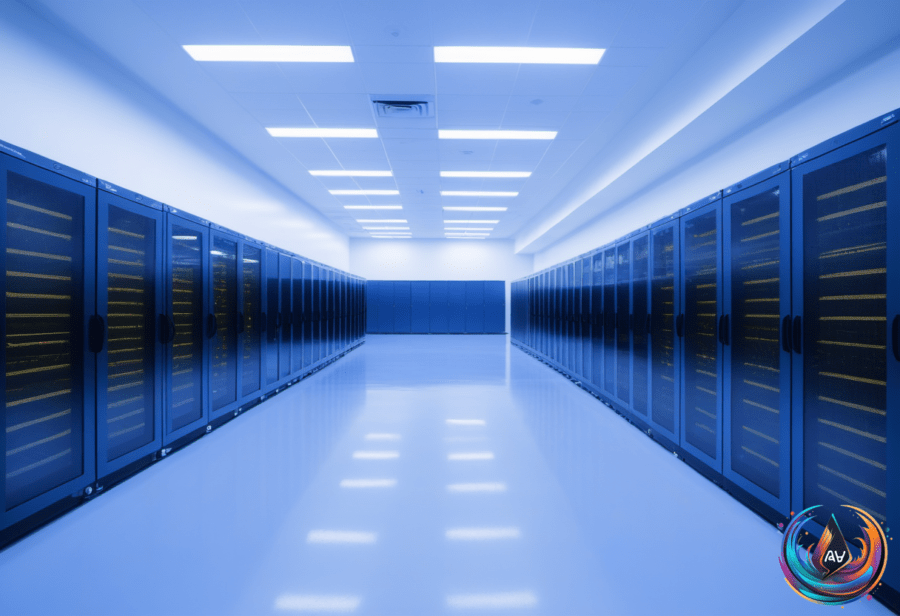
Data centers power the artificial intelligence boom, but their environmental footprint reaches far beyond server halls and industrial campuses. Toxic chemicals, discarded components, diesel spills, strained power grids, and higher electric bills are becoming part of the same expansion story.
PFAS now sit at the center of that concern. Nearly all of the top ten global producers of PFAS plan to ramp up production quotas on the back of the data center boom, creating a new connection between AI infrastructure and chemicals that can persist in the environment.
Forever Chemicals Are Built Into Data Center Systems
PFAS are used in data center construction across several critical systems. They appear in cooling systems, AI chips, circuit boards, fire suppression systems, and coatings on cables, placing these chemicals throughout the equipment needed to keep data centers operating.
Components laden with PFAS are found throughout the industrial world, but their use in data centers creates a particular concern because these facilities operate continuously. That constant operation causes components to break down quickly, leading to the steady scrapping of old parts as newer equipment takes their place.
When those components are discarded, PFAS will almost inevitably wind up in the environment. From there, the chemicals face a greater chance of entering the food chain, creating a pollution pathway that does not end when a server, cable, circuit board, or cooling system leaves a data center.
PFAS can accumulate in the human body and may contribute to health problems. The chemicals’ long persistence gives the data center boom an environmental dimension that reaches beyond construction sites, server rooms, and the companies operating the facilities.
Anne-Sofie Bäckar, executive director of Swedish chemical watchdog ChemSec, warned that the production plans could push the problem into a new phase: “These companies’ expansion plans show that unless governments and regulators insist on a rapid phaseout, we will face a new tidal wave of forever chemicals.”
Pollution Does Not Stop At The Property Line
The PFAS problem is only one part of the pressure created by data centers. These facilities can also release other harmful discharges, and their demands on electricity networks can strain the grid while driving up everyone’s electric bills.
One diesel spill shows how a single incident can extend beyond a facility’s boundaries. Nearly 5,000 gallons of diesel fuel spilled from the Equinix Data Center in Secaucus, New Jersey, flowing into a tributary creek.
That spill demonstrates why data center impacts cannot be treated as an issue contained within one building or one property. A chemical discharge can move into waterways, while grid pressure can affect people who live far from the facility itself.
Ben Dziobek, executive director of Climate Revolution Action Network, described the problem in direct terms: “Leaving this [data centers] to individual towns doesn’t make any sense, data centers create problems that don’t stop at municipal boundaries, whether it’s pollution or straining the grid and driving up everyone’s electric bills.”
A Bigger Boom Demands Broader Oversight
Leaving data centers to individual towns does not make sense when their effects travel across municipal boundaries. Local decisions may govern where facilities operate, but PFAS production, discarded equipment, water pollution, and electricity demand create problems that extend beyond any one town.
The planned increase in PFAS production quotas adds urgency to that challenge. Nearly all of the top ten global producers of PFAS plan to expand production quotas, linking the growth of data center infrastructure to a larger supply of chemicals that can remain in the environment and accumulate in the human body.
That link becomes stronger as data center components wear out under continuous operation. Every discarded part creates another opportunity for PFAS to enter the environment, and every new facility adds more cooling systems, AI chips, circuit boards, fire suppression systems, and coated cables to the industrial landscape.
The choices made around data center growth will shape more than computing capacity. They will influence how communities handle toxic chemicals, fuel spills, grid pressure, electric bills, and waste from the hardware supporting AI.
As of Sep 16, 2026 9:21 AM EDT, the warning is clear: data centers are not isolated technology sites. Their pollution and infrastructure demands move outward, and any response must move beyond individual towns to address the full reach of the boom.