AI agents are moving beyond systems that receive an instruction, call a tool, and return an answer. The next question is far more ambitious: can an agent learn from experience, improve its own process, and become better after each attempt?
That research direction is producing a growing toolkit for self-evolving AI agents. These systems may learn from previous failures, accumulate memory, build reusable skills, improve prompts, adapt tool-use strategies, or modify parts of their reasoning pipeline. The result is a shift from static automation toward agents that change through feedback.
Seven Ways to Understand Self-Evolving Agents
The fastest way to enter this field is to follow the resources that explain how agents work, how they improve, and how researchers measure progress. Each one focuses on a different layer of the system.
- Hugging Face Agents Course: This free course teaches the Think/Act/Observe loop, tool use, agent frameworks such as smolagents, LangGraph, and LlamaIndex, agentic retrieval-augmented generation, function-calling fine-tuning, observability, and evaluation. Hands-on assignments lead to a final benchmark-based project.
- Stanford CS329A: Self-Improving AI Agents: This course covers Constitutional AI, verifiers, test-time compute, reinforcement learning, tool use, memory, multi-step reasoning, planning, evaluation frameworks, coding agents, and research assistants. Its syllabus is organized around research papers.
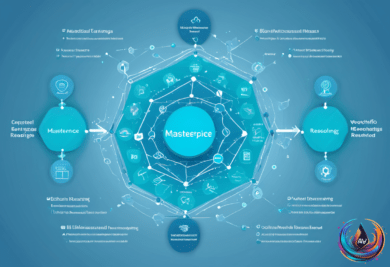
- A Comprehensive Survey of Self-Evolving AI Agents: This survey presents evolution as a feedback loop connecting the agent, its environment, system inputs, and an optimizer. It examines the model, memory, prompts, tools, and multi-agent organization, along with domain-specific systems in programming, finance, and biomedicine.
- Self-Improvements in Modern Agentic Systems: A Survey: This survey separates improvement of the foundation model from improvement of the agent’s scaffolding, including prompts, memory, tools, skills, and control logic. An agent that rewrites its prompt, builds a skill library, or fine-tunes its own model is performing a different kind of improvement.
- Awesome Self-Improving Modern Agentic Systems: This repository organizes papers by what is being improved and includes benchmarks, courses, talks, workshops, code, and newer 2026 work.
- Awesome RSI (Recursive Self-Improvement): This collection covers model-level self-improvement, harness and scaffold evolution, memory, embodied systems, automated AI research and development, benchmarks, and safety.
- Awesome Harness Engineering for Self-Improvement: This list focuses on the surrounding system of tools, memory, control loops, and evaluation.
Together, these resources reveal why the field is bigger than prompt writing. An agent can improve its underlying model, its memory, its tools, its reusable skills, or the control logic that coordinates the entire process.
From Research Loops to Enterprise Control
The same ideas are moving into enterprise AI orchestration. Atlassian is deepening its OpenAI relationship with real dollars behind it while keeping its platform model-agnostic, including Anthropic and others. Cohere’s North 2 adds user quotas, rate limits, organization-wide caps, and a redesigned agent harness, while memory keeps an agent’s context across sessions.
North 2 can run in the cloud, on premises, or fully air-gapped, giving organizations different ways to manage deployment and control. ServiceNow also has an AI agent built to interpret data and suggest actions for its ITSM platform, connecting agent capabilities to operational work.
New tools are also attacking the difficult parts of running agents. OpenClaw launched a free enterprise control plane for persistent AI agents, backed by OpenAI, Red Hat, and Nvidia. Autoheal claims to reduce operating costs by up to 30% per task by managing the work AI coding agents leave behind, and it plans to train smaller models on private engineering data.
Jev offers companies a cheaper way to generate text for decisions that only need a label, reviving an older machine learning approach with modern pretrained models. That focus matters because reliable business automation does not always require long-form generation. Sometimes the winning system is the one that makes a narrow decision with less cost and less complexity.
The Hard Problems Still Ahead
Evaluation remains one of the biggest challenges. MIT’s SIFT framework uses a language model to cut coding agent evaluation costs, achieving 35.1% accuracy on Polyglot with reduced compute resources. Google’s WikiSkill gives agents a memory of what went wrong without placing that information in the prompt, helping a 9B Qwen model outscore a 27B model by turning past runs into reusable skills.
These examples point toward a powerful idea: improvement does not always mean building a larger model. A better memory system, a stronger tool strategy, or a reusable skill library can change what a smaller model accomplishes.
Yet making retrieval-augmented generation reliable enough to run a business is much harder than building a demo. Enterprise teams also face the governance challenge of vibe coding, which VibeOps addresses, along with the need to evaluate control loops and manage the work agents leave behind.
Other projects push the architecture in new directions. C2C allows models to communicate through KV caches, cutting out text handoffs between models, but it works only for teams controlling their own inference stack. Google’s open source EnvHarness lets agents train against environments that evolve with them, offering an alternative to building new simulators and training tasks from scratch.
The developments listed across September 22, September 29, October 2, October 4, October 5, October 6, and October 8, 2026, show a field assembling its foundations. Self-evolving agents will need models, memory, tools, skills, evaluation, safety, and enterprise controls working together.
The future of AI agents may not belong to systems that simply answer better on the first try. It may belong to systems that remember failure, turn experience into reusable capability, and improve the machinery behind every future attempt.
Based on