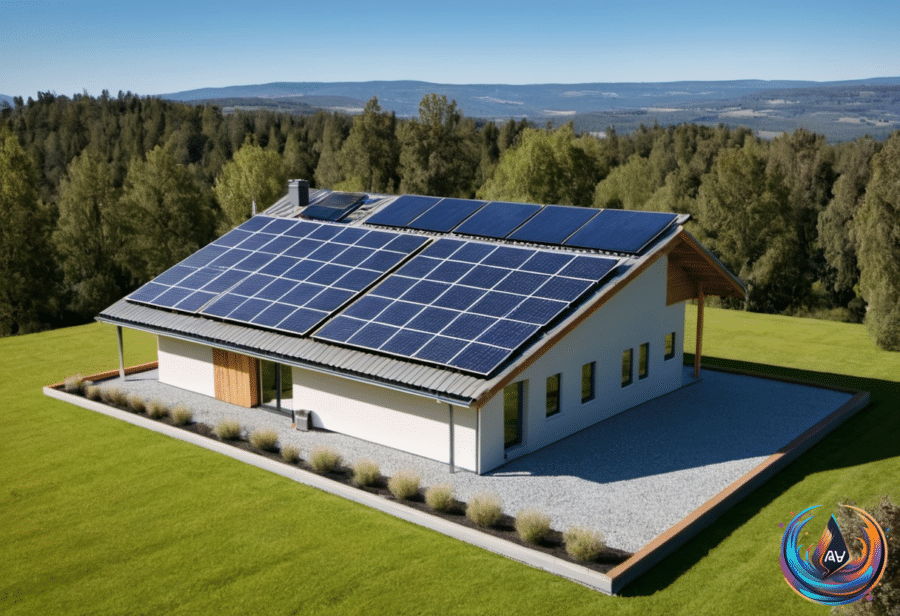
Solar power is not a universal bargain. Panels can cut monthly electricity bills, add potential resale value, and deliver clean, renewable energy—but the financial case weakens when the roof, climate, utility rules, or household demand work against them.
The first problem is the price. Installing a solar power system on a typical home averages between $20,000 and $27,000, based on a national benchmark of $3.36 per watt, before incentives or rebates. Prior to 2026, homeowners could rely on a federal 30 percent tax credit to reduce that cost; the Trump administration terminated the incentive.
Some states and utility companies still offer rebates and income tax credits, but the local rules matter more than the sales pitch. Research whether your utility provides net metering or other incentives before signing anything. Net metering credits homeowners for excess energy and can reduce or even erase a monthly electric bill, but it is not available everywhere and programs differ by state.
The best net-metering programs offer a one-to-one power exchange, crediting exported electricity at the same retail rate a homeowner pays. Other states use buyback programs, reduced-rate structures, or net billing, which return only a portion of the energy price. That difference can turn an attractive calculation into an expensive roof ornament.
Electricity prices also vary by location. The 10 most expensive states are Hawaii, Maine, Massachusetts, California, Alaska, New York, Rhode Island, New Hampshire, New Jersey, and Connecticut. Outside those states, solar may not significantly change the bill—especially in a smaller home, a small household, an energy-efficient home, or one that uses little energy each month.
Your roof and climate decide more than the brochure
Solar panels perform best in places with consistent sunlight and moderate-to-cool temperatures. Overcast weather can hurt panel performance and life, while excessive heat can do the same. Panels are almost always installed on roofs facing south, clear of buildings, trees, and other objects that block sunlight.
An older roof creates another unpleasant calculation. Solar panels are not ideal unless the roof is replaced, and a new roof can cost $4,000 to more than $35,000 depending on the home’s size and roof type. Solar shingles offer an alternative, but they have attracted negative press and cost roughly twice as much per watt as standard panels.
At $21 to $25 per square foot installed, solar shingles on a 2,500-square-foot home cost between $52,500 and $62,500 before incentives. That is not a minor upgrade. It is a second major project wearing a roof-shaped disguise.
Backup power adds another bill
Solar panels do not automatically power a home during an outage. The system needs battery backup to store excess energy and deliver it when the grid is down. A single battery, enough for average household lights, a refrigerator, WiFi, and some power outlets, costs between $10,000 and $16,000; a whole-home, multi-battery setup costs more.
Smaller solar options avoid some of that commitment. Panel-only chargers power devices such as phones directly from sunlight but cannot store captured energy. Chargers with built-in batteries store power for later, while portable power stations can charge several devices at once and include battery storage, though they are less convenient to carry; some compact units weigh as little as 4 pounds.
Small models may produce 15 to 50 watts, and cloud cover or panel angle affects both wattage and charging time. Some include USB-C ports, folding panels, stands, or backpack clips. Water and weather resistance, overcharge protection, and temperature control are the safety features to check before buying.
A 1,000Wh power station also delivers less usable energy than the label suggests. A 200W refrigerator might run for over five hours by simple calculation, while a 65W laptop could last well over 15 hours; practical estimates for the Jackery Explorer 1000 v2 are four hours and 11 hours. Converting battery power through an AC outlet wastes 5 to 20 percent, and another adapter can waste more.
Plug-in solar offers a cheaper middle ground in Britain. Since rules changed in August 2026, thousands of households have registered systems that can feed up to 800VA through a suitable socket. Entry-level kits have been available from around £450, with larger systems costing £1,000 or more, compared with around £6,500 to £8,000 for a conventional system for a three-bedroom home.
The trade-off is output. An 800W plug-in system may generate 378–690kWh a year depending on positioning, while a typical 4–5kW rooftop system can generate several thousand kWh. A south-facing, 30-degree setup could produce 690kWh, with 428kWh used in the home and indicative annual savings of around £110; a vertical east- or west-facing setup could produce 378kWh, with 272kWh used and savings of around £70.
Plug-in solar works best when a household’s “daily rhythm aligns with daylight,” as Kelvin Cao puts it. A home empty during the day loses some benefit because demand is lowest when the panels produce power, and current rules exclude integrated battery systems. Rooftop solar remains more powerful and easier to pair with battery storage, but plug-in equipment can suit apartments and renters—provided landlords, freeholders, or building managers allow it.
Financing can spread the cost through home equity loans, HELOCs, renovation programs, or personal loans, but borrowing adds fees and interest. A HELOC may allow interest-only payments for a set period, while personal loans avoid putting the house up as collateral; either way, solar only makes financial sense when the installation, local rules, energy use, and repayment costs line up.
Based on
- The drawbacks of adding solar panels to your home — engadget.com
- How To Use A Solar Panel To Charge Your Phone — engadget.com
- Plug-in vs installed solar panels: How they compare | The Independent — independent.co.uk
- Home Energy Financing: How To Fund Energy Upgrades To Your Home — cnbc.com
- How Long Can A 1000 Watt-Hour Power Station Run Your Devices? — engadget.com