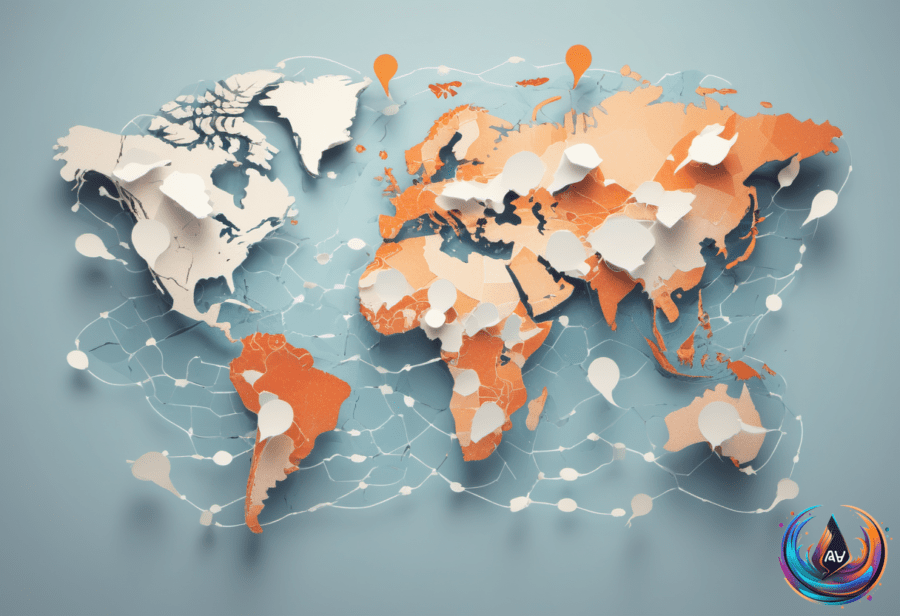
Translation AI has a language coverage problem. The central claim is blunt: “Machine translation is still broken for most of the world’s languages.” Cohere is the company named in this discussion, but the issue reaches beyond any single product or announcement.
That sentence describes a gap between the promise of machine translation and its reach across the world’s languages. The technology may exist as a broad idea, yet the statement says its results remain broken for most languages—a failure measured by coverage, not by marketing confidence.
The wording matters because it avoids presenting machine translation as a finished system. It says the technology works unevenly across languages, leaving most of them outside the category of dependable translation. That is a large limitation for a field often discussed as if language were one tidy technical problem.
The uncomfortable part is the word “most”
The verified facts provide no figures, dates, or language-by-language breakdown. That missing detail does not weaken the core claim, but it does define its limits: the statement identifies a broad problem without specifying how performance varies or where the boundaries sit.
“Most” is doing serious work here. It means the problem is not confined to a small edge case or an unusual language pair; the claim places the failure across the majority of the world’s languages. No chart is supplied, no ranking is offered, and no convenient number arrives to make the issue look tidier.
That lack of precision is also a reminder to avoid pretending the facts say more than they do. They do not identify particular languages, explain the technical cause, or provide a success rate. They establish one point: machine translation remains broken for most of the world’s languages.
Cohere’s connection is narrower than the headline suggests
Cohere appears as the company associated with the discussion, but the available facts do not describe a product, a launch, a research result, or a specific model. They also do not provide a statement from a named speaker. Any larger claim about Cohere’s technology would go beyond the evidence.
That restraint matters because technology coverage often turns a broad company reference into a detailed corporate narrative. Here, the supported story is simpler: Cohere sits alongside a warning about machine translation, while the warning itself concerns the state of the technology across most of the world’s languages.
The original claim also distinguishes the existence of machine translation from its quality. A system can translate in some settings and still fail the majority described here. “Available” and “reliable” are not synonyms, despite the industry’s fondness for treating them as old friends.
A broad promise meets a broad failure
The statement does not call machine translation useless. It makes a narrower and more damaging point: the technology remains broken for most languages. That leaves the field with a basic problem of reach before anyone can claim universal language access.
There is no need to inflate the conclusion. The supplied facts do not support claims about causes, remedies, timelines, or performance improvements. They support a clear assessment of the present state: machine translation has not solved language translation at global scale.
For readers tracking AI, that is the meaningful takeaway. Progress in one part of the language landscape cannot stand in for progress everywhere, and a system that serves only a minority cannot honestly be treated as a complete translation solution.
Cohere’s name gives the discussion a company attached to it, but the central issue is wider than the company. The technology’s unfinished state remains the story—and “most of the world’s languages” is an awkwardly large place for a supposedly solved problem to remain broken.