Artificial intelligence is stepping into a new role in scientific research. Instead of just assisting, AI agents now run entire workflows on their own. This shift is changing how experiments and machine learning projects happen.
One recent breakthrough involves autonomous coding agents like Codex powered by GPT 5.5. This AI can take research papers and turn them into working code without human intervention. It even implemented a new reinforcement learning task called OAPL. The results were impressive, with accuracy jumping from 25% to nearly 97% in vision-language environments.
These AI agents don’t just write code. They manage long-running machine learning workflows, making them practical for real-world use. This means teams can build specialized AI models tailored to specific domains. They start with a strong open model, such as NVIDIA’s NeMo, then improve it through reinforcement learning focused on clear tasks.
NVIDIA CEO Jensen Huang shared how his engineers prefer creating agents over writing Python scripts. He said, “Every one of my software engineers prefers to be building agents than to be writing Python code.” Huang also added, “These agentic systems are new skills, and now we have a lot of software engineers building agents.” This shows a shift in how AI development teams work.
Self-Driving Labs and Autonomous Experimentation
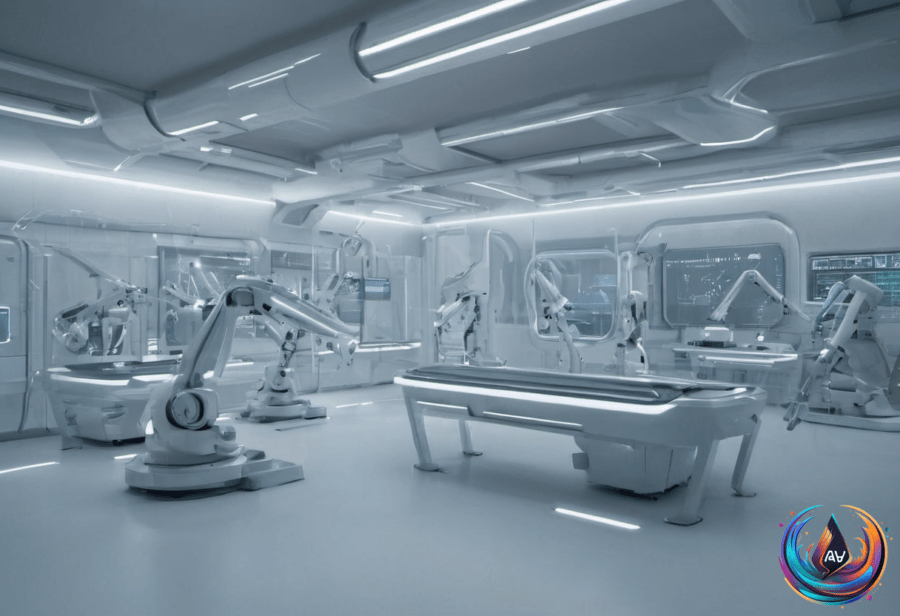
Beyond coding, AI agents are transforming physical research labs. Self-driving labs use autonomous experimentation systems to design, run, and analyze experiments automatically. The AI predicts the outcomes of tests and picks the next best experiment. This closed-loop system speeds up research and uses resources better.
These systems rely on agent AI—AI with autonomy in sensing, decision-making, communicating, and acting. When AI can also collect data, reason, learn, and act independently, it’s called agentic AI. Labs can run with a single agent controlling all tools or multiple agents managing different instruments in a hierarchy. One agent oversees the whole operation.
Physics-informed AI plays an important role here. It knows the underlying physics, materials, and tools related to the research. This AI targets experiments that clarify physical mechanisms or decide between competing theories. This smarter targeting helps labs find answers faster.
The Future of Lab Management and Research Campaigns
AI is moving beyond small, focused experiments. The goal is to handle large, complex research campaigns. Agent-based and agentic AI will be key to next-generation lab management. They will plan, organize, and oversee experiments and resources.
Future labs might use digital and physical sandboxes. These will let scientists test different strategies for managing experiments and research. Computational studies could even explore the philosophy of science to improve efficiency and discovery.
The rise of autonomous AI agents marks a new chapter in science. They automate tasks that once took many hours and lots of human effort. This frees researchers to focus on creativity and big-picture questions. It’s an exciting time for AI in science and engineering.
Training campaigns using these AI systems show clear benefits. For example, changing update intervals in training improved evaluation scores from about 5003 to 5660. Training time depends on hardware but can be optimized. Some approaches cut cumulative training FLOPs by up to 72% and reduced latency by over 16%.
The collaboration of AI agents in labs will shape how research is done. From chemistry to materials science, self-driving labs promise faster discoveries and better use of resources. This new AI-driven workflow is already happening and will grow in the coming years.
Based on
- How to Run an Autoresearch Workflow with RL Agent Skills and NVIDIA NeMo — developer.nvidia.com
- Dynamic structured pruning and merging for real-time acceleration of reinforcement learning | Scientific Reports — nature.com
- Jensen Huang Says His Engineers Prefer Building Agents to Writing Code – Business Insider — businessinsider.com
- Managing autonomous materials labs with multi-agent AI and its implications for the science of science | Communications Materials — nature.com
- I Built a Self-Improving AI, and So Can You | WIRED — wired.com