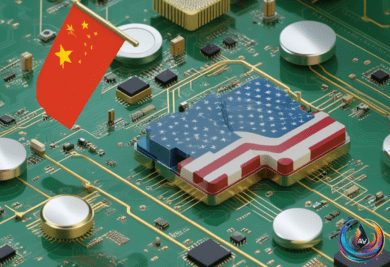
Washington approved a massive AI chip shipment to China. Newly released House Foreign Affairs Committee documents show the Trump administration signed off on 879,868 AI semiconductor chips from Nvidia and AMD, with the broader disclosure describing the total as 879,000 chips, nearly 880,000, or nearly 900,000 depending on the tally.
The approved hardware included Nvidia’s H200 chips and their AMD equivalent. Nvidia’s H200 is a previous-generation data centre GPU that the United States permits for export to China under a case-by-case licensing framework, while China has imposed its own restrictions on importing and using advanced Nvidia chips.
The order moved through 21 license applications as of May 11, with China listed as the ultimate destination in key applications. The documents covered shipments to Alibaba, ByteDance, Tencent, Baidu, JD.com, Didi, Kuaishou, BYD, Great Wall Motor, Tesla’s Shanghai operations, and other Chinese-linked systems.
The paperwork reveals a sprawling customer list
One Nvidia application sought approval for 610,000 chips for Alibaba Group. Another listed 508,000 chips for ByteDance System Sdn. Bhd. in Malaysia, while separate approvals covered Alibaba Cloud deployments in Malaysia and Indonesia and TikTok’s systems in Thailand.
Other figures in the released documents show 75,000 chips for Alibaba, 150,000 for Tencent and its subsidiaries, 43,000 for Baidu, and 4,000 for BYD. AMD applications included 75,000 chips each for ByteDance’s Beijing Zitiao Network Technology subsidiary and Tencent subsidiary Oriental Power Holdings; both applications were approved but marked as not shipped.
AMD also received approval for 75,000 chips each for ByteDance and Tencent, though those shipments had not yet been made. The collection of applications includes Nvidia sales to Tencent, JD.com, Baidu, Didi, Tesla’s Shanghai operations, BYD, and Great Wall Motor, along with AMD applications involving Kuaishou, Beijing Didi, and JD.com.
Alibaba, Tencent, Baidu, and BYD appeared on the Defense Department’s 2026 list of alleged Chinese military companies operating in the United States. The newly released documents say the administration approved shipments to companies designated by the Defense Department, including firms alleged to have links to the Chinese military.
Congress questions the licensing system
Rep. Brian Mast (R-Fla.), chair of the House Foreign Affairs Committee, used authority under the Export Control Reform Act to make public confidential export-control license information tied to Nvidia and AMD applications. The information would normally remain protected under U.S. export-control law, but the committee said, “The withholding of the following information is contrary to the national interest.”
Rep. Gregory Meeks (D-N.Y.), the committee’s ranking member, accused the Trump administration of mishandling chip export controls and criticized the Bureau of Industry and Security for failing “to enforce the rules.” He said the policy “has put our national security and technology edge at risk” and argued that Congress must now conduct rigorous oversight of the administration’s decisions.
The controversy reaches beyond the sales themselves. A November 18 report said Jeffrey Kessler, head of the Bureau of Industry and Security, pressured staff to expedite H200 approvals, sometimes overriding objections from other government departments; three people familiar with the matter said certain applications advanced despite concerns raised during inter-agency reviews.
The licensing dispute also overlaps with an investigation into Megaspeed, a Singapore-based data centre operator. The U.S. Department of Commerce said it began investigating the company in 2024 over possible diversion of advanced GPUs to China.
Hunterbrook Capital, through Hunterbrook Media, disclosed a short position in AMD and alleged that AMD firmware continued reaching blacklisted Chinese server maker IEIT Systems through software updates, along with three companies linked to it in China, Singapore, and the United States. Hunterbrook claimed that $67 million in AMD’s 2025 licensing income came from two blacklisted Chinese chip ventures; AMD said the report misrepresented its business practices and relationships, and that it complies with U.S. export controls.
Nvidia stopped H200 shipments amid scrutiny
The White House approved Nvidia’s H200 exports in January, but Nvidia later halted China sales as congressional scrutiny intensified. An Nvidia spokesperson said the review and licensing process lasted more than half a year, with approvals subject to strict conditions and limited volumes, adding, “Despite receiving some licenses, we have since stopped shipping H200s to China.”
AMD said it complies with applicable U.S. export-control laws and regulations and maintains rigorous processes across its global operations. That statement will now face the same practical test as the licenses themselves: whether paperwork can keep up with hardware moving through a supply chain designed to cross borders.
Mast has led House probes into the administration’s approval of Nvidia’s H200 chips. Former Nvidia CEO Jensen Huang previously argued to federal officials that allowing China to buy the company’s third- or fourth-best chips would make China dependent on U.S.-made infrastructure, a strategy that now looks less like a tidy policy theory and more like a congressional exhibit.
Huang is expected to testify to Congress next month, while lawmakers from both parties push for more oversight of Nvidia’s China sales. AMD shares fell 8% on November 19, and scrutiny of the broader U.S. semiconductor sector intensified as Washington adopted a more hawkish stance.
Since 2022, the United States has sought to restrict China’s access to cutting-edge chip technology. The latest disclosure could strengthen chip self-sufficiency efforts already underway in Beijing; Tencent’s president said the clampdown “sets everyone back” but also hastens a future where “all Chinese players” rely on domestic compute.
China’s technology companies were “reeling” from the prospect of new semiconductor restrictions. Washington approved the chips under licensing rules, then Nvidia stopped shipping the H200 to China—the kind of policy whiplash that leaves both sides investing harder in alternatives.
Based on
- US Agreed to Sell 879,000 NVIDIA and AMD Chips to China — analyticsindiamag.com
- Trump administration approved shipment of 900,000 AI chips to China — thehill.com
- US Congress releases list of Chinese firms seeking Nvidia chips | South China Morning Post — scmp.com
- US scrutinises chip sales to China in wake of Nvidia scandal | Semafor — semafor.com
- Nvidia halts sale of US-approved H200 chips to China | Semafor — semafor.com