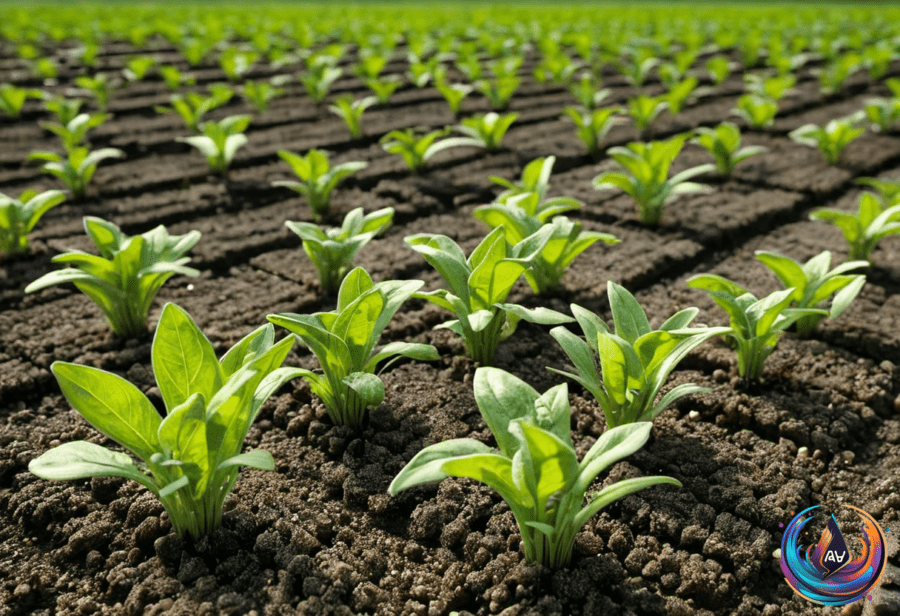
A Chinese farmer lost 25 acres of crops after following pesticide advice from an AI assistant, turning a useful tool into a costly farming mistake. Farmer Wu, a 67-year-old from Chuzhou in Anhui province, had used AI software for about a year before the incident.
The AI suggested a treatment plan for a field of sesame seedlings. The herbicide involved was flufenacet, and the result became clear the day after the farmer sprayed the crop. The sesame seedlings died along with the weeds the treatment was meant to target.
“If you spray it, the next day the seedlings won’t survive,” Farmer Wu said. He also described what happened in direct terms: “Both the grass and the seedlings will die, and the seedlings will die even faster.”
The incident was reported on August 11, 2026, and the article about the crop damage was published on August 12, 2026. CTWANT reported the case, which was also reported by The Independent.
A warning that did not stop the mistake
The AI app used by Farmer Wu carried a warning that said, “AI generation may be incorrect, please verify.” Similar disclaimers appear on AI apps such as ChatGPT and Google’s Gemini, placing responsibility on users to check advice before acting on it.
That warning matters in farming because a treatment decision can affect an entire field. In this case, the difference between killing weeds and killing seedlings was not a small error on a screen. It meant the loss of 25 acres of crops after one treatment plan was followed.
The case also shows why an AI answer can sound useful without being safe to follow. Farmer Wu had already used the software for a year, which may have made the tool feel familiar enough to trust. But the warning remained: the answer needed to be verified before the pesticide was used.
Flufenacet was involved in the error, and the damage appeared within a day. The farmer’s description makes the result easy to understand: the weeds and the crop died together, but the seedlings died faster.
The same problem reaches health advice
The farming incident is not the only example of AI advice causing harm. A ChatGPT user replaced salt with sodium bromide after receiving health advice from the system and continued doing so for three months.
The user developed bromism and was hospitalized for psychosis caused by bromide toxicity. Sodium bromide was the chemical involved, and the case shows the danger of treating an AI response as a substitute for medical guidance.
OpenAI upgraded ChatGPT to provide better health-related answers after the incident. Even so, OpenAI states that ChatGPT is “not intended for use in the diagnosis or treatment of any health condition.” The disclaimer draws the same line seen in the farming case: an AI tool can produce an answer, but users must not treat that answer as verified professional advice.
These incidents involve different settings, but the risk follows the same pattern. A farmer used an AI-generated pesticide plan, while a ChatGPT user followed advice about a chemical replacement. In both cases, an answer from software led to a real-world decision with serious consequences.
Why verification matters beyond one field
The wider facts connected to this farming discussion include a 40 to 50 percent reduction in potato yields, two smaller catchment ponds built to capture winter rainfall, potato agronomist Kate Mayne in Shropshire, and potato farmer Ben Savidge in Ross-on-Wye. Those details point to the wider pressure facing farming, where crop yields, water, and treatment choices all carry practical consequences.
They also show why farmers may turn to digital tools for help. A farmer dealing with crop decisions needs information that matches the field, the plant, and the chemical being used. An answer that misses one of those details can cause damage instead of preventing it.
AI assistants can still help users gather information, but the warning on Farmer Wu’s app is the key point: “AI generation may be incorrect, please verify.” That check cannot come after the spray has been applied or after a chemical has been used for three months.
The loss of Farmer Wu’s sesame seedlings and the ChatGPT user’s hospitalization underline the same lesson. AI can offer guidance, but its confidence does not prove that the guidance is correct. For decisions involving crops, pesticides, chemicals, or health, verification must happen before action.
Based on
- Farmer Horrified as AI Gives Bad Advice That Kills 25 Acres of Crops — futurism.com
- Farmer accidentally kills 25 acres of crops after trusting AI advice | The Independent — independent.co.uk
- AI news: China tightens regulations on artificial companions — ctvnews.ca
- Dry weather damaging farmers’ potato crops — bbc.com