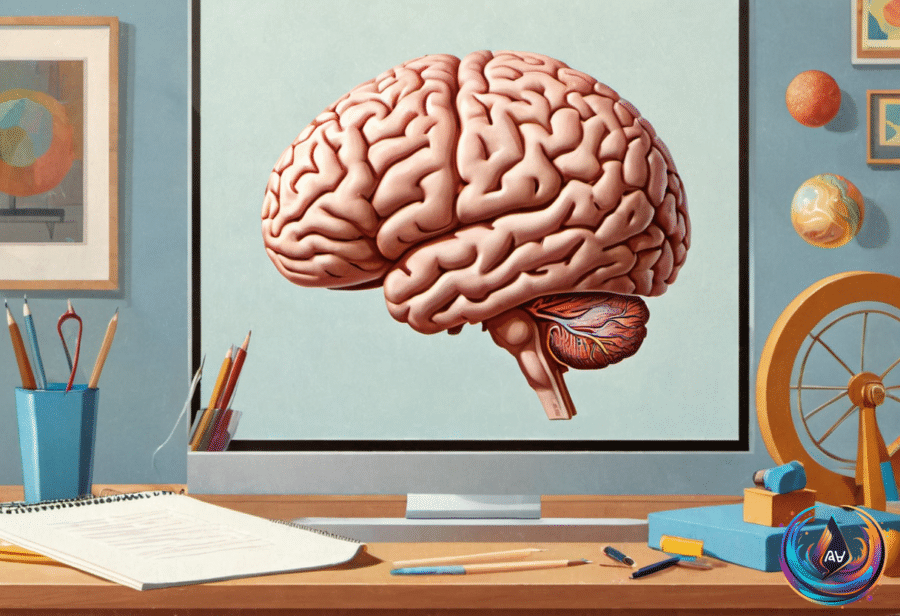
We already understand what happens when bodies stop moving: fitness falls, chronic disease rises, and daily life becomes harder. The same question now applies to the mind. If people rely on AI to do more of the thinking, what happens to the mental effort that keeps the brain sharp?
Devi Sridhar, professor at the University of Edinburgh, puts the idea in familiar terms: “Just as resistance training is important to maintain muscle mass as we age, our brains also need regular exercise to keep sharp.” Her warning is that relying on AI may have corrosive effects on brains, much as a lack of exercise harms the body.
The screen-time problem is already familiar
Social isolation, anxiety, depression, and sleep issues are widespread and linked to excessive screen time. The scale of screen entertainment is also clear in Netflix’s global revenue, which reached $12.6bn (£9.5bn) in 2026. That figure does not explain every health problem, but it shows how central screen-based activity has become.
Physical activity decreases as GDP per capita increases in low- and middle-income countries. At the same time, sedentary behavior is associated with higher rates of chronic disease such as cancers and type-2 diabetes, along with more chronic back and neck pain and a reduced quality of life.
The comparison with AI is direct. Watching something is not the same as doing something, and receiving an answer is not the same as working through a problem. When technology removes the effort that builds a skill, convenience can come at the cost of strength, whether that strength is physical or mental.
Students are already using AI in assessed work
The shift is no longer theoretical. In 2026, 95% of undergraduates reported using AI in at least one way, while 94% reported using AI in assessed work. Those figures show how closely AI is tied to student life, including the work that is meant to demonstrate what students understand.
Learning requires effort and cognitive struggle. Andreas Schleicher, the Organisation for Economic Co-operation and Development’s education and skills director, explains the point plainly: “You do not learn by consuming content. Learning is always about effort, that’s the only way you build your brain cells, by investing energy, by investing by cognitive struggle.”
He also offers a simple comparison: “You do not get fit by watching sports.” The same logic applies in a classroom. Students do not build knowledge by watching a machine complete the difficult parts for them. They need to wrestle with ideas, make mistakes, and invest attention in reaching an answer.
That does not mean every use of AI damages learning. The concern is what happens when AI replaces the thinking instead of supporting it. A tool can help with education, but learning suffers when the tool undercuts the effort that learning requires.
Why schools and governments face a difficult choice
The UK ranks close to the bottom internationally on AI in schools. The OECD found that overall, the more AI is present, the worse the country’s performance. That finding raises a difficult question: does adding more technology improve education, or does it weaken learning when schools use it without protecting time for human effort?
Sir Anthony Seldon, former private school headteacher and co-founder of AI in Education, describes AI as the “biggest challenge” to young people’s mental health. He says the potential for harm is “immeasurably greater than from pre-AI social media”. His concern reaches beyond marks and classroom performance.
“The biggest risk of AI is not that it pulls the plug on humanity but that, without rapid government intervention, it will choke and not liberate the minds of our young people,” Seldon states. He also predicts a major change in schools: “It will be such a different world because the heavy lifting and a lot of the learning can be done on the screen, sometimes in a lesson where you’ve got all the kids on a screen, sometimes in smaller spaces.”
The Department for Education is investing £23 million to determine which digital tools deliver the greatest impact in schools. That work matters because the question is not whether technology belongs in education. It is whether schools can use it without removing the challenge that makes learning possible.
A Department for Education spokesperson says the guidance is clear: “AI must be used safely, responsibly and effectively in education – any technology should enhance, not replace, the deep thinking, creativity and critical engagement that underpins effective learning.” That principle offers a useful test for every classroom tool. If AI helps students think, it supports learning. If it thinks in their place, it may leave their brains with less exercise.
Based on