Are We Living in a Digital Cage? The New Quest for True Freedom
Imagine waking up every day on a perfectly optimized schedule, your choices guided by algorithms designed to maximize efficiency. Sounds ideal, right? But what if this perfection masks a hidden trap? Increasingly, tech innovators and thinkers are questioning whether reliance on algorithms and AI is subtly constraining our autonomy rather than enhancing it. The digital world promises freedom, yet many are discovering that behind the scenes, our lives are shaped by invisible code—predictable, repetitive, and, dare we say, confined. Today, we’re witnessing a bold experiment: pushing the boundaries of algorithmic control to see if true liberation is even possible in a world ruled by machines.
The Rise of the Algorithmic Rebel: Embracing Uncertainty
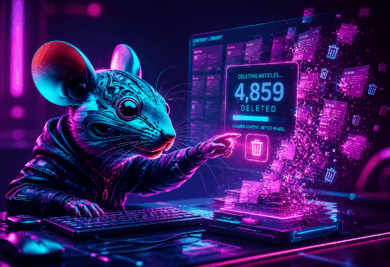
Meet Max, a talented software engineer who felt the weight of his meticulously optimized life. His mornings started with the same coffee ritual, his commute along the most efficient route, and his evenings at familiar hangouts—each choice a reflection of data-driven convenience. But one day, a revealing study on human mobility patterns unsettled him. It showed that our daily movements are shockingly predictable—like characters following a script written by algorithms. Max wondered: if his life was already a repeatable pattern, where was his free will? Could he break free from this digital autopilot?
So, Max devised a radical plan: he built a program that would randomly choose his destinations, from dives into hidden bars to visits to obscure landmarks across town. By surrendering routine to randomness, he sought genuine spontaneity. His experiments led him to unexpected places, new experiences, and even moments of reflection about control and choice. Was this chaos truly freedom? Or just another form of confinement—an escape into unpredictability that still left him governed by algorithms? His story raises a vital question: in a world where every decision can be optimized or randomized, what does real autonomy look like?
The Double-Edged Sword of Optimization and AI
As Max’s adventures illustrate, algorithms can be both liberators and prison guards. On one side, they help us break free from boring routines—injecting surprises and broadening horizons. On the other, their relentless pursuit of efficiency can trap us in echo chambers, reinforcing existing preferences and reducing genuine exploration. Experts warn that excessive reliance on AI for decision-making risks creating a new form of confinement—one where choice is limited by what’s safe, familiar, and predictable.
For instance, many people now let AI recommend what movies to watch, what music to listen to, and even how to structure their days. While convenient, this can lead to a “filter bubble” effect—where AI keeps us comfortable but stagnant, never daring to venture into the unknown. The danger is a subtle form of control, where our desires are shaped not by us, but by the algorithms we trust. So, the challenge becomes: how do we harness AI’s power to foster genuine freedom without falling into its trap?
Some thinkers propose a middle ground—embracing randomness and structured choice in tandem. By consciously choosing when to let algorithms guide us and when to rebel, we can design lives that are both efficient and fulfilling. It’s about reclaiming agency in an age where machines increasingly make decisions for us. The future may belong not to those who blindly surrender to AI, but to those who learn to dance with it—using technology as a tool to expand, not contract, our sense of self.
The Cosmic Perspective: Are We Just Simulated Players?
This debate about freedom and control extends beyond personal choices into the realm of philosophy and science. The famous simulation hypothesis suggests that we might be living inside a vast, multi-layered digital universe—an idea that has captivated minds from philosophers to tech moguls. If our entire reality is a simulation, then questions about free will become even more complex. Are we genuinely autonomous, or just characters in a grand algorithmic game?
Visionaries like Nick Bostrom have argued that advanced civilizations could be creating countless ancestor simulations—meaning our universe might be just one of many layers of code. The implications are staggering: if we’re in a simulation, what does it mean to seek freedom? Would breaking out of the “matrix” require transcending the very fabric of reality? And if AI surpasses human intelligence, could it eventually decide to rewrite or even erase its creators?
These cosmic questions fuel a new wave of curiosity and caution. While the idea of total control might be illusory, the pursuit of genuine freedom—whether through embracing chaos, questioning algorithms, or contemplating our place in the universe—remains vital. As AI continues to evolve, we stand at a crossroads: will we become masters of our digital destiny or prisoners of our own creations?
Looking Ahead: Toward a New Era of Human-AI Collaboration
The exciting truth is, the future isn’t written yet. The experiments of today—whether embracing randomness or questioning algorithmic control—are shaping tomorrow’s possibilities. We are entering an era where humans and AI can collaborate to craft lives that are both meaningful and free. The key lies in awareness: recognizing the power of algorithms, understanding their limits, and consciously choosing when to follow, when to rebel, and when to innovate.
Imagine a world where AI helps us explore new horizons, not by dictating every move, but by acting as a catalyst for human creativity and autonomy. From personalized learning to creative arts, the potential is enormous. The challenge is to ensure that as machines become smarter, they serve as enablers of human freedom—amplifiers of our capacity to choose, explore, and grow.
As we stand on the brink of this new frontier, one thing is clear: the true revolution isn’t just about smarter machines. It’s about reclaiming our agency, reimagining what freedom really means in a digital age, and mastering the art of living intentionally amidst the endless streams of data and code. The question remains: are you ready to break out of the matrix?
Based on
Programmer Breaks Out of the Matrix — futurism.comThe Lure of a Fully Randomized Life – WDC NEWS 6 — wdcnews6.comThe Lure of a Fully Randomized Life – Skeptic Society Magazine — dev.akhiles.co.ukWhen Optimization Is a Trap – Cyber Media Creations — cybermediacreations.comMan Behind Simulation Hypothesis Warns That Extinction of Humanity Is a Risk We Have to Take — futurism.comI Let AI Run My Life for 7 Days — What Happened Shocked Me | Futurism — vocal.media