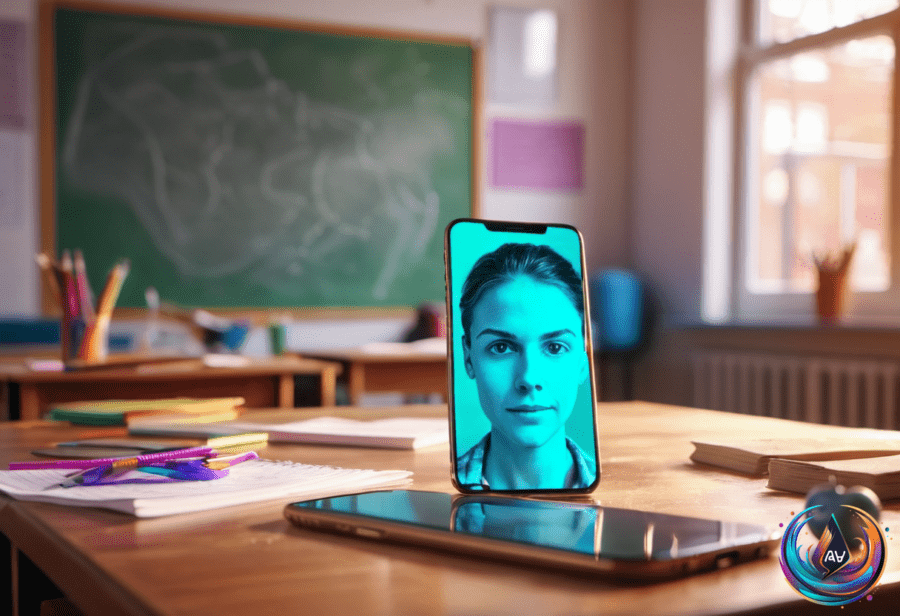
For Luis DeSantiago, a substitute teacher in Los Banos, California, a message on March 12, 2026, turned a familiar social media image into something frightening. The message contained a sexually explicit AI-generated image that resembled a mirror selfie he had taken in college, except the altered version showed him in lingerie and a suggestive pose.
“When I finally saw the image, that’s when it felt like a punch to the gut,” DeSantiago said. The image moved through Snapchat and spread among students, while a separate student created a TikTok account impersonating him. DeSantiago also received crude sexual comments on TikTok.
The incident did not stay on a screen. DeSantiago had been scheduled to work at a middle school the next day, but he decided not to return until the matter was addressed. He reported the incident to the assistant principal, who assured him the school would “take care of it.”
When the image enters the classroom
DeSantiago suspected that students were involved based on social media interactions and known student groups. He suspected two other students as well, though the image’s spread made it difficult to know who had seen it, shared it, or helped create it.
“Keep in mind this could include other students as well,” DeSantiago said. That concern became real when he received an AirDropped photo of the same AI-generated image during a class at a substitute high school.
“It makes you question everything,” he said. An image that began as a private college selfie had become a source of sexual comments, impersonation, and disruption across multiple school settings.
The case shows why deepfake abuse can be difficult for schools to contain. A single altered image can appear on one platform, move to another, and reach students who were not part of its creation. The person targeted may then face the content at work, where students and colleagues can encounter it without warning.
Schools face legal and practical questions
Snapchat has policies that prohibit sharing AI-generated or manipulated content to humiliate or sexually harass others. Yet most teachers and students did not directly report the content to the platforms where it appeared.
That gap matters because platform rules only help when people use the reporting systems. It also leaves schools handling a problem that can involve student conduct, workplace safety, impersonation, sexual harassment, and digital evidence at the same time.
The federal Take It Down Act makes it a crime to publish nonconsensual “intimate visual depictions of individuals, both authentic and computer-generated,” on the internet. That language covers more than genuine photographs. It includes computer-generated images like the one sent to DeSantiago.
Donna Ballman, a retired employment advocacy lawyer, stated that students creating and sharing sexual images of teachers constitutes sexual harassment in the workplace. Employers have an obligation under federal laws to create a workplace free of sexual harassment.
Those responsibilities do not produce a simple response plan. There is no blueprint for how schools should handle these incidents, especially when the people involved may be students, the content may cross several platforms, and the targeted teacher must decide whether returning to class feels safe.
AI literacy must include restraint
The response to deepfake abuse cannot focus only on how to make or detect AI-generated images. It also has to address when the technology should not be used, how students should report harmful content, and how schools should protect people targeted by it.
Amanda Bickerstaff, founder and CEO of AI For Education, spoke at the Charleston County School District symposium on July 22, 2026. Rebecca Winthrop put one part of the challenge plainly: “Good AI literacy includes knowing when not to use it.”
That lesson reaches beyond classroom assignments. Students also need to understand that generating a sexualized image of a teacher, sharing it, or helping it spread can cause workplace harm and may violate platform policies or federal law.
Other comments point to the work required when schools investigate technology-related incidents. Monique Bellamy referred to “established processes for reporting such content,” while Ray Knauer said, “You can’t just get an answer and move on. You have to use analytical skills and dig deeper.”
For teachers, that deeper work can begin with a report to school administrators and the platforms involved. For schools, it means taking the complaint seriously, examining how the image spread, and addressing the workplace impact rather than treating the incident as a joke or a simple student prank.
DeSantiago’s experience also shows the personal cost of waiting for an answer. He faced the image online, sexual comments on TikTok, an impersonation account, and the same image during a high school class. The technology may have created the picture, but people and institutions still determine whether the harm continues.
Based on