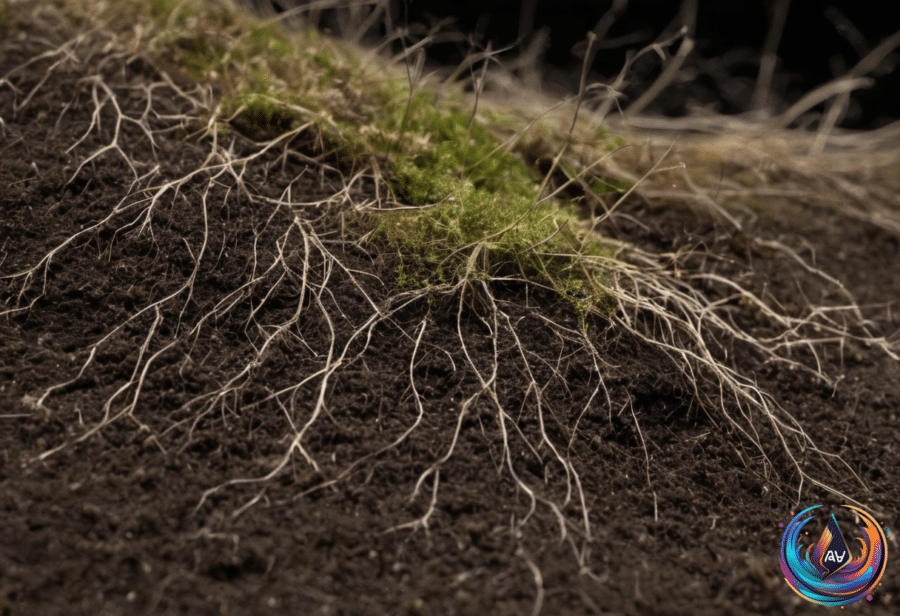
Beneath your feet, a vast fungal network is trading minerals with plant roots, enriching soil and influencing the planet’s atmosphere. These organisms have no brain or central nervous system, yet they can make choices about partners, move resources across their networks, and help plants thrive.
That hidden exchange reaches far beyond individual roots. Mycorrhizal fungi sequester 13 billion tons of atmospheric carbon dioxide each year, a total roughly equivalent to one-third of the world’s fossil-fuel emissions. What looks like a microscopic partnership underground is helping shape the climate above it.
A partnership written into plant life
Scientists know that fungi form partnerships with 80% of all plant species on Earth. Another estimate puts the share of plant species getting help from fungi at 80% to 90% across the world. This relationship evolved some 450 million years ago, creating a connection that still supports plants, soil, agriculture, and biodiversity.
The basic trade sounds simple: plant roots provide resources to fungi, and fungi deliver minerals to plants. Yet the network behind that exchange can span soil and connect different parts of a plant’s root system. The fungi enrich the soil, helping farmers and supporting biodiversity and agriculture.
The partnership also links the soil to the atmosphere. Fungi may contribute to cloud formation through the release of their spores over rainforests, adding another possible route through which underground organisms affect conditions above ground. “They may even contribute to cloud formation through the release of their spores over rainforests,” said Toby Kiers, an evolutionary biologist at Vrije Universiteit Amsterdam.
Trade without a brain
How can an organism without a brain or central nervous system manage a complex exchange? Toby Kiers is examining that question through economics and game theory, treating the fungal network as a system of trade rather than a passive connection between roots.
“Drawing on economics and game theory, and using tools that range from fluorescent quantum dots to imaging robots, her lab is probing how fungi and plants conduct their trade,” Kiers said.
The research points to a surprising picture. These brainless, decentralized organisms can behave strategically, discriminating between better and worse partners and shifting resources across the network to wherever a plant will “pay” more for it. The result is a living marketplace spread through soil, with resources moving toward stronger exchanges.
That behavior changes how scientists may understand intelligence in nature. Fungi do not need a brain to respond to conditions, compare partners, or redirect resources. Their networks distribute those functions across many connected parts, allowing the whole system to influence plant growth and the wider ecosystem.
The next frontier below the roots
Fungi do not work alone. They are very intimately associated with bacteria, creating a root environment shaped by several kinds of organisms at once. Davide Bulgarelli, an author and researcher at the University of Dundee, describes the root microbiota as an untapped resource for sustainable agriculture.
Research has also found that family-conserved functional repertoires emerge as building blocks of the root microbiota in distinct plants. That finding points toward a deeper pattern beneath plant life: different plants can draw on functional building blocks within their root microbiota, while fungi and bacteria help shape the resources available around them.
The potential reaches from soil management to climate research. Fungal networks help enrich soil, support plant partnerships, sequester carbon dioxide, and may influence cloud formation over rainforests. Put those functions together, and fungi could affect the whole ecosystem like that.
- Mycorrhizal fungi trade minerals with plant roots.
- They sequester 13 billion tons of atmospheric carbon dioxide each year.
- They partner with 80% of all plant species, with estimates reaching 80% to 90%.
- They help enrich soil for farmers, biodiversity, and agriculture.
- They may contribute to cloud formation through spores released over rainforests.
The next advances may come from studying these exchanges as networks instead of isolated biological events. Economics, game theory, fluorescent quantum dots, imaging robots, and research into root microbiota are opening new ways to understand what fungi do beneath the surface.
Fungi have no brain, but their networks still make the planet feel connected. As scientists investigate those underground trades, the soil may reveal a powerful model for sustainable agriculture and a clearer picture of how living systems influence Earth’s climate.
Based on