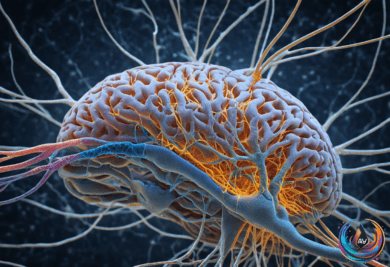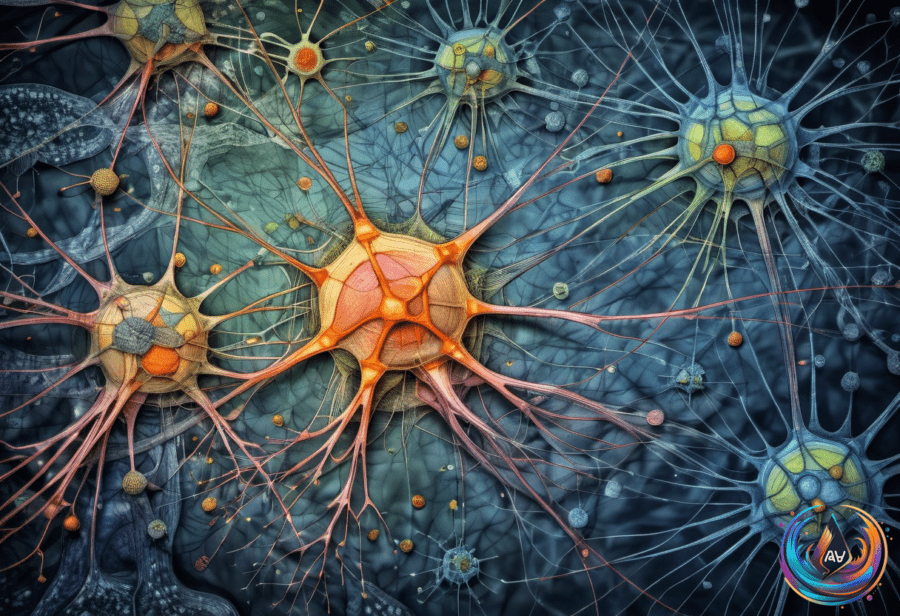
AI has cracked open new ways to understand the brain’s language processing and internal wiring. Large language models (LLMs) now predict brain responses to language with startling precision. These models don’t just mimic speech—they track how the brain constructs meaning.
Dr. Ariel Goldstein said, “What amazed us was how closely the brain’s step-by-step process of constructing meaning aligns with the sequence of transformations in large language models.” That’s not fluff. It means AI and brain function share a surprisingly similar logic.
This insight comes from a process called generative causal testing (GCT). GCT extracts brief verbal summaries explaining why a brain region reacts to certain phrases. Then it tests these explanations by crafting engineered stories. If the brain reacts as predicted, the explanation stands.
AI models weren’t built to explain brains. Their internal representations emerge during training without neuroscience in mind. Yet, when researchers align these AI states with brain activity, the models start to look more like biological brains. This “brain-tuning” improves predictions and reveals that brains process more than just word length.
Scientists aren’t just watching—they’re experimenting. By tweaking and evolving AI’s internal signals, researchers treat these models as “model organisms.” This method helps decode brain mechanisms that remain elusive in live subjects.
Mapping the Brain with AI Precision
AI’s impact goes beyond language. It revolutionizes brain mapping by handling complex genetic and cellular data. Using machine learning, researchers can now create ultra-detailed, high-resolution maps of brain regions and neighborhoods.
The CellTransformer algorithm is a standout tool. It defines neural neighborhoods and uncovers new subdivisions within brain areas like the striatum. So far, it has identified between 25 and 1,300 distinct neighborhoods in the mouse brain. This precision matters because, as neuroscientist Bosiljka Tasic puts it, “Location is everything in the brain.”
These advances rely on massive datasets: 10.4 million individual cells from five mouse brains, over 1,675 mouse brains analyzed, and more than 1,000 brain regions cataloged in the Allen Mouse Brain Common Coordinate Framework. The mouse brain atlas now includes over 5,000 different cell types. Meanwhile, the human brain atlas is catching up, with a first draft listing 3,313 cell types.
The ultimate goal is applying this AI-driven mapping to human brains. Efforts are underway to integrate more technologies for a deeper, more detailed understanding. The promise: tools that accelerate neuroscience by turning mountains of data into testable hypotheses.
Debara Tucci, M.D., director of NIH’s NIDCD, highlights the importance of this work. Speech and language research hinge on understanding neurons at this granular level. With AI, what once took decades now unfolds in years.
In 2026, AI and neuroscience are no longer parallel lines. They intersect, merge, and push each other forward. The result is a clearer picture of how brains process language and organize themselves at the cellular level. It’s not just progress—it’s a quiet revolution inside our heads.
Based on
- Understanding the brain with AI-driven explanations and experiments — microsoft.com
- Transforming AI models into useful model organisms | The Transmitter: Neuroscience News and Perspectives — thetransmitter.org
- AI and the Human Brain: Unlocking the Secrets of Language Processing (2026) — euskadirugby.org
- Unveiling the Brain’s Language Secrets: Single-Cell Activity and Human Speech (2026) — oldfarmshow.org
- AI Revolutionizes Brain Mapping: Unlocking New Neighborhoods (2026) — gciot.org