The AI stock boom has hit a moment of doubt. The Nasdaq 100 dropped 5.5%, raising fears that the market’s biggest technology story could be heading for a bust.
Yet the fall does not offer a simple answer. The index remains worth nearly three times more than it was at the start of 2023, and the latest move may show investors changing how they price AI rather than abandoning it.
A correction inside a much bigger rally
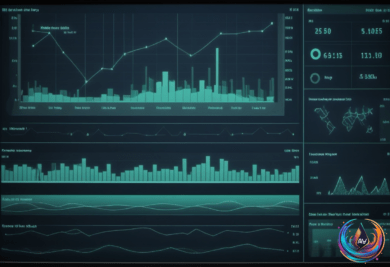
The value of the Nasdaq technology index has been plotted since November 2025, a period that captures the scale of the climb and the strain now showing in major technology shares. U.S. stocks reached record highs before investors began questioning whether AI investment can produce returns strong enough to justify those prices.
The S&P 500 sat 1% below its record from the previous week, while the Nasdaq had fallen more than 3% below its peak. Wall Street opened mixed on Monday, with both indexes higher as AI stocks rebounded. That bounce offers relief, but investors are still waiting for earnings from Tesla, SpaceX and Meta for clues about future AI spending.
The concentration of market value makes every shift feel bigger. Alphabet, Amazon, Apple, Meta, Microsoft, Nvidia and Tesla now make up 35% of the S&P 500, compared with 12% a decade ago. Together, the “magnificent seven” have lifted their total market capitalisation by more than 50% in the past two years.
That strength has also carried the wider economy. Nearly half of all U.S. economy growth this year is tied to tech-related spending. Most Americans do not own tech stocks or work in AI, but the AI buildout has helped lift the economy on paper, created a wealth effect that supports consumer spending and the job market, and made the sector’s fortunes matter far beyond Wall Street.
Why investors are taking a closer look
Raisah Rasid, a Singapore-based global market strategist at JP Morgan Asset Management, described the sell-off as “a valuation reset, rather than the market questioning the efficacy of AI itself”. She called AI “a long-term, structural transformation trend,” suggesting that a pullback in share prices does not erase the technology’s larger promise.
Sally Auld, NAB’s chief economist, offered a similar reading: “It suggests investors may be taking a more balanced approach. It doesn’t mean the whole thing is a disaster; there’s a reassessment under way.” She said last week’s pullback looked more like investors taking a breath than the entire trade running out of energy.
That distinction matters because the market can keep climbing even after warning signs appear in company earnings. Gerard Minack of Minack Advisors said, “While I am becoming more confident that returns on AI investment will disappoint, I have no confidence calling the precise top of the AI market.” His view leaves room for both concerns to be true: AI returns may disappoint, yet the market may not have reached its final peak.
The imminent quarterly earnings season in the United States will provide the next test. Investors want evidence that the money flowing into AI infrastructure can produce matching revenue and profits. Quarterly revenue growth at Anthropic has slowed, even as the company is expected to be worth more than $1 trillion when it goes public.
Questions are also spreading beyond software companies. Investors have started selling bonds backing some data centers because they fear AI revenue will not cover the sums borrowed to build them. If that concern grows, it could pressure the financing behind the physical systems supporting the AI expansion.
Risks that reach beyond share prices
Rasid sees two threats that could matter more than a normal market correction. An open source AI model from China could undermine the economics of the industry, while opposition to data center developments or to AI harming society could slow the buildout.
Chip markets add another layer of uncertainty. Chinese memory technology companies could undermine or overtake Western rivals, and mass production of memory chips in China could flood the market with oversupply. Those pressures would challenge the companies and investors counting on strong demand for the hardware behind AI systems.
The economic stakes are high because a fall in tech spending and stock prices could put broader U.S. growth at risk. Charlie Scharf, Wells Fargo’s CEO, said, “While higher interest rates, higher oil prices and persistent inflation create risks to the economy, strong positive forces such as the investment in AI infrastructure, high employment levels and consistent wage growth continue to outweigh the risks.”
Citi analysts offered a less comfortable list of pressures, saying, “Higher interest rates, elevated energy prices, slow job growth and the sell-off in equities (if it continues) are all downside risks to consumer spending.” The contrast shows why the AI debate now reaches into the wider economy: the same investment boom that supports growth could become a weakness if spending retreats.
What the next market moves may show
Ed Yardeni, a market economist, lowered his year-end target for the S&P 500 to about 7,900 from 8,400 as investor caution rose. The figure signals a cooler outlook, not a prediction that the market’s AI leaders will vanish.
The Nasdaq 100’s rebound on Monday gives investors a short-term counterpoint to the sell-off, but the bigger test sits in company results and spending plans. Reports from Tesla, SpaceX and Meta will help show whether businesses are still willing to commit money to AI at the same pace.
For now, the evidence points to a market wrestling with price, profit and risk rather than declaring AI finished. The boom has lost some of its easy confidence, and investors are demanding stronger proof that enormous spending can deliver lasting returns. That is a serious challenge, but it is not the same as the end of the AI market.
Based on
- Is this the beginning of the end of the AI stock market boom? — theguardian.com
- An AI Bust Could Come From Places Investors Aren’t Watching: Economist – Business Insider — businessinsider.com
- Cracks are showing in the stock market, as doubts grow about AI — nbcnews.com
- AI sell-off lingers as tech shares mount recovery — bbc.com