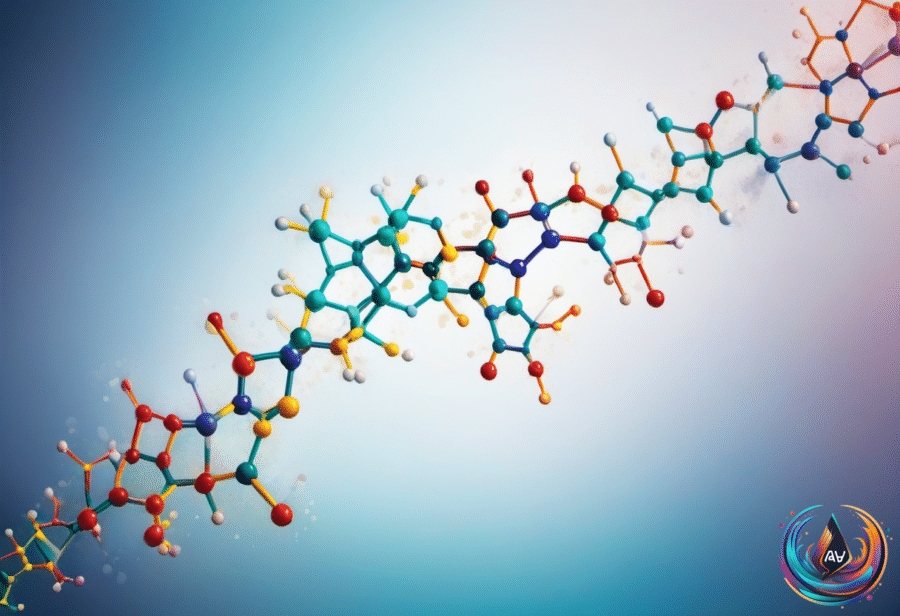
Proteins designed by artificial intelligence may soon carry a hidden mark showing where they came from. Google DeepMind has developed a watermarking system called SynthIDBio, which embeds a faint signature into AI-designed proteins without noticeably harming their function.
The system could help identify proteins created by artificial intelligence, but it does not create an unbreakable label. A person with a secret detection key can spot the watermark, while another AI tool can erase it by redesigning the protein.
How SynthIDBio marks a protein
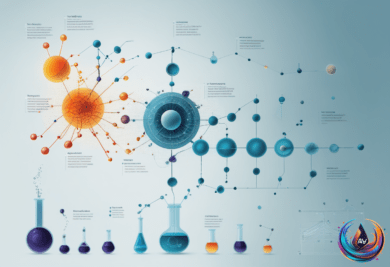
SynthIDBio inserts a statistical tell into two parts of a protein: its amino-acid sequence and its three-dimensional shape. The signal is hidden rather than visible, so the protein does not carry an obvious symbol or change that a person could recognize by looking at it.
That hidden signal is meant to preserve the protein’s practical behavior. Google DeepMind stress-tested the system, and proteins carrying watermarks were able to bind to targets as efficiently as proteins without watermarks.
Those targets included proteins involved in viral infection, blood-vessel formation and immune regulation. Pushmeet Kohli described the result this way: “They found that the watermarked proteins were able to bind to a range targets — including those involved in viral infection, blood-vessel formation and immune regulation — as efficiently as unwatermarked ones.”
The finding matters because a watermark would have little value if adding it weakened the protein. SynthIDBio is designed to leave the protein’s function intact while adding information about its artificial origin.
A useful marker with a clear weakness
The watermark can be found by anyone who has the secret detection key. That makes the system a way to test whether a protein carries the hidden signature without exposing the mark to everyone.
But the signature can also be removed. Redesigning the protein with another AI tool can erase the watermark, so SynthIDBio identifies marked proteins without guaranteeing that every AI-designed protein will remain traceable.
This limitation gives the system a specific role rather than making it a permanent record. A detected mark can show that a protein came through an AI design process covered by the system, while a missing mark cannot prove that a protein was created without AI.
Why watermarking matters for protein design
Elie Dolgin described the development as a way for machine-generated proteins to carry a hidden signature of their origins. “Proteins designed by artificial intelligence could soon carry a hidden signature of their machine-generated origins, thanks to a watermarking system described today in Nature,” Dolgin said.
The idea also connects technical identification with research practice. Steph Guerra said, “Watermarking can support innovation and scientific reproducibility, and, at the same time, have a security benefit.” A hidden mark could therefore help connect an AI-designed protein to its origin while supporting checks around how the design was produced.
Tessa Alexanian said the watermark would be added automatically to proteins designed by AI tools such as AlphaFold and RFdiffusion. ProteinMPNN and AlphaFold are among the named tools connected with this work, while RFdiffusion is another AI tool that could receive the watermark under Alexanian’s description.
The result is a system built around a tradeoff. SynthIDBio keeps the protein’s tested binding performance while adding a hidden origin signal, yet the signal remains vulnerable to redesign by another AI tool.
Google DeepMind’s work, dated 30 September 2026, places that tradeoff at the center of AI-designed protein identification. The watermark can support detection, innovation and scientific reproducibility, but its usefulness depends on whether the original design remains unchanged enough for the hidden signature to survive.
Based on