Big moves are shaking up AI, robotics, and retail right now. Startups are raising eye-popping sums, and the impact is about to change how we shop, work, and secure software. This isn’t just evolution—it’s a revolution in speed, intelligence, and scale.
Speeding Up Retail with Smarter Warehouses and AI
Amazon’s lightning-fast delivery set the bar. Now, challengers are racing to catch up. One logistics startup just landed $250 million at a $3 billion valuation to turbocharge independent brands’ shipping speed. Their secret? AI and robotics supercharging warehouse networks.
They run nearly 100 warehouses worldwide and handle over $15 billion in merchandise annually. With the cash, they’re expanding their footprint and launching a robotics lab to test automation before rolling it out. Imagine robots and AI working side-by-side to pick, pack, and ship orders faster than ever.
This tech levels the playing field. Brands no longer need to surrender margins or customer data to Amazon’s marketplace. Instead, they gain access to a shared logistics backbone that rivals Amazon’s delivery power. The race to next-day or even same-day delivery isn’t just for retail giants anymore.
Bringing AI Inside Physical Stores for Real-Time Insight
Physical stores have been stuck in the past, operating with outdated inventory lists and blind spots. But not anymore. Another startup just hit unicorn status after raising $170 million to inject AI into brick-and-mortar retail. Their system uses overhead RFID sensors and AI to track every item’s exact location—every few seconds.
Stores now get near-perfect inventory accuracy. If a shopper moves a dress from aisle three to aisle seven, the system knows instantly. This transforms how stores manage stock, fulfill online orders, and prevent theft. It’s like giving physical retail the superpowers e-commerce has had for years.
With deployments in over 1,400 stores, including major apparel brands, the company is scaling fast. The data they collect on shopper behavior is a gold mine for AI-driven demand forecasting and store optimization. Retailers can finally compete with the precision and speed of online giants.
Robots and AI Join Forces to Rewire Factories and Warehouses
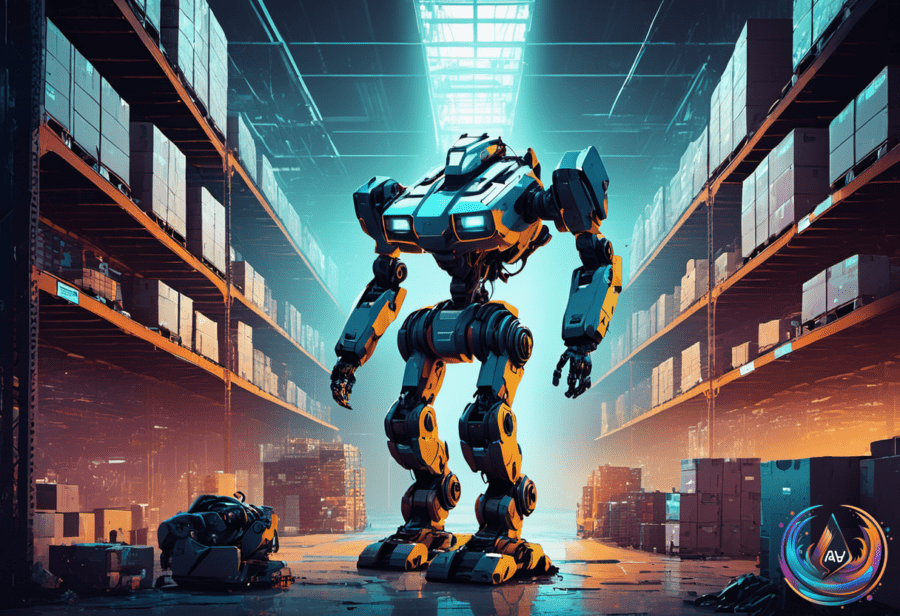
Labor shortages are a growing crisis. One robotics firm is tackling this head-on. They’ve built an integrated system of humanoid robots, autonomous forklifts, and mobile bots—all orchestrated by a smart AI operating system. This “super-intelligent factory manager” assigns tasks dynamically and adapts to workflow changes in real time.
Instead of buying machines, customers subscribe to this robot workforce, scaling capacity as needed. They’ve already secured deals worth hundreds of millions and are expanding globally. This isn’t science fiction—it’s happening now, ready to fill gaps left by shrinking human labor pools.
Securing the Software Supply Chain with AI
AI speeds up software development, but it also raises risks. More code comes from open source, increasing vulnerability to malicious components. One cybersecurity startup just raised $60 million at a $1 billion valuation to fight this threat.
Their platform scans third-party code in real time, detecting malicious behavior before it enters production. They mix AI analysis with human review to catch risks faster than traditional methods. In one case, they stopped a widespread malicious package within six minutes, protecting thousands of organizations.
This is critical as AI tools churn out more code at breakneck speed. Security teams need to keep up without slowing developers down. This approach flips the script, making software supply chains safer in an era of rapid innovation.
Collaborative AI is Shaping the Future of Work
Most AI tools today serve individuals. But what if AI could work for entire teams? A startup just raised $40 million to build a “multiplayer AI” platform where AI agents collaborate across companies. Instead of isolated assistants, these agents share knowledge, learn from usage, and help whole teams solve problems together.
This platform connects to over 100 data sources, supports enterprise-grade governance, and integrates with existing tools. Thousands of companies use it to save thousands of hours weekly. Sales, marketing, and operations teams now build custom AI agents that multiply their impact.
This shift from solo AI to team AI could transform how companies operate. The future is about shared intelligence, where humans and machines co-create and compound productivity.
What’s Next? AI Redefines Industry Boundaries
These breakthroughs are just the beginning. AI’s influence is exploding across logistics, retail, robotics, software security, and enterprise collaboration. Startups are not only raising huge funding rounds—they’re delivering real-world solutions that shift entire industries.
Expect faster deliveries, smarter stores, autonomous factories, airtight software, and team-powered AI workflows. The gap between digital and physical, manual and automated, individual and collective is closing fast.
We’re entering an era where AI accelerates everything—from how goods move to how work gets done. The question is no longer if AI will transform business, but how soon you’ll see it in your daily life. Stay tuned. The revolution is here.
Based on
- Stord raises $250 million to give independent brands the shipping speed they need to compete with Amazon — thenextweb.com
- RADAR Raises $170M, Hits $1B Valuation in AI Retail Push – Ventureburn — ventureburn.com
- Socket raises USD $60 million to tackle code risks — securitybrief.ca
- Dust Raises $40M to Make AI Multiplayer Inside the Enterprise — theaiinsider.tech
- RADAR reaches unicorn status after raising $170M to modernize physical retail with AI – Tech Startups — techstartups.com
- Doozy Robotics Takes Physical AI Solutions Global with New Funding – NervNow™ — nervnow.com