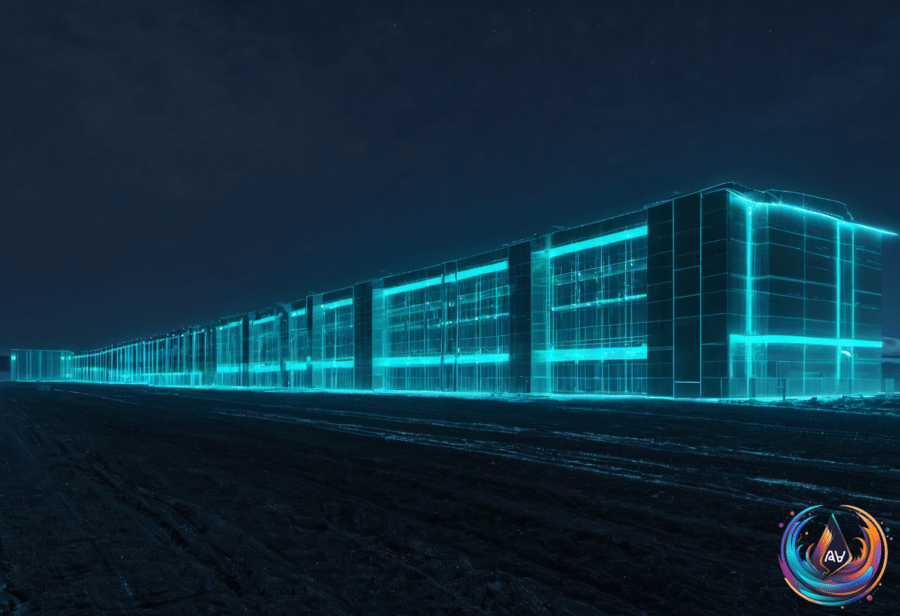
AI data centers keep rising across the United States, but the projects are running into a powerful obstacle: the communities expected to host them. A Gallup survey found that 70% of Americans oppose building data centers in their communities, and 48% say they strongly oppose them.
That divide puts a striking question at the center of the data center buildout: how much disruption will people accept in exchange for the infrastructure behind AI? Projects continue across the country, yet local opposition is turning resource use, construction pressure, and community impact into major public concerns.
A National Buildout Meets Local Resistance
AI data center projects are continuing across the US as of Aug. 19, 2026. The construction push reflects the need for facilities connected to AI, but the expansion is not moving ahead without resistance from people living near proposed or active projects.
Critics, environmentalists, and anti-AI activists oppose data centers because of their impact on local communities and their consumption of resources. Their concerns place the facilities inside a wider debate about what AI development demands from the places where its physical infrastructure takes shape.
The Gallup survey, released in May, captures the strength of that reaction. Seven out of every ten Americans surveyed oppose building data centers in their communities, while 48% strongly oppose them. Those numbers show that opposition reaches well beyond a small group of residents.
That matters because a project can be part of a national technology push and still face a local fight. Data centers are built in specific communities, where residents experience the changes tied to construction and resource consumption. The survey shows that many Americans are judging the projects through that local lens.
Construction Pressure Adds Another Flashpoint
The data center expansion also lands in an American skilled trades industry facing a shortfall of 300,000 skilled trades workers overall. The figure does not establish that data centers caused the shortage, but it highlights the workforce pressure surrounding a construction surge that continues across the US.
That shortage gives the debate another layer. Communities are not only weighing the presence and resource demands of data centers; the country also lacks 300,000 skilled trades workers overall. The available facts do not assign the shortfall to data centers alone, but the figure shows the scale of pressure facing the skilled trades industry.
This tension helps explain why local opposition can grow beyond a simple disagreement about the presence of data centers. Residents and critics are looking at the full impact of the projects, including disruption and the resources needed for their construction. At the same time, the skilled trades shortfall puts construction capacity under a national spotlight.
The result is a collision between AI’s physical expansion and public tolerance. Data centers may support the continued growth of AI projects, but their presence creates a direct local issue in communities where construction happens.
Why the Debate Is Moving Toward Election Season
Opposition to data centers has become part of the public discussion amid the upcoming election. The issue drew attention on Aug. 19, 2026, and an update on Aug. 20, 2026, kept the story moving as concern over data centers remained part of the wider political conversation.
The timing gives the survey numbers extra force. When 70% of Americans oppose building data centers in their communities and 48% strongly oppose them, public unease becomes impossible to overlook. The figures turn a technology infrastructure issue into a question with visible political weight.
Gallup supplied the survey showing 70% opposition and 48% strong opposition, while the continuing projects keep the debate grounded in developments happening across the US. The numbers and the construction activity point in opposite directions: expansion continues even as local resistance remains strong.
That combination creates a difficult path for data center growth. The projects continue, local opposition remains strong, and the skilled trades industry faces a 300,000-worker shortfall overall. Each fact points to a different pressure, but together they show why the next phase of AI infrastructure will be watched far beyond the technology industry.
The data center boom is no longer only a story about AI’s reach. It is also a story about community consent, resource consumption, disruption, and the workers needed to turn plans into buildings. As projects continue across the country, the central challenge will be whether expansion can move forward while public resistance keeps demanding attention.
Based on