Anthropic is making a striking move from renting computing power to securing the machinery that produces it. The AI company has agreed to obtain about $3.4 billion worth of gas-fired power generators capable of producing 1.7 gigawatts of electricity for data centers.
The deal shows how demand for Anthropic’s Claude family of AI models is pushing the company into a new phase. Compute capacity is no longer only a question of chips and cloud contracts; it is becoming a question of turbines, fuel, grid access, financing, and years of construction.
Anthropic Reaches for Power Beyond the Grid
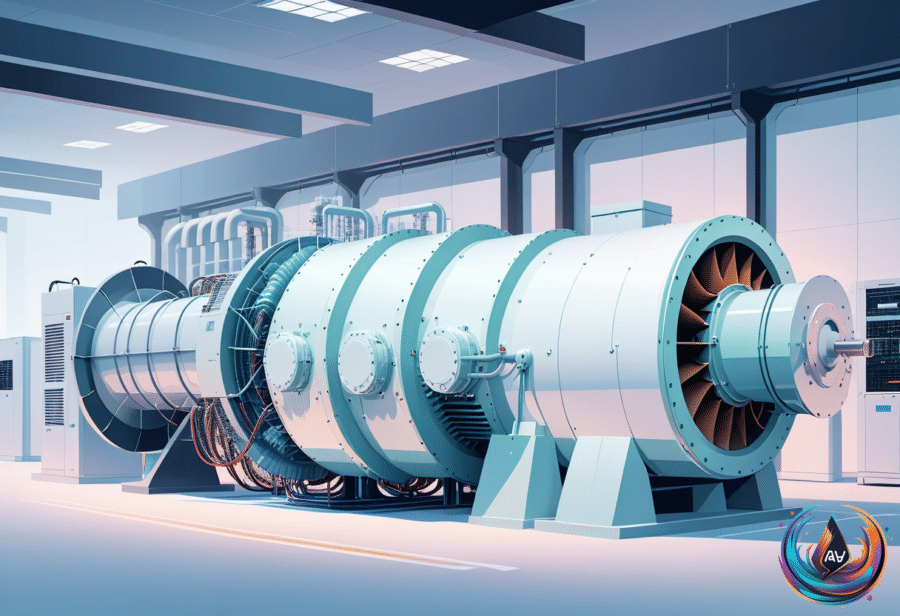
In late September, Anthropic bought commitments for 1.7 gigawatts of heavy-duty generators from OnePWR Solutions, an equipment supplier based in San Antonio, Texas. Anthropic did not acquire OnePWR, and none of the supplier’s employees transferred to the AI startup. The arrangement did include engineering and construction capabilities needed to install the generators.
The generators are Caterpillar equipment that OnePWR had originally ordered. Anthropic had planned to buy them from OnePWR, but instead went directly to Caterpillar, the manufacturer. OnePWR had ordered the turbines a couple years ago but could not find financing to complete the purchase.
The deal has not been independently verified, and Anthropic and OnePWR did not respond to requests for comment. Even so, the reported purchase fits a broader shift across the AI industry as companies search for power sources outside the public grid.
Google, Amazon, Microsoft, and Meta have announced plans to build natural gas power plants for data centers on site. The push has given a second wind to fracking, the drilling method used to extract natural gas from underground rock. If the buildout proceeds as planned, U.S. data centers alone could consume more natural gas than Germany and Japan combined by 2035.
That energy strategy brings a major financial risk. Natural gas prices can fluctuate, and one analyst expects prices to more than triple by the end of the decade in some markets. If that happens, Anthropic could face serious buyer’s remorse after committing billions of dollars to gas turbines.
Why AI Companies Are Building Their Own Electricity
The power race is being driven by a basic constraint: new grid connections and new turbines take years. The backlog for natural gas turbines stretches into the early 2030s, while connecting to the electrical grid can take just as long.
Some AI data centers are turning to converted jet engines instead. These units come from retired aircraft and are rebuilt to burn natural gas, giving operators a way to generate electricity before a standard power plant or grid connection arrives. One analyst described the strategy in blunt terms: “It’s all about getting power as fast as possible.”
With jet-powered units, “they can have a data center running in 24 months,” the analyst said. Connecting 100 megawatts to the grid in Northern Virginia, by comparison, takes about seven years. Most power capacity is expected to come online by 2031, according to an executive at Mitsubishi Power.
xAI has installed eight converted jet-engine turbines in Mississippi to help power its Colossus 2 data center in Memphis. ProEnergy supplies the units by rebuilding a GE engine commonly found on Boeing jets. OpenAI used gas turbines at its first Stargate site in Abilene, Texas, while Crusoe ordered 13 converted units for that campus in April.
Crusoe later walked away from a $1.25 billion deal to buy 29 natural gas turbines from Boom Supersonic in September, but a Crusoe spokesperson said the company still plans to use turbines. The Trump administration is also encouraging data centers to generate their own electricity.
Converted jet engines offer speed, but they carry trade-offs. They are less efficient and pollute more than turbines designed for conventional gas plants, and operators need more of them to produce the same amount of power. That may make them a short-term answer as efficiency and environmental concerns gain importance.
Anthropic’s Compute Bill Is Reshaping Its Business
Anthropic has historically preferred to rent rather than buy physical infrastructure. Its May S-1 filing disclosed that it pays SpaceX subsidiary xAI $1.25 billion per month through May 2029 for computing power, and the company stated, “We expect to enter into additional similar services contracts.”
Those commitments are colliding with rising demand. Anthropic expects to spend more than $500 billion over the next 10 years building AI infrastructure, while its compute bill reached $10 billion for the quarter.
Revenue reached $17 billion, up from $11.5 billion in the previous quarter, but compute consumed 58% of revenue, up from 48%. Revenue generated for every dollar spent on compute peaked at just over 2x before falling to 1.72x.
The company’s filing also disclosed “$5.0 billion of compute under short-term commitments, which currently costs significantly more than comparable compute procured under our multi-year commitments.” Anthropic says compute and infrastructure expenses will remain its largest operating expense for the foreseeable future.
Anthropic is trying to reduce that pressure through Anthropic Direct, a program designed to build its own cloud computing infrastructure. The plan separates commitments to data-center space from the larger investment in the chips that run inside those facilities.
The company has pledged $895.4 billion in data-center spending through 2045. A $63 billion equipment-financing arrangement involving Broadcom, Bank of America, Citi, Morgan Stanley, and Blackstone will finance chips and networking equipment leased to Anthropic, with deliveries expected to begin in 2027.
Broadcom agreed to absorb losses if Anthropic defaults, with maximum potential liability reaching about $43 billion once the equipment is deployed. Anthropic can also issue up to $42 billion in convertible notes to Broadcom to cover eligible quarterly rent under a March 2026 agreement.
The financing carries real pressure: notes normally carry 9% interest and convert at 90% of market price, while notes issued when revenue conditions are unmet carry 13% interest and convert at 85% of market price. Anthropic reported 45% quarterly revenue growth and more than 1,000% year-over-year growth in its third quarter results, alongside $146.6 billion in liquidity at September 30.
Anthropic is planning to go public this year, making the cost of its infrastructure ambitions impossible to ignore. CEO Dario Amodei has described the goal as “having a country of geniuses in a data center,” but that vision demands an enormous physical foundation.
The $3.4 billion generator deal marks a powerful signal: the next stage of AI will be built not only with models and chips, but with turbines, fuel, financing, and power plants. Anthropic’s future now depends on whether its demand for intelligence can grow faster than the cost of producing it.
Based on
- Anthropic joins AI’s natural gas frenzy, buys $3.4B worth of turbines — techcrunch.com
- Anthropic secures $3.4 billion generator deal for AI data centers: FT — cnbc.com
- Data centers are turning to old jet engines as the wait for power grows | TechCrunch — techcrunch.com
- Anthropic is still grappling with the economics of compute | TechCrunch — techcrunch.com
- Anthropic’s IPO filing shows the risky financing needed to achieve its compute goals | Fortune — fortune.com