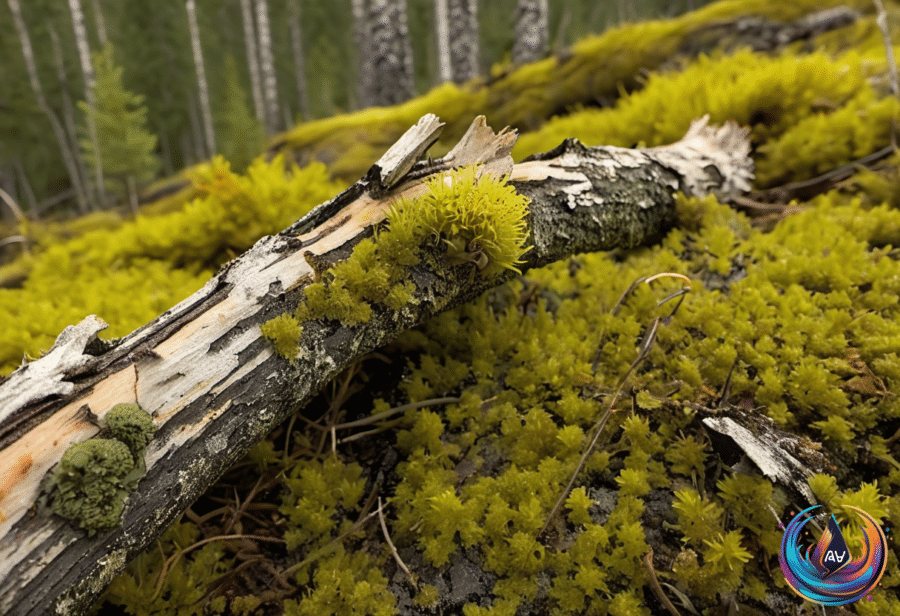
A wildfire that started on the northern campus of the University of Alaska, Fairbanks, in July 2021 became a living lesson in how Arctic fires can reshape the ground beneath them. The flames crossed a dry carpet of feather mosses and lichen before climbing into the crowns of black spruce and paper birch trees. By the time fire agencies responded, the flames reached 12 feet and sent a 500-foot column of smoke into the air.
The fire did more than consume trees. It stripped away moss and organic-rich topsoil that had helped insulate the frozen earth. A thaw probe outside the burn scar met a concrete-like layer about a foot below the surface, but plunged at least three times deeper inside the burned area. The difference showed how quickly fire can expose permafrost to heat.
Fire had already thawed the permafrost quite a bit immediately after the blaze. In 2024, the Alaska Fire Science Consortium helped turn the area into an educational walking trail, giving visitors a place to see the damage and the ground changes for themselves.
Why Permafrost Matters to the Climate
Permafrost underlies 15% of the land around the Northern Hemisphere and stores roughly twice as much carbon as the atmosphere. When frozen ground thaws, that stored carbon becomes part of the climate system that researchers are trying to understand and protect.
Arctic and boreal fires make that challenge harder. In 2023, wildfires in Canada released more carbon than the country’s combined fossil fuel emissions. The fire itself sends carbon into the atmosphere, while the loss of moss and topsoil allows deeper thaw that can expose more frozen carbon later.
Eric Miller has recorded the thaw depth at the Alaska fire site. Hilary Shook, coordinator of the Alaska Fire Science Consortium, and Alison York, its outgoing coordinator, are connected to the effort to turn fire science into public education. The trail offers a simple way to understand a process that can otherwise feel hidden beneath the surface.
“We need to figure out a better way to live with wildfire,” said Brendan Rogers, a senior scientist at the Woodwell Climate Research Center. That means studying not only how fires spread, but also how land managers can reduce damage to permafrost and carbon stores.
Research Moves From Observation to Intervention
Researchers across the United States, Canada, and elsewhere are studying tools such as controlled burns and faster fire detection. The goal is to understand which interventions can limit the reach of wildfires, protect the moss and soil layers, and reduce the amount of carbon released from northern landscapes.
The Woodwell Climate Research Center, the University of Victoria’s Polis Institute for Ecological Governance, and Alaska Venture Fund are partnering on the North Fire initiative. The project aims to study and raise awareness about interventions that can protect permafrost and the carbon stored within it.
Rogers said, “I do think that it can make a meaningful difference.” The statement points to a practical question facing fire researchers: how much protection can targeted action provide as warmer conditions make fires more difficult to manage?
The need for answers extends far beyond one university campus. Climate change pushed Earth’s environmental system to, and perhaps beyond, its limits in 2026. Seven of 16 climate markers reached record extremes, while multiple others showed evidence of shifting or accelerating. Those markers include greenhouse gases, temperature, glacier mass, oceans, wildfires, and the planet’s energy imbalance.
A Climate System Under Growing Pressure
July 2026 became the warmest month ever recorded for the contiguous United States, and the country experienced its hottest summer ever. Ocean temperatures also reached new heights in July 2026. Carbon dioxide levels in the atmosphere are higher now than at any time in the last 2 million years.
The warming pace has changed as well. Between 1880 and 1970, global warming occurred at roughly 0.05°C per decade. From 2010 to 2024, the rate rose to 0.36°C per decade. Heat waves in Europe in 2026 killed an estimated 14,000 people, showing that climate extremes are already affecting human lives, not only remote frozen landscapes.
Coral reefs became the first environmental system on Earth to reach a climate “tipping point” in 2025. That milestone sits alongside the thawing of permafrost, the loss of glacier mass, rising ocean temperatures, and the spread of wildfires. Each system has its own warning signs, but they connect through the same warming climate.
Worsening trends in fossil fuel combustion and emissions have appeared alongside positive shifts in renewable energy use. Progress so far remains far below what is needed to stabilize Earth’s climate system, however. Arctic fire research cannot solve that wider problem alone, but it can show where focused action may protect frozen carbon before more of it enters the atmosphere.
The burned forest at the University of Alaska, Fairbanks, makes the issue tangible: a surface that looks like a fire scar can hide a much deeper change below ground. The work of researchers, educators, and the North Fire initiative is aimed at understanding that change while there is still time to reduce its reach.
Based on
- Inside the quest to combat Arctic fires and save the planet’s frozen carbon — technologyreview.com
- Tag: Exploring Geopolitical Tipping Points and Climate Cooling Strategies – Ars Technica — arstechnica.com
- Climate change pushed Earth to its limits in 2026 as certain “vital signs” reach record extremes, report says – CBS News — cbsnews.com