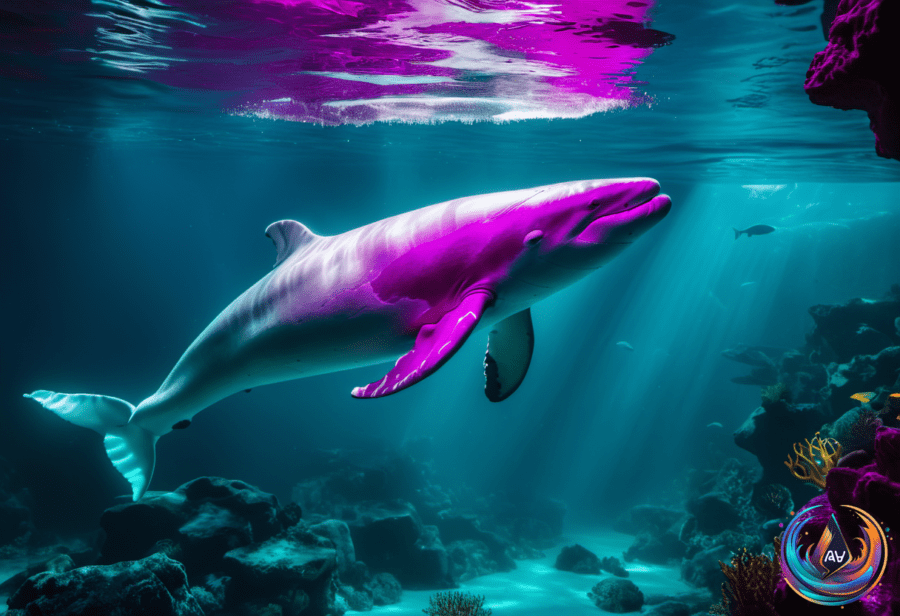
Beluga whales have surprised scientists by recognizing themselves in mirrors. This ability, called mirror self-recognition, is rare in the animal kingdom. It is often seen as a sign of self-awareness and complex cognition.
More than 20 years ago, researchers tested four captive belugas at the New York Aquarium. They placed a two-way mirror on the pool’s viewing window and recorded the whales’ reactions. Only two whales, a mother named Natasha and her daughter Maris, showed strong interest.
At first, Natasha and Maris acted like they saw another whale. They clapped their jaws and shook their heads. But then, their behavior changed. They started moving in ways that tested if the reflection copied their moves. This is called contingency testing.
After that, the whales used the mirror to explore themselves. They blew bubbles, looked inside their mouths, and even did barrel rolls while watching their reflections. These behaviors suggest they understood the mirror showed themselves, not another whale.
The Mark Test and What It Means
To confirm self-recognition, researchers used a classic experiment called the mark test. They placed a harmless mark on parts of the whales’ bodies that they couldn’t see without a mirror. The test checks if the animal notices and tries to examine the mark using the mirror.
Natasha passed this test. She turned her marked side toward the mirror and pressed the spot against the glass. Maris did not pass the mark test but still showed many self-directed behaviors in front of the mirror. This suggests some level of self-awareness.
The mark test is tricky for animals without hands. Unlike chimpanzees or elephants, belugas can’t touch marks directly. Their behavior—pressing the marked area against the mirror—counts as a clear sign of self-recognition.
Why Mirror Self-Recognition Matters
Mirror self-recognition has been documented in only a few species. Great apes, dolphins, elephants, magpies, and even a type of fish called cleaner wrasse have passed the test. Belugas join this exclusive group.
Self-recognition links to social complexity and empathy. Belugas live in tight social groups and have large, complex brains. They communicate with various sounds and mimic other species. This intelligence aligns with their ability to see themselves in mirrors.
Some scientists argue the test doesn’t measure consciousness itself but a specific skill: using a mirror as a tool to inspect one’s own body. Still, passing the test shows a mental picture of self, which is rare in animals.
Not all animals fail because they lack intelligence. Many simply don’t rely on mirrors in their world. For belugas, the reflective glass in aquariums may have made mirrors more relevant, helping them demonstrate this ability.
What This Means for Belugas and Beyond
Belugas face threats in the wild, such as climate change, pollution, and noise from ships. Understanding their intelligence and self-awareness could increase empathy and drive better protection efforts.
The whales tested were captive and had some experience with reflective surfaces, but the results suggest wild belugas may share this capacity. Recognizing themselves shows a deeper level of cognition than previously known.
Scientists hope to study more belugas to see how widespread mirror self-recognition is in the species. This research adds to a growing understanding of animal minds and challenges how we view intelligence in non-human creatures.
Ultimately, belugas recognizing themselves invites us to rethink the boundaries of self-awareness. It shows that complex minds exist in surprising places, beneath the waves, and that intelligence takes many forms across the animal kingdom.
Based on
- Whatever the mirror test tells us, beluga whales pass it — arstechnica.com
- A whale meets itself at last: Belugas may have crossed a cognition line to join an elite group of animals — sciencex.com
- A Beluga Whale Showed a Sign of Intelligence Once Thought Unique to Humans : ScienceAlert — sciencealert.com
- Belugas join a rare animal kingdom club—they can recognize themselves in a mirror | National Geographic — nationalgeographic.com
- Belugas Can Recognize Themselves in Mirrors, Joining a Short List of Nonhuman Species That Show Signs of Self-Awareness — smithsonianmag.com
- Beluga Whales Show Signs of Mirror Self-Recognition in Captivity, Study — scienmag.com