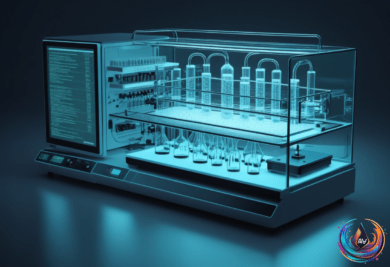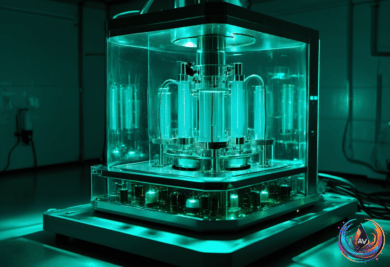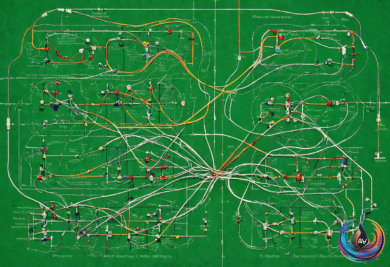
Anthropic just flipped the script on scientific research workflows. On June 30, 2026, they launched Claude Science in beta, an AI workbench built to handle the chaos scientists face every day. Imagine juggling mountains of data, notebooks, cluster terminals, and research papers—all in one place. That’s exactly what Claude Science delivers.
An AI Workbench Made for Scientists
This isn’t just another chat window. Claude Science runs on Anthropic’s proven Claude models, not a new AI engine. It’s a fully loaded environment designed to connect literature analysis, database queries, code execution, chart generation, and compute management into one seamless pipeline. Anthropic calls it “an agent-powered research environment.”
Why does that matter? Because scientists don’t just want answers. They want traceable, auditable results they can trust. Every output in Claude Science carries a full history of how it was made—including code, environment details, descriptions, and message histories. This level of reproducibility is critical for labs working with massive datasets and complex pipelines.
Powerful Features and Real-World Wins
Claude Science hooks into over 60 scientific databases and domain-specific open models. It’s packed with more than 60 curated skills and connectors, including NVIDIA’s BioNeMo Agent Toolkit tools like Evo 2, Boltz-2, and OpenFold3. These tools empower Claude Science to tackle tasks like single-cell RNA sequencing analysis, protein structure prediction, CRISPR screen design, and cheminformatics.
Some early adopters are already seeing big benefits. Manifold Bio used Claude Science to nominate targets for tissue-targeting medicines. Jérôme Lecoq at the Allen Institute built a multi-agent computational review template. Stephen Francis at UCSF applied it to glioma molecular epidemiology analysis with independently validated results.
Anthropic says, “Claude Science helps read through thousands of papers, extract claims and findings, and create long-form reviews with citations checked by reviewer agents.” This is a game-changer for scientists drowning in literature and data.
Flexible Access and Open Opportunities
Claude Science runs locally on macOS or Linux. You can also access it remotely over SSH or through HPC cluster login. This flexibility means labs can tap into on-demand platforms or local compute resources as needed.
The beta is open to Pro, Max, Team, and Enterprise plans. Anthropic is backing up to 50 “Claude Science AI for Science” projects. Each project can receive up to $30,000 in credits and compute resources. Applications close on July 15, 2026, with winners announced on July 31, 2026. The projects will run from September 1 to December 1, 2026.
Anthropic notes, “The system can also create specialist sub-agents or work with custom expert agents built by users.” This means researchers can tailor the AI environment to their specific needs, pushing the boundaries of what’s possible in scientific discovery.
What’s Next for Research?
Claude Science is built to keep humans in control of data and decisions while powering reliable, traceable, and reproducible research. It’s designed for labs that demand auditability and rigor in their workflows. By connecting literature, code, compute, and artifacts into a verifiable pipeline, Claude Science sets a new standard.
The future looks bright. With AI handling complex, multi-step research tasks, scientists can focus on insights and breakthroughs. Anthropic’s move to fuse AI agents with scientific workflows pushes research into a new era of speed and trust.
Are you ready to harness AI for your lab’s toughest challenges? Claude Science is live, and the race is on.
Based on
- Anthropic Launches Claude Science Beta: A Multi-Agent AI Workbench for Reproducible Genomics, Proteomics, and Cheminformatics Pipelines — marktechpost.com
- Anthropic unveils Claude Science AI workbench for scientists — completeaitraining.com
- Claude Science: Anthropic Puts Scientific Workflows Into an AI Workbench — knightli.com
- Anthropic Launches Claude Science, An AI Workbench Built For Scientific Research – TechDogs — techdogs.com
- Anthropic and Nvidia introduce AI agents for scientific research workflows — completeaitraining.com