The toaster has started watching. Breville’s Eye Q Toaster uses optical sensors to judge bread by color instead of relying on a timer, making it the world’s first toaster built around that approach.
That distinction explains the price. The Eye Q starts at $300 for the two-slice model, which puts it far beyond the usual countertop appliance purchase and into the category of products that need an argument. Breville has one: toast should be judged by how it looks, not by how long it has been sitting inside a heated box.
Sam Rutherford called it “The world’s first toaster that works on color instead of time is great.” The enthusiasm is clear. So is the price, which Rutherford addressed with the question, “Did we mention that this toaster starts at $300”
A toaster built around shade
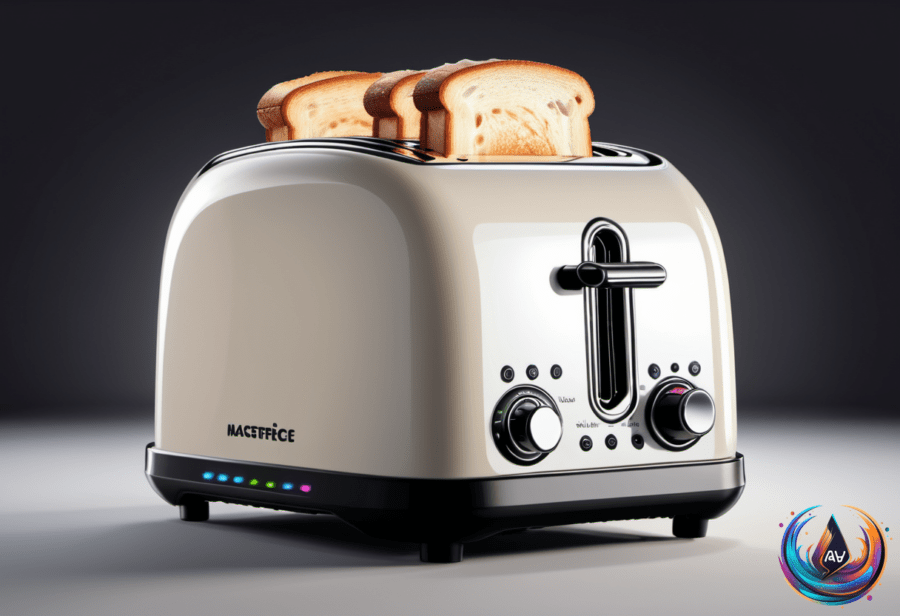
The Eye Q has rounded edges and a minimalist design, with a non-stick ceramic coating across the top. Its controls keep the same stripped-back approach while offering several ways to adjust the toast darkness: a minus button, a button for a deeper toast, a dedicated bagel button, and an “A bit more” button.
There is no spring-loaded lever. Instead, a big button starts the toasting process, and built-in motors clamp down on the bread before lowering it inside. The mechanism gives the appliance a more deliberate feel than the familiar lever, although the useful part is what happens after the bread disappears.
Optical sensors track the toast’s color 10 times per second. The toaster uses those readings to determine when the bread is done, rather than following a fixed timer, then beeps and raises the toast when it reaches the selected shade.
That changes the basic promise of the appliance. A timer can measure elapsed heat, but it cannot know whether the result is faint, golden, or close to burning. The Eye Q is designed to stop when the bread reaches the desired color instead.
Testing the range
The first test involved a slice of whole wheat bread across seven different color settings. The lightest setting produced a faint slice, while the darkest setting reached a deep brown that stopped short of burning.
The standard middle setting delivered the strongest result: a perfect golden slice of toast. That middle setting matters because most people are not shopping for a seven-level laboratory experiment. They want the same familiar result without having to guess whether a timer will land there.
The test also shows what Breville is trying to solve. The Eye Q does not treat every setting as a simple countdown; it uses the selected shade as the target and watches the bread as it changes. The sensors keep checking the color 10 times per second, giving the toaster a stream of information instead of one preset duration.
That is a clever solution to a small but familiar problem. Bread can begin at different levels of color, and a timer only knows the clock. The Eye Q adds a visual check, then stops when the toast reaches its chosen appearance.
Still, the feature must justify a starting price of $300. Breville has wrapped the idea in rounded edges, a minimalist design, a ceramic-coated top, motorized bread handling, and dedicated controls, but the central pitch remains simple: pay more for toast that stops at the color you selected.
The Eye Q Toaster is not trying to reinvent breakfast. It is refining one narrow task with sensors, motors, and a target shade—an unusually elaborate answer to the question of when toast is done.
As of Sept. 16, 2026 7:00 am EST, the result is a toaster with a clear gimmick and a working demonstration behind it. The middle setting produced golden toast, the darkest setting avoided burning, and the sensors watched the process instead of trusting the timer. For $300, that is the entire case—and it had better be.
Based on