California is moving AI safety from voluntary promises toward independent scrutiny. On August 30, 2026, the California Legislature gave final approval to SB 813, a bill that would create a formal path for outside organizations to assess the risks of AI systems and models.
Authored by Senator Jerry McNerney, the legislation now goes to Governor Gavin Newsom. Its arrival comes as California, the European Union, China, and the United States build different pieces of a global response to increasingly capable AI.
California Creates a New Role for AI Auditors
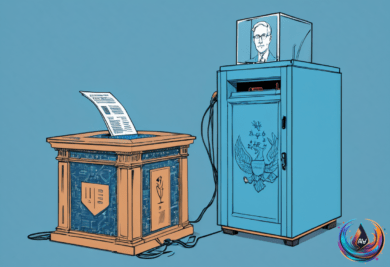
SB 813 directs the Government Operations Agency to designate independent verification organizations, or IVOs. These organizations would act as outside auditors qualified to assess the safety risks of AI systems and models, giving developers and policymakers a defined framework for examining how those risks are measured.
The Assembly passed the bill on third reading on August 30, recording 67 ayes, 6 noes, and 6 members not voting. The Senate concurred in the Assembly’s amendments the same day, passing the motion with 39 ayes, no opposition, and one member not voting.
Under the bill, an IVO must demonstrate expertise in assessing the risks posed by an AI system or model and identifying the metrics and methodologies behind that assessment. Independence is central to the plan: a designated IVO cannot have financial, operational, or management dependence on the party it assesses.
The Government Operations Agency must develop application requirements for IVO designation on or before January 1, 2028. Once approved, each IVO must submit an annual report no sooner than 12 months after its initial designation.
- The report must summarize the standards and methodologies used by the IVO.
- It must disclose changes to governance policies or funding sources relevant to the organization’s independence.
- Suspension and termination procedures must address failures to follow standards, material misrepresentations, conflicts of interest, and failures to maintain documentation.
- The procedures must also cover cybersecurity lapses and conduct that harms integrity, objectivity, or competence.
There is an important limit: the framework is voluntary. SB 813 does not require any developer, deployer, or operator of an AI system or model to engage an IVO or undergo an audit.
Europe Expands Enforcement Across a Huge Market
California’s proposal arrives as the European Union turns its AI rules into an enforcement system with real investigative power. On August 2, 2026, the European AI Office gained authority to investigate major technology firms and sanction them for infringement of the EU AI Act’s rules.
The European AI Office is a technical organization created to enforce the European Union’s 2024 AI Act, a framework that categorizes AI systems across four risk levels. High-risk systems face enhanced requirements, including transparency and human oversight, while systems classified as presenting unacceptable risk are banned.
One example of unacceptable risk involves AI systems that use biometric data to infer sensitive characteristics. Models that pose systemic risks face extra measures, except when they are used in research. All frontier models fall within the systemic-risk category, including Claude Fable 5, developed by Anthropic.
Creators of frontier models must provide the EU regulator with an overview of their training data and methodologies, demonstrate respect for copyright laws, and show that their models can maintain safety. AI outputs must also be identifiable, for example with a watermark, and Anthropic announced that future Claude-generated content would carry one.
The office can request model documentation, conduct evaluations, and impose fines of up to €15 million or 3% of global annual turnover. Firms can face penalties for providing incorrect, incomplete, or misleading information, while serious cases can lead to models being restricted or recalled from the European market.
Those rules reach a market of more than 450 million people. The European AI Office has around 140 employees and is recruiting around 40 more staff members, with hiring focused on AI safety and governance.
China and the United States Take Different Paths
China already has wide-ranging AI-specific regulations and technical standards. Its rules require labels for AI-generated content and restrict the use of AI companions, while President Xi Jinping launched the World Artificial Intelligence Cooperation Organization in the previous month.
WAICO is an intergovernmental agency designed to promote global governance of AI. Its 29 founding member countries do not include the United States or any European Union nations, creating another dividing line in the international debate over how AI should be managed.
The United States has started shifting from a hands-off position on AI regulation, with some form of federal regulation in the pipeline. President Donald Trump is involved in those AI regulation efforts, and in June the United States created a voluntary mechanism allowing firms to have their models vetted by the federal government 30 days before release.
Safety concerns are also shaping company decisions. Anthropic delayed the release of its Claude Mythos model because of safety concerns, while almost 1,400 employees of frontier AI companies, including leadership from OpenAI and Anthropic, called for the US government to support an international effort to slow AI development.
The emerging system remains fragmented. California is preparing independent verification organizations, Europe is enforcing risk-based rules, China is combining regulations with technical standards, and the United States is testing voluntary federal review.
Most countries are now aware that some regulation of AI is necessary. SB 813’s next test comes with Governor Gavin Newsom, but its larger impact may reach beyond California: it asks whether trust in powerful AI systems should rest on internal claims alone, or on independent organizations with clear standards, documented methods, and consequences for losing their independence.
Based on