A new six-month contest will ask whether people can lower their biological age, not just count another year on the calendar. Around 500 participants are expected to take part, with about 120 people already signed up, including Jessica Hamzelou, who joined on October 2, 2026.
Christin Glorioso, founder and CEO of NeuroAge Therapeutics, organized the competition. She says one goal is to “explain to the world what aging clocks are” while building what organizers describe as the world’s most comprehensive clock dataset.
How the biological age contest will work
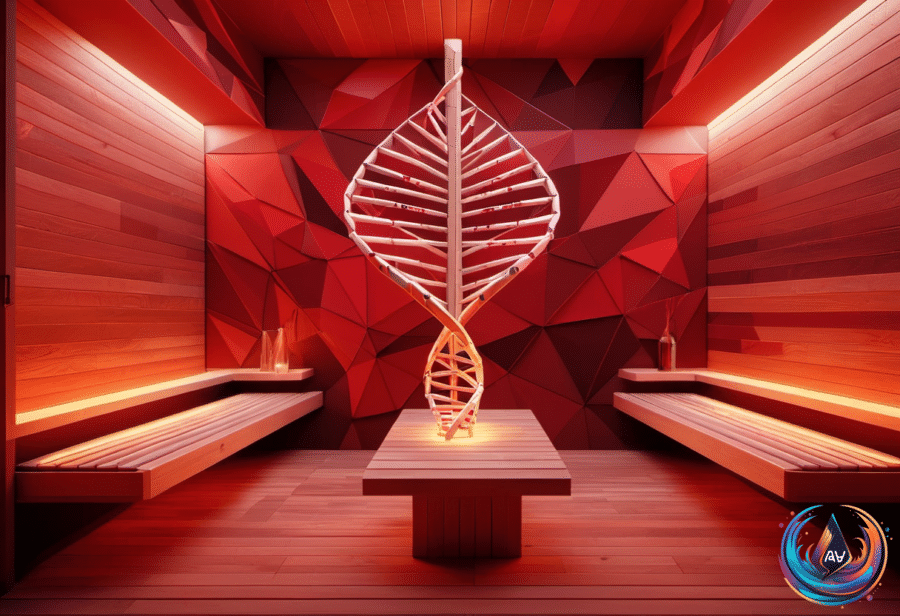
The event starts in January 2027, when participants will complete baseline measurements. After six months, the same tests will help measure whether their biological age has changed. The contest will examine approaches such as red-light masks and sauna use, giving participants a way to compare those choices with changes in their test results.
Biological age does not come from one universal test. There are more than a hundred biological clocks, each designed to measure different parts of aging. The contest will use several tools, including epigenetic clocks, blood tests, brain age scores, and face age estimates.
Participants will send blood samples to TruDiagnostic. The company measures epigenetic chemical groups on DNA and uses them to provide biological ages for organ systems. NeuroAge Therapeutics will calculate a brain age score after participants complete cognitive tasks, while an app developed by a Harvard team will estimate face age from uploaded selfies.
That mix of measurements matters because aging does not affect every part of the body at the same pace. A person might show one result in a blood-based test, another in a brain assessment, and a different estimate through facial features. Putting those measurements together could show how various longevity approaches affect specific systems.
Why aging clocks are drawing attention
Longevity biotechnology has attracted major investment. Companies in the field raised approximately $3.74 billion in the first quarter of 2026, as researchers explored ways to measure aging and change the processes linked to it.
One research focus involves manipulating DNA repair processes. The idea is complex because living systems must balance aging, immunity, reproduction, growth, and maintenance. Changing one process can affect others, and DNA manipulation may bring side effects.
The push to extend life also reaches beyond laboratories. Vladimir Putin has discussed advances in organ transplantation and regenerative medicine, while Russia has directed billions of dollars toward those areas. Xi Jinping predicted that humans could live up to 150 years this century.
Humanity has chased that goal for centuries, though the methods have changed. Qin Shi Huang, the first emperor of China, died from suspected mercury poisoning while searching for immortality. In the 1920s, Alexander Bogdanov pioneered blood transfusions from the young to the old. Today, genetic engineering and biological manipulation are possible, and space travel is a reality.
David Sinclair, a Harvard Medical School researcher, estimated that slowing aging could save $38 trillion. That figure helps explain why researchers, investors, governments, and the public are paying attention to tools that claim to measure biological age.
Could the voice reveal how old the body is?
Blood, brain tests, and selfies are not the only ways to estimate biological age. Speech analysis can also examine signs of aging through a tool known as a “speech clock.” The system studies pauses, pitch, and vocabulary to estimate age and identify signs of biological aging.
People with older-appearing voices tend to perform worse on tests of memory, thinking, and planning. Bigger gaps between speech age and actual age are also linked to biological differences, including older-looking brains and DNA changes.
Voice data can reveal social conditions as well. Older-sounding voices are associated with less education, financial hardship, food insecurity, and other social disadvantages. Agustin Ibanez, Professor in Brain Health at the Global Brain Health Institute, said, “Our voice appears to contain much more information about aging than we previously recognised.”
Speech-based measures can be recorded from a distance, repeated over time, and collected without invasive procedures at low cost. That makes them useful in places where advanced diagnostic tools are not available, even though the contest itself will rely on blood, brain, and face measurements.
A growing conversation about longer lives
The 6th TimePie Longevity Forum, held in Shanghai on September 20–21, 2025, brought together about 2,500 participants from 16 countries. Its focus included aging biology, biomarker development, and clinical geroscience.
At the same time, examples of long life remain a powerful part of the discussion. As of June 23, 2026, the world’s oldest living trio of sisters were Zoraide de Deus Mota, 104, Zulina de Deus Nunes, 103, and Levita de Deus Nunes, 109.
The new contest will not settle the question of whether humans can live to 150, or whether any single intervention can reverse aging across the body. It will offer something more practical: a six-month test of several aging measurements, tied to real participants and repeated results.
Based on
- A new contest pits competitors against each other in a race to biological youth — technologyreview.com
- The longevity boom is getting ahead of the science | Science and Technology | Al Jazeera — aljazeera.com
- How the way you talk can reveal how quickly you are aging | The Independent — independent.co.uk
- Advancing aging biomarkers and intervention discovery at the TimePie Longevity Forum | Nature Aging — nature.com