Chinese open-source AI models have moved from a regional alternative to a major part of global developer activity in 2026. On two large developer platforms, Chinese models went from a small share of usage to a majority, helped by lower prices, stronger coding abilities, and access to models designed to run on Chinese chips.
That shift is raising questions in the United States about security and China’s growing technology influence. The change also gives Chinese developers more local options behind the Great Firewall, where access to major U.S. platforms can be limited or unreliable.
ModelScope and MoArk Build a Domestic Model Base
China’s main open-source AI platforms include ModelScope and MoArk, which compete to serve Chinese-speaking developers. ModelScope hosted more than 170,000 models as of 2022, giving it a large library for developers looking to test, adapt, and use open AI systems.
OSChina launched MoArk in 2023, and the platform serves some 20,000 models. Both platforms offer domestic open-source models that can run natively on Chinese chips, an important feature for developers who want to build without relying on foreign hardware or services.
Beijing tolerates VPN workarounds for U.S. open-source platforms such as Hugging Face, but that access does not work for everyone. “Not everyone is able to use a VPN [virtual private network] all the time,” said Xu Yong, chief executive of OSChina.
Hugging Face was blocked in China in 2023, adding pressure for developers to use local platforms. Xu Yong described the wider direction this way: “In the AI era, China is developing an independent ecosystem faster than in the internet era.”
The pattern has an earlier precedent. GitHub was briefly blocked in China in 2013, although access was later restored. In 2020, China endorsed Gitee, a domestic version of GitHub owned by OSChina. The history shows how developer infrastructure can become part of a larger technology relationship between China and the rest of the world.
Chinese Models Are Winning More Global Usage
The clearest evidence of the shift comes from usage data in 2026. On OpenRouter, Chinese models accounted for 57% to 67% of tokens used during the week of September 14, up from 6% to 13% in February. On Vercel, their share reached 55% in August, compared with 11% in January.
Those figures place Chinese models in the majority position on two major developer platforms. About half of all tokens on OpenRouter are used by companies in the United States, so the platform’s numbers show that this is not only a story about Chinese developers choosing domestic tools.
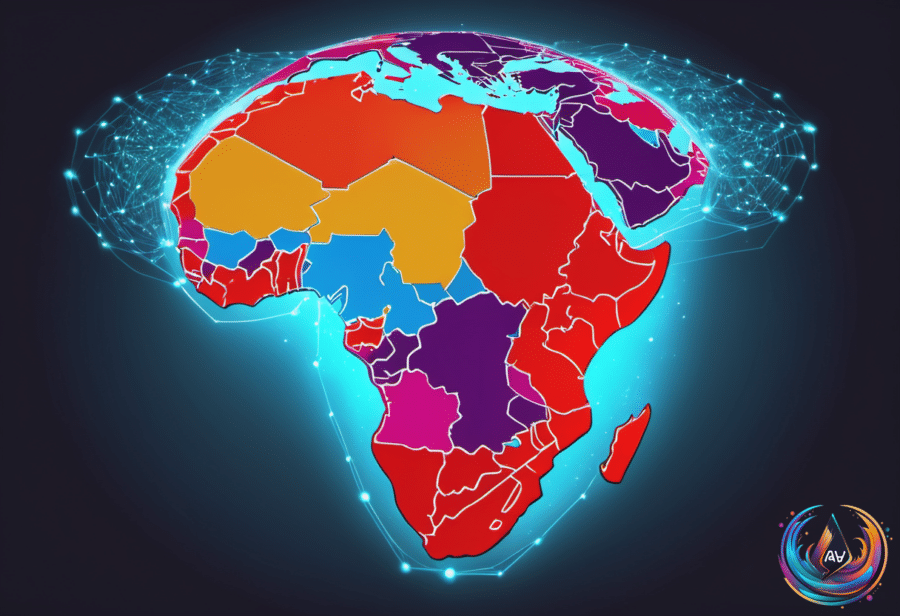
Chinese models are now used in 82 countries across Central and South America, Africa, and Asia. More than two-thirds, or 67%, of tokens used by companies in the “Global South” run on Chinese models. Southeast Asia may see strong uptake because of its close economic and cultural links with China.
Price is one reason for the change. Chinese models released in 2026 can perform in advanced agentic use cases, especially coding, while costing less than many American models. Peter Walker described them as models that “can credibly perform in advanced agentic use cases, especially in regards to coding, in a way that was just not true in late 2025.” He also called them “incredibly cost-effective compared to most models from American labs.”
Harpreet Arora, head of agentic infrastructure at Vercel, explained why that combination matters: “Chinese models are becoming capable enough for more tasks at a much lower cost. Once a model meets the quality bar for the job, that price difference becomes compelling.”
Open Access Brings Security and Influence Questions
The appeal of these models does not remove the political concerns around them. Chinese open-source AI has spread as the United States and China manage a tense technology relationship. U.S. president Donald Trump and Chinese president Xi Jinping met in Beijing in May 2026, while debates over AI access, chips, and software ecosystems continued around them.
Daniel Remler, a senior fellow at CNAS, described the long-term concern in direct terms: “The ultimate concern is that the integration of Chinese AI models pulls countries into a Chinese technology sphere of influence that hardens into geopolitical alignment.”
That influence may grow through everyday developer choices rather than a single major announcement. If a model is affordable, capable at coding, and easy to run on available hardware, companies have a reason to adopt it. As more teams build with those systems, their tools and workflows can pull entire technology markets toward the same ecosystem.
Safety creates another question. Open-source models can be modified and deployed across many settings, and the risks depend on more than the original model. Avijit Ghosh, lead technical AI policy researcher at Hugging Face, put it this way: “Safety increasingly depends on the whole system around a model.”
Hanna Foerster, a Ph.D. student at the University of Cambridge, said some start-ups are developing open-source models with capabilities close to closed-source systems. “There are some start-ups that are working on open-source models that have actually got similar capabilities … to what they’re getting for some closed-source, superbig models,” she said.
That leaves developers and companies facing a practical choice alongside the political one. Chinese models offer strong performance, lower costs, and a growing international user base, while U.S. platforms still hold a major place in global development. Ion Stoica, a professor at the University of California, Berkeley, summed up the dilemma with a short question: “What’s the alternative?”
Nvidia announced it was acquiring Hugging Face for $12.9 billion, adding another major development to the open-source AI landscape. The contest is no longer only about which model performs best. It is also about which platforms developers can access, which chips those models support, and which technology ecosystem becomes part of daily work across the world.
Based on